Buying a mask line is a big step for a small factory. The machine can cost more than a car, and a poor choice means months of lost output. If you are searching for a face mask manufacturing machine manufacturer, you need to know what the machines do, which type fits your product and what to ask before you pay. This guide covers all of that in plain words.
It is written for factory owners, start-up founders and sourcing managers. It does not name or rank any company. Instead, it gives you a checklist so you can judge any supplier yourself. Prices and speeds below are examples to help you plan. They change with the model, the country and the year, so always get a written quote.
What a mask line actually does
A disposable flat mask looks simple, but it is made from several layers of nonwoven fabric. A typical surgical-style mask has three layers. The outer layer is spunbond polypropylene. The middle layer is a meltblown filter. The inner layer is soft spunbond again. To learn more about this kind of cloth, read our guide on what non-woven fabric is and the manufacturing flow chart of non-woven fabric.
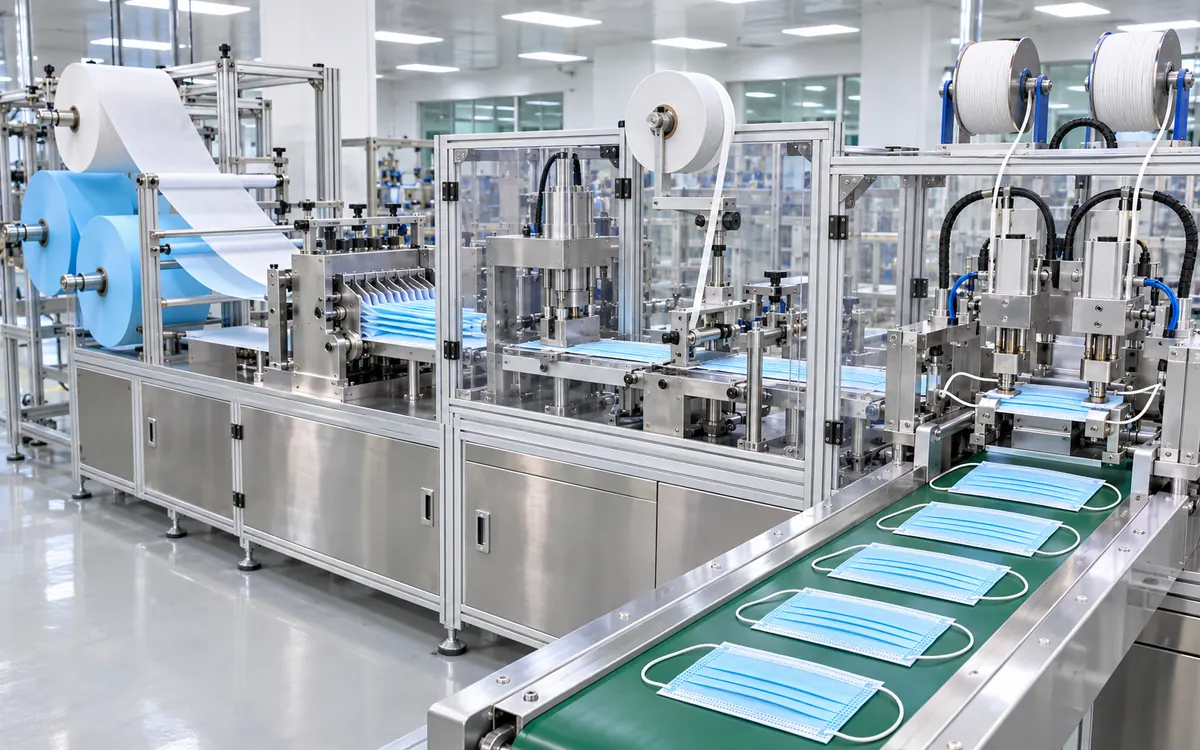
A mask machine takes rolls of these layers and turns them into a finished mask. The main steps are:
- Unwinding. Rolls of fabric feed into the machine under steady tension.
- Nose wire feeding. A thin metal or plastic strip is cut and laid into the top edge.
- Folding and pleating. The layers are folded so the mask can open over the face.
- Welding. Ultrasonic energy joins the layers and seals the edges. No thread or glue is used.
- Cutting. A cutter trims the mask to size.
- Ear loop welding. Elastic loops are welded to each side.
- Output. Masks leave on a belt for inspection and packing.
Most flat-mask machines do steps 1 to 6 in one body, in a few seconds per mask.
Main types of mask machines
| Machine type | Product | Speed (typical range) | Operators | Best for |
|---|---|---|---|---|
| Body machine (flat mask) | 3-ply surgical-type mask | Roughly 60 to 120 pieces per minute for good models | 1 to 2 | Most start-ups and factories |
| Ear loop welding machine | Attaches loops to blank masks | 40 to 100 pieces per minute, depending on setup | 1 to 3 | Semi-automatic lines where blanks are made first |
| Blank mask machine | Makes the mask without loops | Higher speed than a full line | 1 | Two-step production |
| N95 / cup-type machine | Moulded respirator mask | Usually slower, about 20 to 60 per minute | 2 to 4 | Higher-grade respirators with strict testing |
| KN95 / folded (flat-fold) machine | Folded respirator | Roughly 30 to 80 per minute | 2 to 3 | Folded respirators with headbands or loops |
| Cup-mask forming machine | Shapes the cup | Slower | 2 | Cup respirators |
| Kids’ mask line | Smaller flat masks | Similar to adult | 1 to 2 | Child sizes |
| Packing machine | Counts and packs masks | Varies | 1 | High-volume factories |
The speed ranges are indicative only. A supplier’s claim of the top speed on the brochure is not the same as steady output in a real shift, which is lower once rolls are changed and settings are adjusted.
How the key parts work
Understanding the parts helps you ask better questions.
Ultrasonic welder. A generator makes a high-frequency electrical signal, often around 20 kHz. A transducer turns it into tiny vibrations. A metal tool called a horn presses on the fabric. The vibration creates heat between the layers and melts the polypropylene fibres together. Because only the weld point heats, the process is fast and clean.
Servo motors and drives. These pull the fabric by the exact length for each mask. Good servo control keeps masks the same size, which makes inspection easier.
Tension control. Rollers and brakes keep the fabric flat. Wrinkles cause bad welds.
Nose wire unit. A feeder cuts wire to length. It must place it straight, or the mask will not seal on the face.
Touch screen and PLC. The control system stores settings such as mask length and weld time. Look for easy recipe saving so you can switch between products fast.
Sensors and alarms. They stop the machine when a roll ends, when the wire runs out or when the fabric breaks.
Frame and guards. A strong frame reduces vibration. Safety guards protect the operator.
Specifications to compare
When you receive offers from several suppliers, put them in one table. Compare:
| Specification | Why it matters |
|---|---|
| Rated speed and real speed | Ask for output per hour in a normal shift, not the peak number |
| Mask size range | Adult, child, or both on the same machine |
| Number of layers handled | Three layers is common. Some machines handle more |
| Fabric roll width and weight | Affects how often rolls are changed |
| Power use (kW) and supply | Match your voltage and phase. Check the load on your line |
| Air supply need | Many machines use compressed air |
| Machine footprint | Floor space and room for rolls and packing |
| Weight of the machine | For floor loading |
| Weld pattern | Affects strength and look |
| Changeover time | How long to switch size or style |
| Control language | English or your local language on the screen |
| Spare parts list | Horns, cutters, belts and sensors |
| Warranty period | Parts and labour terms |
| Installation and training | Whether it is included and where |
Questions to ask any manufacturer
Before you pay, send a written list of questions. Real manufacturers will answer clearly.
- Are you the factory itself, or a trading company? Can I visit, or see a live video of the factory floor?
- Can you show a running video of this exact model, making the exact mask I want?
- What is the steady output in masks per hour over a full shift?
- What is the scrap rate for a normal run?
- Which spare parts wear out first, and what do they cost?
- How long do spare parts take to reach my country?
- Who installs the machine, and who trains my staff?
- What is the warranty, and what does it cover?
- Can you give me contact details of other buyers in my country?
- What certificates does the machine hold for electrical and machine safety in my market?
- What are the payment terms? How much is paid before shipment?
- What happens if the machine arrives damaged or does not meet the agreed speed?
If the answers are vague, or if the supplier pushes you to pay in full at once, take care.
Do you need certification
The machine itself needs to be safe to use. That usually means electrical and machine safety marks required in your country. The mask it makes is a separate matter. Medical masks and respirators are regulated products in most countries. They may need testing for filtration efficiency, breathability and fluid resistance, and the factory may need a quality system and registration. The rules differ, so check with your national regulator before you promise a mask grade to a buyer. A machine that can weld a mask does not make the mask a certified medical product.
Raw materials you will need
The machine is only one part of the business. You also need:
- Spunbond polypropylene rolls for the outer and inner layers
- Meltblown filter rolls for the middle layer, which are the most important and often the most costly part
- Nose wire or strip
- Elastic ear loop cord or band
- Packing boxes and bags
- Spare parts and tools
Test samples of each material before you buy in bulk. A cheap meltblown layer can make a mask that looks right but filters poorly. If you plan to sell to hospitals or exporters, work with documented suppliers and keep batch records.
Worked example: cost per mask and payback
Take a small factory that buys one flat-mask body machine and one ear loop welder. The numbers below are examples only, so replace them with your own quotes.
Assumptions
- Machine set cost, landed and installed: 25,000 US dollars
- Real speed: 80 masks per minute, once running
- Effective run time: 6 productive hours per shift, 1 shift per day, 25 days per month
- Material cost per mask: 0.012 dollars
- Labour, power, packing and other direct costs: 0.004 dollars per mask
- Selling price: 0.030 dollars per mask
Monthly output
- Masks per day = 80 × 60 × 6 = 28,800
- Masks per month = 28,800 × 25 = 720,000
Per-mask profit
- Total cost = 0.012 + 0.004 = 0.016 dollars
- Gross margin = 0.030 − 0.016 = 0.014 dollars per mask
Monthly gross margin
- 720,000 × 0.014 = 10,080 dollars
Simple payback
- 25,000 ÷ 10,080 = about 2.5 months
That sounds excellent, but real life is harsher. Now test the same case with more realistic assumptions: sales only at 50 percent of capacity, a lower price of 0.022 and a rejected rate of 5 percent.
- Sold masks = 720,000 × 0.50 × 0.95 = 342,000 per month
- Margin per mask = 0.022 − 0.016 = 0.006
- Monthly margin = 342,000 × 0.006 = 2,052 dollars
- Payback = 25,000 ÷ 2,052 = about 12.2 months
The same machine pays back in 2.5 months in the best case and more than a year in the cautious case. The lesson is that selling price, order volume and quality drive the result more than the machine speed. Mask prices have swung widely in past years, so do not base your plan on one high season. Also remember overheads such as rent, salaries, interest, testing fees and marketing, which are not in this simple example.
Setting up the production space
A mask line works best in a clean, dry and dust-controlled room. Keep floors smooth and easy to clean. Store rolls off the floor, away from damp and sunlight, because moisture and dust harm filter layers. Place the unwinding side, the machine and the packing table in a straight line so material moves one way. Allow space for a quality table where an inspector checks masks under good light. Fit a power stabiliser if your supply is unsteady. Give staff caps, gloves and clean clothes if the masks are for medical use, and keep a log of cleaning.
Quality checks on the line
Even with a good machine, check masks as they come out. Use a simple plan.
- Start of shift: Run a few masks and check size, weld strength, nose wire position and loop strength.
- Every hour: Pull a sample of masks. Pull the ear loops to test the weld. Check edges for open seams.
- Visual check: Look for holes, dirt, uneven pleats and missing wire.
- Roll change: Check the new roll with a few masks before running at full speed.
- Lot records: Write down the date, shift, roll numbers and checks.
Our guide on AQL and garment inspection explains sampling ideas that can be adapted to simple products like masks.
Maintenance basics
Ultrasonic horns wear and must be checked often. Cutting blades dull and cause ragged edges. Belts stretch, and sensors get dusty. Clean the machine at the end of every shift, lubricate as the manual says and keep a log. Keep a spare horn, a spare cutter set, spare belts and a few sensors in stock. Train two people on basic adjustments so one absence does not stop the line. For general ideas, see our sewing machine maintenance schedule, which uses the same habits of cleaning, checking and recording.
Common mistakes buyers make
- Buying on price alone and ignoring spare parts and support
- Believing the maximum speed on the brochure
- Skipping a video of the exact model producing the exact mask
- Paying the whole amount before shipment to an unknown seller
- Ordering a machine before checking local rules for medical masks
- Not testing raw materials first
- Having no plan for who will buy the masks
- Forgetting power, air and space needs
- Not training staff before the machine arrives
Alternatives to a full machine
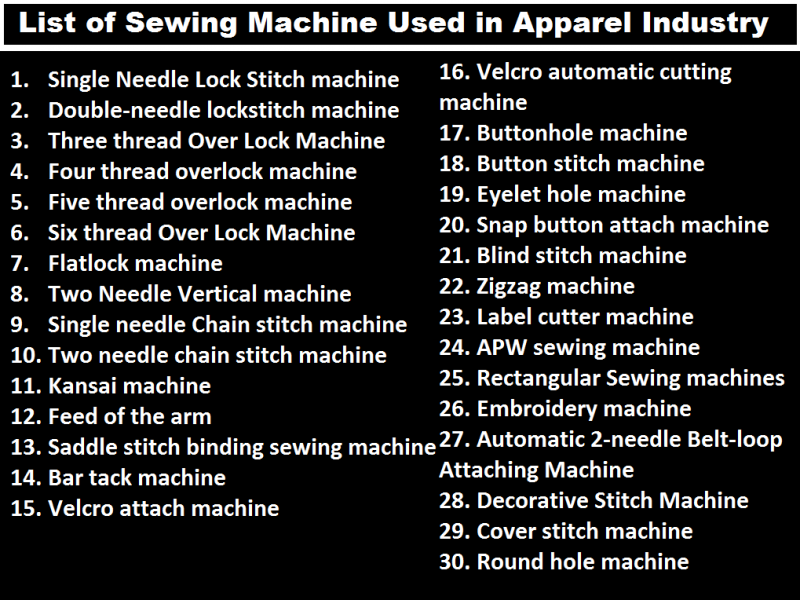
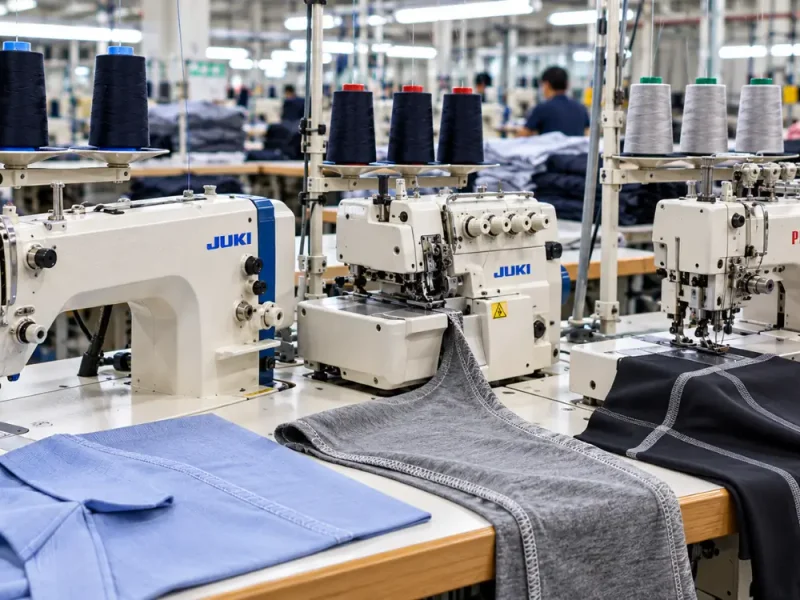
If you are not sure yet, you can start smaller. A blank mask machine with a separate ear loop welder lets you build the line in steps. You can also buy a used machine, but ask for a working test, spare parts availability and the age of the horn and generator. Another route is contract manufacturing, where an existing factory runs your design on its line while you build demand. For sewn cloth masks, standard sewing machines are enough. See our list of sewing machines used in the apparel industry for the options.
Final thoughts
Choosing a face mask manufacturing machine manufacturer is mostly about trust and proof. Ask for live videos, real output numbers, spare parts plans and the contact details of other buyers. Test your raw materials, check the rules in your market and work out a cautious payback before you commit. A good machine is a strong start, but steady sales, careful quality checks and good support keep the business running.
Frequently asked questions
It is a machine that takes layers of nonwoven fabric, adds a nose wire, welds the edges with ultrasonic energy, cuts the mask and attaches ear loops.
Check that they run a real factory, ask for videos of the exact model in use, get real output figures, review spare parts support and speak to other buyers.
A good flat-mask body machine may run at about 60 to 120 masks a minute at peak, but steady output over a shift is lower. Ask for the real number in writing.
Prices vary widely by speed, type and country. A semi-automatic setup costs far less than a full automatic N95 line. Get several written quotes.
No. You also need raw materials, trained staff, quality checks, packaging, a sales plan and, for medical masks, the right approvals.
Often yes, for medical masks and respirators. Rules differ by country, so check with your national regulator.
Usually three layers of polypropylene nonwoven: two spunbond layers and a meltblown filter in the middle.