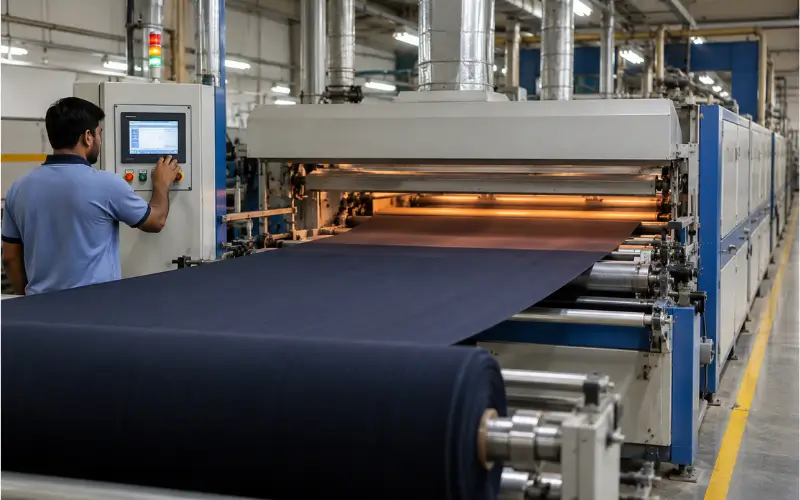
A used dyeing machine priced at a fraction of a new equivalent looks like an easy decision on a spreadsheet. Whether it actually is depends entirely on what a proper inspection turns up, and the gap between a genuinely good used machinery purchase and an expensive mistake usually comes down to how thoroughly that inspection was actually done, not luck.
Why Used Machinery Is a Legitimate Option
Used textile machinery, particularly for well-established technology like standard dyeing machines, stenters, and compactors where the core mechanical design hasn’t changed dramatically in recent years, can meaningfully reduce capital outlay for a mill managing growth carefully. The savings can be substantial compared to equivalent new machinery, which is exactly why used equipment remains a genuine, common part of the market rather than a last resort. The risk sits entirely in what condition the specific machine is actually in, which is why inspection discipline matters more here than in almost any other capital purchase decision.
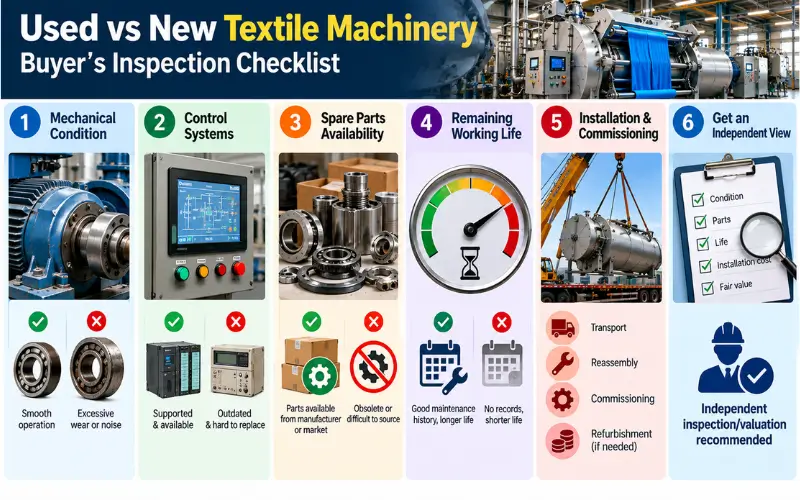
Mechanical Condition
Start with the machine’s core mechanical systems: motors, bearings, drive systems, and any moving mechanical components specific to the machine type. Listen for unusual noise during operation if a live demonstration is possible, check for excessive vibration, and inspect visible wear points for damage beyond what normal use over the machine’s age would suggest. Where the seller can’t or won’t provide a live operating demonstration, treat that reluctance itself as a meaningful signal worth pressing on, since a genuinely well-maintained machine in good working order is usually something a seller is happy to demonstrate.
Control Systems
Older machines, particularly those from earlier control system generations, can present a real compatibility problem beyond simple mechanical condition. Check whether the machine’s control system uses components and software still supported and available, or whether it relies on a discontinued control platform where a failure would mean sourcing an obsolete part or facing a costly control system retrofit to keep the machine running. This matters more for machines with more sophisticated process control, particularly dyeing machines with programmable process profiles, than for simpler mechanical equipment where control system obsolescence is less of a factor.
Spare Parts Availability
Before finalizing a used machinery purchase, confirm what spare parts are actually available for that specific model, and from where. A used machine from a manufacturer that’s exited the market entirely, or from a model generation the manufacturer no longer supports, carries meaningfully higher risk than a used machine from a currently active manufacturer still supporting that generation with parts. This connects directly to the same spare parts and service consideration covered in Garment Machinery guide for sewing machine brand selection, applied here to processing machinery: a machine that’s cheap to buy but expensive or impossible to keep running isn’t actually the bargain it looks like on the initial purchase price.
Remaining Working Life
Every machine has a realistic remaining working life, and estimating it honestly for a used purchase requires looking at actual hours or years in service, maintenance history if the seller can provide it, and the general condition indicators covered above, rather than relying on the seller’s stated age alone. A machine that’s technically ten years old but was run intensively across three shifts a day has a very different remaining working life than a machine of the same age that ran a single shift with a disciplined maintenance program behind it. Where possible, requesting maintenance records, and treating a seller’s inability or unwillingness to provide them as a meaningful gap in the information needed to price the purchase fairly.
Installation and Commissioning Cost
The machine’s purchase price isn’t the full cost of getting it running in your facility. Used machinery, particularly larger processing equipment like dyeing machines or stenters, often needs disassembly for transport, reassembly and recommissioning at the new site, and sometimes refurbishment of specific components identified as worn during inspection. Get a realistic estimate of these costs before finalizing a purchase decision, since a used machine that looks like a bargain on sticker price alone can end up costing close to a new equivalent once transport, reinstallation, and any needed refurbishment are fully accounted for.
Valuation: Getting an Independent View
For any large used machinery purchase, an independent valuation or inspection from a qualified third party, rather than relying solely on the seller’s representations or your own team’s assessment if they lack specific experience with that machine type, is worth the modest cost given what’s at stake in the purchase. This is particularly true for buyers newer to sourcing used processing machinery, where experience recognizing red flags during inspection genuinely differs from what a general mechanical background alone would catch.
Documenting the Purchase Decision Itself
Beyond inspecting the machine, it’s worth documenting the actual decision-making process behind a used machinery purchase, particularly for larger transactions. A simple record noting what was inspected, who inspected it, what condition issues were identified and how they were priced into the final offer, and what warranty or return terms, if any, were negotiated with the seller protects the buying factory if a dispute or unexpected issue arises after the purchase. This is especially relevant for private-party used machinery transactions, which typically carry far less formal protection than a new machinery purchase from an established distributor with a defined warranty policy. A factory that treats a used machinery purchase with the same documentation discipline it would apply to a new equipment contract, rather than a more casual handshake transaction, is better positioned if a condition or performance dispute emerges once the machine is actually running in production.
Reconditioned Machinery: A Middle Option
Reconditioned machinery, sold through a dealer who has already inspected, repaired, and in some cases upgraded components on a used machine before resale, sits between a private used sale and buying new. This generally carries a price premium over an equivalent private used sale but reduces the buyer’s own inspection burden and risk, since a reputable reconditioning dealer has effectively already done much of the diligence work covered above. The trade-off is verifying the reconditioning dealer’s own reputation and the specific scope of what was actually reconditioned, since “reconditioned” isn’t a standardized term and can mean anything from a full mechanical overhaul to a basic cleaning and cosmetic refresh depending on the specific dealer’s practices.
A Practical Inspection Checklist
Before finalizing any used textile machinery purchase, confirm a handful of things. Mechanical condition through direct inspection and, where possible, a live operating demonstration. Control system compatibility with currently available and supported components. Actual spare parts availability from the manufacturer or a reliable third-party source. A realistic estimate of remaining working life based on actual usage history rather than stated age alone. Full installation, transport, and recommissioning cost at the destination site. And, for any purchase large enough to justify the cost, an independent valuation from a qualified third party unfamiliar to the seller.
A Worked Used-Versus-New Comparison
Consider a used dyeing machine offered at an illustrative $70,000, against a new equivalent quoted at $180,000. On sticker price alone, the used machine looks like a strong deal at 39 percent of new cost. Say inspection and a realistic assessment suggest the used machine has roughly 6 remaining years of working life against a new machine’s expected 15 years, and the used machine, given its older control system and a thinner spare parts network for that specific model generation, is expected to run $8,000 a year in maintenance and parts cost against $3,000 a year for the new machine. Add an illustrative $12,000 in transport, reassembly, and recommissioning cost for the used machine, against $4,000 in standard installation cost for the new one.
Used machine total cost of ownership: $70,000 + $12,000 (installation) + ($8,000 × 6 years) = $70,000 + $12,000 + $48,000 = $130,000 over 6 years, or about $21,667 per year.
New machine total cost of ownership: $180,000 + $4,000 (installation) + ($3,000 × 15 years) = $180,000 + $4,000 + $45,000 = $229,000 over 15 years, or about $15,267 per year.
On an annualized basis, the new machine actually costs less per year of service than the used one in this illustration, despite its much higher upfront price, purely because of the used machine’s shorter remaining life and higher ongoing maintenance cost. This doesn’t mean used machinery is always the worse financial choice, a mill with a tight capital budget and a genuine near-term need might still reasonably choose the used machine despite its higher annualized cost, simply because $70,000 is available now and $180,000 isn’t. But it does mean the sticker price comparison alone was actively misleading about which option is cheaper over time, which is exactly the same lesson the sewing machine brand comparison article in our Garment Machinery guide draws from a very similar calculation.
Weighing the Full Picture
None of this is meant to discourage used machinery purchases, which remain a genuinely sound capital strategy for many mills when done with proper diligence. The point is that the attractive headline price difference between used and new machinery only tells part of the story, and a used machine purchased without working through the checklist above carries real risk of turning that apparent savings into a more expensive problem than buying new would have been in the first place.
A Final Note on Buyer Perception
It’s worth adding one consideration beyond pure cost and mechanical condition: some buyers auditing a factory’s production capability form impressions based partly on visible machine age and condition, even when a well-maintained used machine performs identically to a newer equivalent. For factories serving buyers who place explicit weight on equipment modernity as part of their supplier assessment, a mixed fleet weighted more heavily toward newer or reconditioned equipment on customer-visible parts of the operation may carry a commercial value beyond the pure production economics this article has focused on, worth factoring into the purchasing decision alongside the technical and financial considerations covered throughout.
Frequently Asked Questions
Is used textile machinery actually a good investment?
It can be, particularly for well-established technology, but only with proper diligence. The worked comparison in this article shows a used machine can sometimes cost more per year of service than a new one once realistic maintenance cost and remaining working life are factored in.
What’s the biggest risk in buying used processing machinery?
Control system obsolescence and thin spare parts availability for older machine generations, since a cheap machine that’s expensive or impossible to keep running isn’t actually the bargain it looks like on purchase price alone.
Should I get an independent inspection before buying used machinery?
For any large purchase, yes. An independent valuation from a qualified third party catches red flags that a general mechanical background or the seller’s own representations might miss.
What’s the difference between buying used privately and buying reconditioned?
Reconditioned machinery, sold through a dealer who has already inspected and repaired it, carries a price premium over a private used sale but reduces the buyer’s own inspection burden and risk.