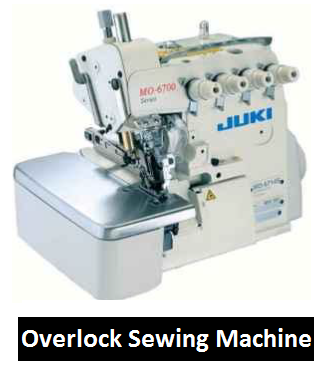
The types of sewing thread can be grouped in three ways: by the fibre they are made from, by how the thread is built and by what it is used for. Cotton, polyester, nylon and blends are the common fibres. Spun, core spun, filament, textured and monofilament are the common builds. A shirt seam, a jeans topstitch, an overlocked knit edge and a buttonhole all want a different thread, and the wrong choice shows up as broken thread, puckered seams, weak seams or a seam that looks poor after washing.
This guide explains each main type of sewing thread, where it is used, what its strengths and weak points are and how to choose between them. It also covers thread finishes, ply and twist, how thread links to the needle and the machine and the common thread problems on the line. It is written for merchandisers, sewing supervisors, mechanics, quality staff and students.
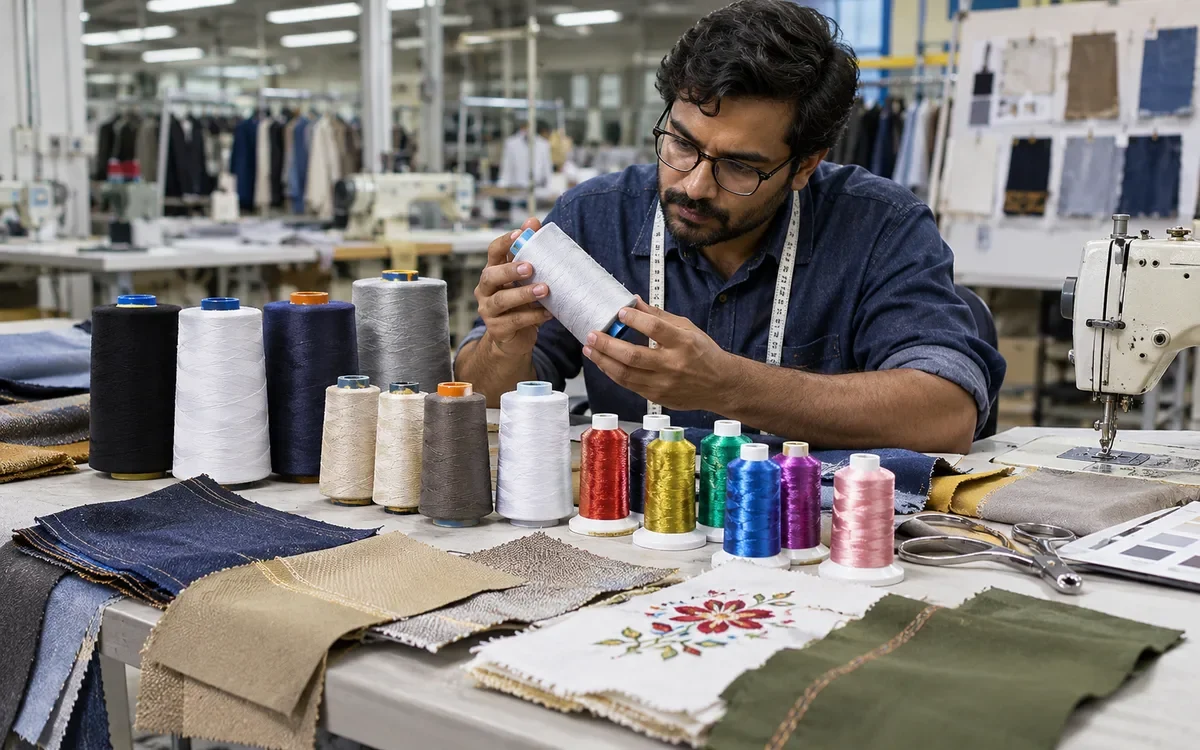
Why the type of thread matters
A seam is only as good as the thread in it. The thread must pass through the machine at speed without breaking, form a balanced stitch, hold the seam under stress and survive washing, ironing and wear. It must also match the fabric in colour and, in many cases, in fibre and care. A thread that suits one fabric may be a poor choice for another.
Thread is also a cost item and a source of claims. Thread consumption is a real part of garment cost, as described in the guide to how to calculate sewing thread consumption per garment. A wrong thread can cause seam failures, shade mismatch and breakage that slow the line.
Types of sewing thread by fibre
Cotton thread
Cotton thread is made from cotton fibres. It sews smoothly, handles heat well and has a soft, natural look. Many cotton threads are mercerised, which is a treatment that adds strength, shine and better dye take up.
- Strengths: Good heat resistance in pressing, soft hand, good for natural fibre fabrics, and a classic look on shirts and traditional garments.
- Weak points: Lower strength than polyester or nylon at the same size, less abrasion resistance, can shrink, and can rot if stored damp.
- Common uses: Cotton shirts, light woven fabrics, quilting, some denim topstitching, garments where the buyer asks for all natural content.
Polyester thread
Polyester is the most widely used sewing thread in the industry. It is strong, resists abrasion and chemicals and keeps its shape through washing.
- Strengths: High strength, good colour fastness, low shrinkage, good for high speed machines and for most fabrics.
- Weak points: Can soften or melt under very hot irons or high needle heat, and may be less pleasant in some applications that need a natural look.
- Common uses: Almost every garment type, such as T-shirts, shirts, trousers, jackets, uniforms and activewear.
Polyester thread comes in several builds, described below.
Nylon thread
Nylon thread is strong and elastic, with high abrasion resistance. Bonded nylon is used for heavy duty sewing. Fine nylon is used for stretch seams and for hidden stitching.
- Strengths: Very high strength, good stretch, good abrasion resistance.
- Weak points: Sensitive to sunlight, can be stiff when bonded, and may melt under high heat. Nylon thread can also be noisy and can yellow with age.
- Common uses: Heavy fabric, bags, leather, upholstery, outdoor gear, some lingerie and swimwear, and monofilament for invisible stitching.
Cotton wrapped polyester, or core spun thread
This thread has a polyester filament core wrapped in cotton or spun polyester fibres. The core gives strength, and the cover gives heat resistance and a spun look.
- Strengths: Strong, good heat resistance in pressing, good sewing performance at speed, and a cotton like surface.
- Weak points: More costly than plain spun polyester, and a cotton cover can shrink or fade slightly.
- Common uses: Garments sewn at high speed that need a natural look and strong seams, such as shirts, jeans, trousers and work wear.
Rayon or viscose thread
Rayon thread has a smooth, high shine and is used for decoration.
- Strengths: Rich colours and high gloss.
- Weak points: Lower strength and abrasion resistance, and it may lose colour in strong bleach.
- Common uses: Embroidery and decorative stitching. See the guide to embroidery thread types for machine embroidery for more.
Silk thread
Silk thread is strong for its fineness, with a natural shine.
- Strengths: Fine, smooth, strong and good for delicate fabric.
- Weak points: High cost, and sensitivity to light and moisture.
- Common uses: High end tailoring, silk fabric, hand work and fine garments.
Aramid and other high performance thread
Fibres such as aramid are used for flame resistant garments and for protective wear. They resist heat and have high strength.
- Strengths: High heat resistance, high strength.
- Weak points: Costly, with special handling needs.
- Common uses: Fire resistant uniforms, protective clothing and some technical garments.
Types of sewing thread by construction
The way the fibres are turned into a thread changes how it behaves.
Spun thread
Spun thread is made from short fibres, called staple fibres, that are twisted together. The thread has a slightly hairy surface, like a yarn.
- Strengths: A soft, natural look, good grip in the stitch, and generally low cost.
- Weak points: Lint, lower strength than filament of the same size and fuzz that can shed in the machine.
- Common uses: General sewing, cotton and spun polyester, wide use in shirts, trousers and everyday garments.
Filament thread
Filament thread is made of one or more continuous strands of long fibre, twisted together. The surface is smooth.
- Strengths: High strength, low lint and a smooth, shiny surface.
- Weak points: Slippery, can be stiff or wiry and sometimes harder to keep in a balanced stitch.
- Common uses: Overlock seams on smooth fabrics, buttonholes, decorative work, and fabrics where lint is a problem.
Textured or bulked thread
Textured thread is filament that is processed so the fibres curl and bulk up. It is soft, stretchy and covers the seam edge well.
- Strengths: Good stretch and recovery, a soft hand and good coverage. It is a standard choice for overlock loopers and for stretch seams.
- Weak points: Lower tensile strength than standard filament at the same size, and unsuitable for the needle in many cases because it can snag.
- Common uses: Overlock and flatlock stitching in knits, sportswear, underwear and swimwear. See the guides to overlock sewing machine types and adjustment and flatlock machine uses.
Core spun thread
A core spun thread has a continuous filament core wrapped by staple fibre. It combines the strength of filament with the look and heat behaviour of spun thread, as mentioned above.
Monofilament thread
Monofilament thread is a single, clear or smoke coloured strand, usually of nylon or polyester.
- Strengths: Almost invisible, and useful where thread colour cannot be matched.
- Weak points: Stiff, can scratch the skin, and may be hard to keep in good tension.
- Common uses: Blind hems, some decorative work and sewing on multi coloured fabric. It is not suited to the inside of garments that touch skin.
Bonded thread
Bonded thread is coated with a resin that holds the plies together and makes the surface smooth and abrasion resistant.
- Strengths: Strong and resists fraying, and runs well on heavy machines.
- Weak points: Stiff and harder to use on light fabrics.
- Common uses: Heavy fabrics, bags, leather, shoes and upholstery.
Ply and twist
Most sewing thread is made of several single yarns twisted together. The number of plies affects strength and smoothness.
- 2 ply: Used for fine work and some stretch seams.
- 3 ply: A common choice for general sewing, with a good balance of strength and smoothness.
- 4 ply or more: Used for heavier work.
The direction of twist matters for the machine. Most industrial sewing machines are set up for a standard twist direction, and a thread twisted the wrong way can unravel as it passes through the needle. Always use thread made for the machine, as the maker advises.
Thread size and the needle
Thread size is given by a number, such as a tex or a ticket number, and a bigger tex means a thicker thread. Size and the matching needle are linked. A thread that is too thick for the needle eye frays and breaks, and a thread that is too thin makes a weak seam. The guide to sewing thread size, tex and ticket number explains the numbers, and the guide to sewing needle parts, size and point selection shows how to match the needle.
Thread finishes
Thread may be given a finish to improve how it sews.
- Mercerised: Treated with a caustic solution that gives cotton thread more strength, shine and dye take up.
- Gassed: Passed through a flame to burn off loose fibres, which gives a smoother surface.
- Glazed or waxed: Coated for stiffness and smooth running, used in some heavy or hand sewing.
- Soft finish or lubricant: A silicone or similar finish that reduces friction and heat at the needle. It helps in high speed sewing. Too much lubricant can stain fabric, so use only what the thread maker supplies. See the guide to oil stains in garments if you see marks along seams.
- Bonded: Coated to hold the strands together.
Thread types and their typical uses
| Thread type | Fibre | Build | Typical use |
|---|---|---|---|
| Spun polyester | Polyester | Spun | General sewing in woven and knit garments |
| Core spun | Polyester core, cotton or polyester cover | Core spun | Shirts, jeans, trousers at high speed |
| Cotton, mercerised | Cotton | Spun | Natural fibre garments, shirts, quilting |
| Filament polyester | Polyester | Continuous filament | Smooth seams, buttonholes, fabrics where lint is a problem |
| Textured polyester | Polyester | Textured filament | Overlock and flatlock in knits and stretch wear |
| Nylon, bonded | Nylon | Bonded filament | Heavy duty sewing, bags, leather |
| Monofilament | Nylon or polyester | Single strand | Blind hems, invisible stitching |
| Rayon | Viscose | Filament or spun | Embroidery and decoration |
| Aramid | Aramid | Spun or filament | Flame resistant garments |
How to choose the right thread
Look at these points together. No single point decides the answer.
- Fabric. Match the thread to the fabric weight, fibre and stretch. A light knit needs a fine, soft, stretchy thread, while a heavy denim needs a thicker, stronger one.
- Seam and stitch type. Overlock loopers often use textured thread. Lockstitch seams often use spun or core spun thread. Flatlock and cover stitch seams need stretch. See the guide to lockstitch vs overlock vs flatlock and the guide to types of stitches used in garments.
- Garment use. Sportswear needs stretch and strength. Workwear needs strength and abrasion resistance. Baby wear needs soft thread. Protective gear may need heat resistance.
- Care and finishing. Check the care label. Hot washing, bleaching and heavy pressing need thread that can take it. The wash and the colour fastness of thread should be at least as good as the fabric. See the guide to colour fastness tests.
- Machine and speed. High speed machines need smooth thread with good lubrication. A thread that runs well at low speed may break at high speed.
- Strength and seam performance. The seam should hold under use. Thread strength is part of seam strength. See the guide to seam strength and seam slippage testing.
- Shrinkage. A thread that shrinks more than the fabric can cause puckering. Pre shrunk or low shrink thread is preferred where this is a risk. See the guide to seam puckering in garments.
- Colour and shade. The thread colour must match the approved shade. Check under the right light. See the guide to the light box for colour matching.
- Buyer requirements. Many buyers name the thread type, size and sometimes the maker in the specification or the trim card. See the guide to the trim card in the garment industry.
- Cost. Compare the cost per metre and the cost per garment, together with the cost of breakage and rework, and not only the price per cone.
Common thread problems
| Problem | Likely cause | What to check |
|---|---|---|
| Frequent thread breaks | Thread too weak or too thick for the needle, rough thread path, high speed, poor thread | Thread size, needle, thread guides, tension. See thread breakage in sewing |
| Skipped stitches | Needle and thread mismatch, poor setting | Needle type and size, timing. See skipped stitches in sewing |
| Puckered seams | Thread too thick or too tight, thread shrinkage | Thread size, tension, thread shrinkage |
| Lint build up | Spun thread, poor quality thread | Clean machine, consider core spun or filament thread |
| Weak seams | Thread too fine or weak | Thread size and fibre, seam strength test |
| Colour mismatch | Wrong shade, dye lot difference | Shade card, light box check, lot control |
| Melted thread | Needle heat with polyester at high speed | Slow the machine, use a lubricated thread or a needle cooler |
| Thread colour bleeding in wash | Poor dye fastness | Colour fastness test of the thread |
| Uneven stitches | Tension problem, poor winding, poor bobbin | See sewing machine thread tension |
Handling and storage
- Store thread in a cool, dry place, away from direct sunlight and heat.
- Keep thread in its packing until use, to avoid dust.
- Rotate stock, so older cones are used first, because thread can age.
- Keep each dye lot together. Record the lot on the issue slip.
- Do not use thread that is damp, dusty or damaged.
- Use the right cone holder and guide, so the thread unwinds smoothly.
Tips for merchandisers
- Write the thread type, size, colour and maker on the trim card for every style.
- Ask the buyer for the thread requirement early, because some buyers have approved lists.
- Order thread by colour and lot with some allowance, based on a consumption calculation.
- Check each new lot against the shade card.
- Share any thread change with the line, the mechanic and the quality team before bulk.
- Keep a thread record for each style, so repeat orders use the same thread.
Final thoughts
The types of sewing thread cover several fibres, builds and finishes. Polyester is the most common because it is strong and easy to run. Cotton gives a natural look and good heat resistance. Nylon is strong and stretchy, while core spun thread combines strength with a cotton like surface. Spun, filament, textured, monofilament and bonded builds each have a place, and the right choice depends on the fabric, the seam, the end use, the machine and the buyer’s rule.
Match the thread to the fabric and the stitch, check size against the needle, test colour and strength, store the thread well and record the choice on the trim card. A small difference in thread can mean the difference between a smooth line and a line stopped by breakage.
Frequently asked questions
The main fibre types are cotton, polyester, nylon and blends such as core spun thread. The main builds are spun, filament, textured, monofilament and bonded thread.
Polyester and core spun polyester are the most widely used, because they are strong and run well. The best choice depends on the fabric, the seam and the buyer’s requirements.
It is a thread with a continuous filament core, usually polyester, wrapped in cotton or spun polyester fibres. It gives strength and a spun look, with good heat resistance.
Textured polyester is common for loopers because it is soft, stretchy and covers the edge. Spun polyester is often used in the needle.
Spun thread is made of short fibres twisted together and has a slightly fuzzy surface. Filament thread is made of continuous strands and is smooth and strong with low lint.
Yes, but a polyester or core spun thread is often preferred because it matches the fabric’s strength and shrinkage better. Check the buyer’s requirement and test a sample.
Match it to the fabric weight and the needle, and follow the stitch type. Use the thread maker’s chart and check with a test seam.