A trim card in garments is a board or sheet that holds a real sample of every trim used on a style, with a written description beside each one. Buttons, zips, labels, drawcords, elastic, thread, hang tags, poly bags and the rest are all attached or listed in one place. When a buyer approves the card, the factory has a physical record of exactly what was agreed. When a store keeper, a line checker or a packer has a question, they look at the card, not at an email from three weeks ago.
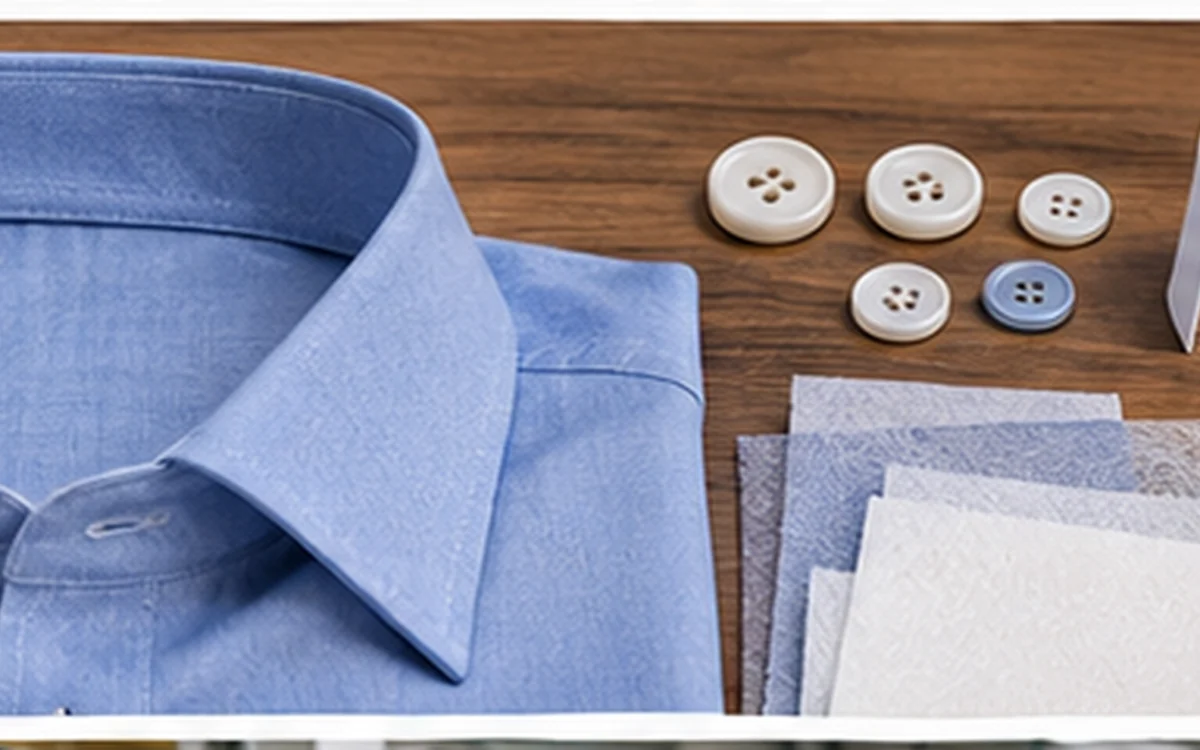
This guide explains what the card is, what to put on it, a layout you can copy, how it moves from the merchandiser to the floor and how to keep it current. It also covers the mistakes that lead to wrong buttons on a full shipment.
What a trim card is
The card is a reference document made by the merchandiser. It lists the trims for one style and one colour, or one colour group, and shows each one in person. Some factories call it a trim board, an accessories card or a trim swatch card.
It is different from three related documents.
- The bill of materials lists every material and its quantity, usually in a table, with the costs. See our guide to the bill of materials in garments. The trim card shows the trims themselves.
- The tech pack and spec sheet describe the garment and its construction, as in the tech pack for clothing and the garment spec sheet. The trim card focuses on trims.
- The fabric swatch card holds fabric samples and colour approvals. It is often kept next to the trim card.
For a list of the trim types themselves, see our article on trimmings and accessories used in garments.
Why the trim card matters
- It records the buyer’s approval. A signed and dated card is proof of what was approved, in case of dispute.
- It prevents wrong trims. Buttons that look similar but differ in size or shade are a common cause of rejection. The card shows the right one.
- It helps incoming inspection. The store or quality team compares delivered trims against the card. See trims and accessories inspection in the apparel industry.
- It guides the line. Operators and checkers see which trim goes where.
- It supports packing. Packing staff compare hang tags, labels, polybags and cartons with the approved samples.
- It saves time in handover. A new merchandiser, a buying house technician or an auditor can see the whole trim set at once.
What goes on a trim card
Each trim has a small sample attached, and a written line with the details. The common fields are:
| Field | What to write |
|---|---|
| Item number | A running number on the card, matching the BOM |
| Trim name | Button, zipper, main label, care label, drawcord and so on |
| Description | Material, size, shape, finish and type |
| Colour | Colour name and code, such as a Pantone reference, and the colour of the garment it goes with |
| Supplier | Name and contact, and the supplier’s item code |
| Placement | Where it goes on the garment, with a short note or sketch |
| Consumption | Quantity per garment, and unit |
| Wastage | Allowance for loss, in percent |
| Artwork or text | For labels and tags, the artwork file name and version |
| Test or compliance notes | Any test report or restriction the buyer needs |
| Approval status | Pending, approved, rejected, or approved with comments |
| Approval date and signature | Who approved and when |
| Remarks | Special points, such as “match to the fabric in daylight” |
At the top of the card, add the buyer, style number, season, order number, colour and the card’s version and date.
Examples of trims on a card
A card for a men’s shirt might hold:
- Main body buttons and a spare button
- Collar stays
- Interlining swatch for collar and cuff. See our guide to types of interlining in garments.
- Sewing thread for body and buttonholes
- Main label, size label and care label. See our article on care labels and wash symbols.
- Hang tag and price tag, with string or pin
- Poly bag, tissue paper, collar support and clips
- Carton marking sample, and the barcode sticker
For trousers add the zipper, the waistband elastic or tape, rivets, hooks and belt loops.
Types of trim cards
A style may have more than one card during its life.
- Development or sample card. Made at the sample stage, shows trims proposed or used in the sample.
- Approval card. Sent to the buyer for sign off before bulk trims are ordered.
- Production or bulk card. The final approved version, used for ordering, checking and packing. It may carry the approved bulk trim samples, not only the sample stage ones.
Label each card clearly, so no one uses an old version for bulk.
How to make a trim card
- Start from the BOM and the tech pack. List every trim for the style.
- Collect samples from suppliers, or from the buyer’s trim library. Ask for enough pieces to make the required number of cards.
- Match to the garment. Check colour against the fabric under the right light. Check size and fit with the real garment sample.
- Prepare the card. Use a stiff card or board. Attach each trim with a staple, tape or a tag that does not damage it. Use a consistent layout.
- Write the details. Fill in each field, including supplier code and consumption.
- Check against the BOM. Every trim in the BOM should be on the card, and the reverse.
- Send for approval. Send one set to the buyer or their agent. Keep a copy.
- Record the response. Mark approved, rejected or with comments, with the date and name.
- Make working copies. After final approval, make several cards for use in the factory.
Who gets a copy
The factory uses the card in many places. A common distribution is:
| Department | Use |
|---|---|
| Merchandising | Master copy and the buyer’s approved copy |
| Sourcing and purchase | To order the right trims from the supplier |
| Store | To check incoming trims and issue the right ones |
| Quality control | To check incoming trims and trims on garments |
| Sewing line | To check the right trim is used and where |
| Finishing and packing | To check labels, tags, bags and cartons |
| Final inspection | To compare finished garments and packing |
Mark the master copy clearly, so that the working copies do not get mixed with it.
Using the card on the floor
- At receipt. The store compares each delivered trim with the card for size, colour, finish and quantity. Anything different is held until the merchandiser decides.
- At issue. The right trims go to the right line, in the right quantity, for the right style and colour.
- In sewing. The line checker looks at trims on the first garments against the card, and again at intervals.
- In packing. Packers check hang tags, labels, bags and cartons against the card before packing starts.
- At final inspection. The inspector compares trims on the finished garment, and the packing, with the card. The garment inspection checklist and the garments quality inspection guide include trims checks.
Keeping the card up to date
A card is only useful if it matches the current order.
- Add a version number and date to every card.
- When a trim changes, make a new card, mark the old one as superseded, and collect all old copies from the floor.
- Keep a log of changes, with who approved each one.
- Record the buyer’s comments on the card itself.
- Store the master in a safe place, and scan a copy so there is a digital record.
Changes often happen near the end of an order. A button is out of stock, a supplier cannot make the exact colour, or the buyer changes a label. Without a clear update process, the factory ends up with some garments using the old trim and some the new.
Trim card and the time and action calendar
Trim approval is a key step in the time and action calendar. Trims often have a longer lead time than fabric, especially custom items like branded buttons, woven labels and printed packaging. Late approval of the trim card delays ordering, which delays production and shipment.
Set a date in the calendar for trim card submission, a date for the buyer’s reply, and a date by which all trims must be in the factory. Follow up if the buyer is late.
Trim card and cost
The card also connects to cost. Each trim has a unit price and a consumption, and the BOM turns these into cost per garment. Trims can be a large part of the cost of a garment with many parts. See our costing sheet of garments manufacturing and the list of trims and accessories with price for how this flows through.
If the buyer approves a different trim from the one costed, tell the buyer and your costing team at once, because the price may need to change.
Common mistakes with trim cards
- No approval before ordering. Trims bought on a verbal okay have a way of being disputed later.
- An unclear sample. A small, worn or incomplete sample does not show the real trim.
- Missing details. Without size, colour code and supplier code, the card cannot be matched to the order.
- Old versions in use. The floor uses a card that was replaced weeks ago.
- Card not matching the BOM. A trim appears on one document and not the other.
- Colour judged under poor light. Shade differences hide under factory lights.
- No spare trims. Extra samples are needed for the card copies, the store and the buyer.
- No link to packing. Packaging trims are forgotten, so packing starts with the wrong bags or labels.
A short checklist before sending a trim card to the buyer
- Is every trim in the BOM on the card?
- Is each sample clean, complete and correctly attached?
- Are descriptions, colours, sizes and supplier codes filled in?
- Are placements shown?
- Are consumption and wastage written?
- Is artwork shown for labels and tags, with the version?
- Are any test or compliance notes included?
- Does the card show the version, date and style information?
- Is there a copy for your own file?
Final thoughts
A trim card in garments gives the buyer, the merchandiser and the floor a shared picture of what goes onto the garment. It lists each trim with a real sample, the details, the placement, the consumption and the approval. Used well, it prevents wrong buttons, wrong labels and arguments over what was agreed.
Keep it simple. One card per style and colour, every trim from the BOM on it, a clear version and date, and signed approval before ordering. Then make sure the store, the line and the packing team all work from the same current copy.
Frequently asked questions
It is a card or board with a sample of every trim used on a style, plus written details such as description, colour, supplier, placement and consumption. It is a reference for ordering, checking and approval.
The BOM lists materials and quantities, usually in a table with costs. The trim card shows the actual trim samples and details. They should match each other.
The buyer or the buyer’s representative. The signed and dated approval is the proof of what was agreed.
Samples of each trim, with item number, name, description, colour, supplier, placement, consumption, wastage, artwork for labels and tags, approval status and date.
Trims change during an order. A version number and date help the store, line and packing use the current card and not an old one.
No. A swatch card holds fabric samples. A trim card holds trims such as buttons, zippers, labels and packaging. Factories often keep both for a style.
One master, one for the buyer, and working copies for the store, quality, line and packing, as needed. The number depends on the size of the factory.