Walk into a jeans shop and you will hear words like raw, selvedge, stretch, comfort and slub. They all describe denim, but each one points to something different about the cloth. Some words describe how the fabric is woven. Some describe what is in the yarn. Others describe how the fabric or garment was washed. If you buy, sell or make jeans, knowing the types of denim fabric helps you ask for the right thing and avoid expensive mistakes.
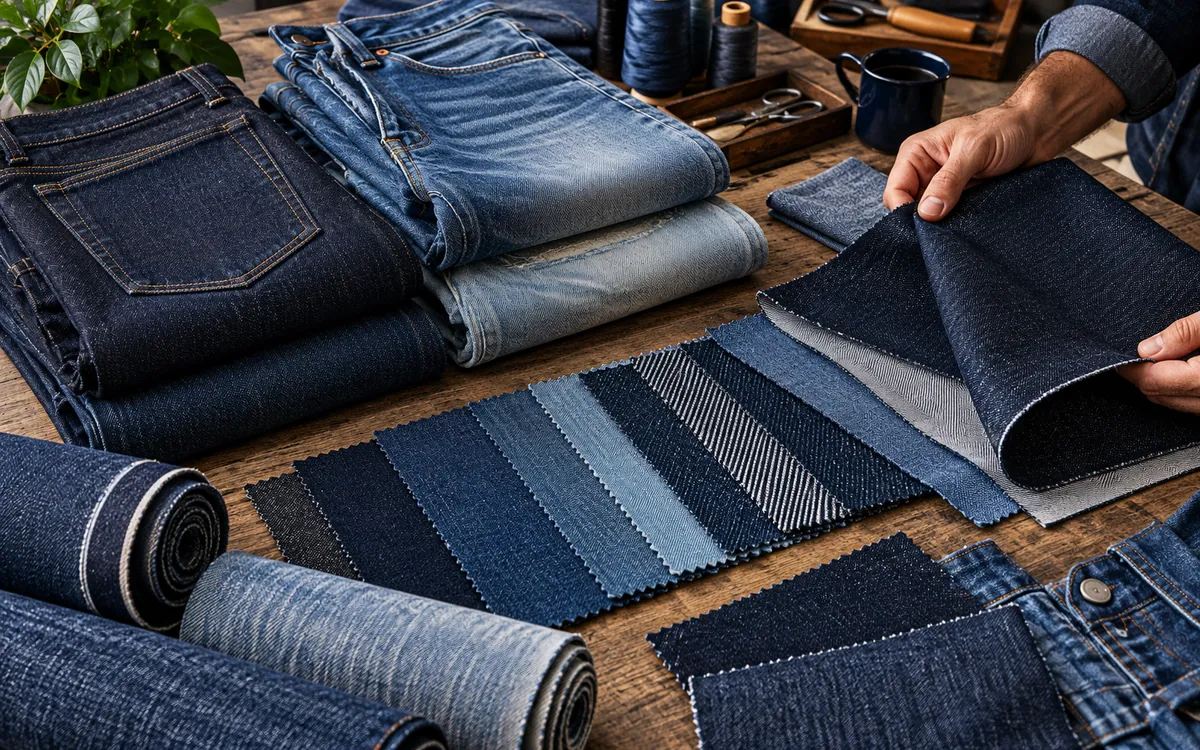
This guide explains the main types of denim fabric by weave, by weight, by fiber, by finish and by look. It also gives a quick buying guide. If you are new to the fabric itself, start with our explainer on what is denim and the list of features of denim fabric.
What makes denim, denim
Denim is a sturdy cotton twill fabric. In the classic form, the warp yarns (the lengthwise ones) are dyed with indigo, and the weft yarns (the crosswise ones) are left white or undyed. The fabric is woven in a twill pattern, typically a 3/1 right-hand twill, where the weft goes under three warp yarns, then over one. This puts mostly indigo warp on the face and mostly white weft on the back. That is why the outside of jeans is blue and the inside is lighter. To see how the fabric is made, read our guide on how denim fabric is made.
Modern denim has many variations. The term now covers fabrics with different fibers, weaves and colors that share the same look and strength.
Types of denim by weave and edge
Selvedge denim
Selvedge denim has a clean, self-finished edge that does not fray. The word comes from “self edge”. It is woven on older shuttle looms, which pass a single weft yarn back and forth across the warp, so the edge loops back on itself. Selvedge denim is narrower, often around 80 cm (about 30 to 32 inches) wide, because shuttle looms are narrow. You will often see a colored line, called the selvedge ID, along the inside seam of jeans.
Selvedge is not a measure of quality by itself, but it often goes with heavier fabric and slower weaving. It costs more and is popular with denim enthusiasts.
Non-selvedge (open-end edge) denim
Modern wide looms, such as projectile and rapier looms, insert the weft yarn from one side, then cut it, leaving a raw edge that needs sewing. This denim is wider, often 150 cm (about 60 inches), and cheaper to make. Most jeans on the market use this type. To learn more about looms, see our guide on the parts of a loom.
Types of denim by treatment
Raw (dry) denim
Raw or dry denim has not been washed after weaving, apart from sizing removal in some cases. It is dark, stiff and often unwashed after sewing too. People wear it for months without washing so that it fades in a pattern that follows their body. Raw denim may shrink on the first wash if it was not pre-shrunk, so check the label.
Rigid denim
Rigid denim is made from 100 percent cotton, with no elastane. It does not stretch, so it holds its shape and feels firm. Raw denim is nearly always rigid. Rigid denim is hard-wearing and ages well, but it is less comfortable at first.
Washed denim
Washed denim has been treated after sewing to soften it and change its look. Common treatments include:
- Stone wash: Garments are tumbled with pumice stones, which scratch the surface and fade the color.
- Enzyme wash: Enzymes break down cotton fibers slightly, giving a soft feel and subtle fading.
- Acid wash: Stones soaked in chemicals create a high-contrast, mottled look.
- Bleach wash: Bleach lightens the color.
- Sand blasting and laser: Used to create worn patterns on the surface.
Our guide on the denim washing process explains the steps in a factory, and our article on sustainable denim looks at lower-impact options.
Pre-washed and sanforized denim
Pre-washed denim has been laundered before sale, so it shrinks little. Sanforized denim has been treated to pre-shrink it in the mill. Most jeans sold today are sanforized. Unsanforized or shrink-to-fit denim is sold on purpose for people who want a custom fit.
Overdyed and colored denim
Overdyed denim is dyed again after weaving, in a color such as black, grey, olive or red. Colored denim uses different dyes. These fabrics are usually softer and may fade differently from classic indigo.
Coated denim
Coated denim has a thin layer of polyurethane or wax applied to the surface. It can look like leather or have a glossy finish. It is used for fashion jeans and jackets.
Types of denim by fiber
100 percent cotton denim
The classic. It is breathable, strong and ages well. It does not stretch much.
Stretch denim
Stretch denim has a stretch fiber, usually elastane (also known as spandex or Lycra), blended with cotton in the weft or both directions. Many comfort stretch jeans have a small share of elastane, often around 1 to 3 percent. Higher shares give more stretch and more recovery. Stretch denim is soft and comfortable, but it can wear out faster at stress points and may lose shape if washed hot.
Stretch is described in different ways.
| Type | Stretch direction | Typical use |
|---|---|---|
| Comfort stretch | Weft (across) | Most jeans |
| Bi-stretch | Weft and warp | Skinny jeans, leggings style |
| Power stretch | High in weft | Jeggings, tight fit |
| Rigid | None | Classic jeans |
Cotton blends
Denim can blend cotton with polyester for strength and shape holding, with viscose or Tencel for softness and drape, with linen for a summer feel or with hemp for a natural look. These fabrics are lighter and can feel silky.
Recycled and organic cotton denim
Some denim is made from recycled cotton or organic cotton. These help brands meet sustainability goals. Recycled cotton fibers are shorter, so mills often blend them with virgin fibers to keep strength.
Types of denim by weight
Denim weight is measured in ounces per square yard (oz). Heavier denim is thicker and more durable but less comfortable in heat. The ranges below are common but not fixed, and different mills draw the lines in different places.
| Weight class | Approx. weight (oz) | Feel and use |
|---|---|---|
| Light | Under about 10 | Shirts, dresses, summer jeans |
| Medium | About 10 to 14 | Everyday jeans |
| Heavy | About 14 to 18 | Workwear, raw jeans |
| Extra heavy | Over about 18 | Durable work denim |
To convert to grams per square meter (GSM), multiply the ounces by 33.9. So a 12 oz denim is about 407 GSM. For example, 12 × 33.9 = 406.8.
Types of denim by look and texture
- Slub denim: Made with yarns that have thick and thin spots on purpose. It creates an uneven, vintage texture.
- Ring-ring denim: Uses ring-spun yarns in both warp and weft. It has a smoother, finer look.
- Crosshatch denim: Slub yarn in the weft gives a crosshatch pattern.
- Jacquard denim: Woven with a pattern in the fabric using a jacquard loom.
- Bull denim: A heavy, stiff twill cotton that is not always indigo.
- Chambray: A lightweight, plain weave fabric with a denim-like color. It is not true denim, because it is not a twill.
- Sulfur black denim: Dyed with sulfur dye to a deep black, often with a dull finish.
- Japanese denim: A style of denim from Japan, known for fine yarns and traditional dyeing, often woven on old shuttle looms.
- Reflective or printed denim: Printed with special effects.
How to choose
| If you want | Pick |
|---|---|
| A traditional, long-lasting jean that fades beautifully | Raw or rigid selvedge denim |
| An everyday comfortable pair | Comfort stretch, medium weight |
| A skinny or very fitted style | Bi-stretch or power stretch |
| A soft summer jean | Light weight, cotton blend with viscose or Tencel |
| A rugged work garment | Heavy rigid denim |
| A black pair that stays black | Sulfur black or overdyed denim |
| A low-impact option | Organic, recycled or low-water treated denim |
Which denim for which garment
Garments need different denim. Jeans for daily wear use medium weight, often with a little stretch. Jackets and workwear use heavier, rigid denim because they take more abrasion. Shirts and dresses use light denim or chambray for drape. Skirts and shorts can use either, depending on the season. Children’s denim is usually softer and stretchier, with tested dyes and trims. Bags and aprons use heavy, firm denim that keeps its shape. If you design a product, write the weight, the fiber content and the finish in the tech pack so the mill and the washing unit work to the same target.
Common denim defects
- Uneven shade: Dye uptake varies across the roll or between rolls.
- Skew or twisting: Legs spiral after washing, caused by twill direction and finishing tension.
- Streaks (barre): Lines in the warp direction caused by yarn variation.
- Crocking: Indigo rubs off onto other clothes, which is common in dark and raw denim.
- Weft bow: The weft yarn curves across the fabric instead of running straight.
- Holes and thin places: Weaving faults or over-aggressive washing.
- Seam puckering: Sewing problems on heavy denim, often fixed with a bigger needle and correct tension.
Denim in Bangladesh
Bangladesh is a major exporter of denim jeans. Mills here weave and finish denim, and factories wash and sew it for global brands. Companies invest in modern washing, laser finishing and water recycling to meet buyer demands. For context on the market, see our overview of the denim market in Bangladesh.
Reading a denim label
A good label tells you most of what you need. Look for the fiber content, such as 98 percent cotton and 2 percent elastane, the fabric weight if it is given, the country of origin and the washing advice. If the label says sanforized or pre-shrunk, expect little shrinkage. If it says unwashed or dry, expect color transfer and some shrinkage on the first wash. Ask the seller for the weight if it is not printed, because weight is the quickest guide to how the jeans will feel and last.
Care tips
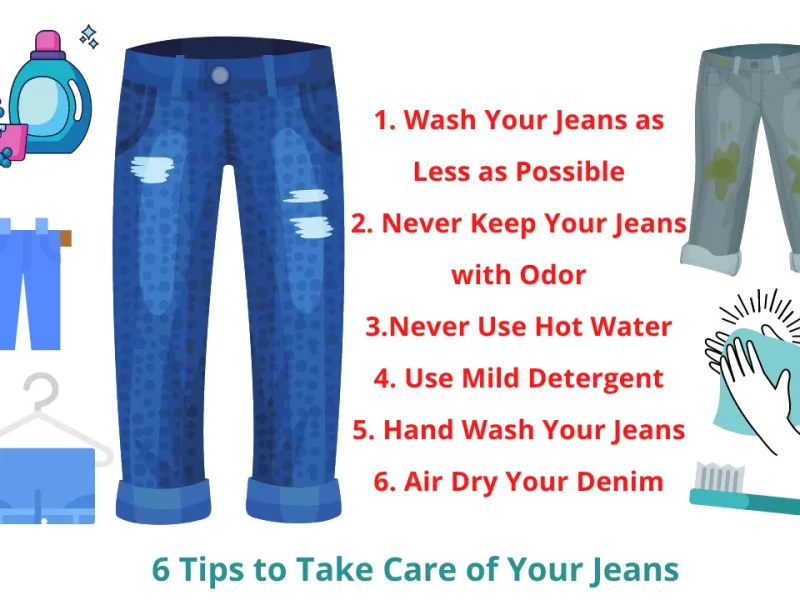
- Wash jeans less often, and turn them inside out.
- Use cold water to reduce fading and protect elastane.
- Skip the high heat dryer, especially for stretch denim.
- Hang to dry when you can.
- For raw denim, follow the maker’s advice about first wash.
Quality checks for denim
- Shade consistency: Compare panels under a light box.
- Weight: Check oz or GSM against the spec.
- Shrinkage: Test length and width. Our guide on shrinkage control explains how.
- Skew (twist) test: Check if the legs twist after washing.
- Color fastness: Check crocking, which is color rubbing off onto other clothes.
- Stretch and recovery: For stretch denim, measure how it returns after stretching.
- Seam strength: Pull test on seams.
Final thoughts
Denim looks like one fabric, but it is a family. The weave, the edge, the fiber, the weight and the finish all change how it looks, feels and ages. Start with what you need the jeans to do, then choose the weight and stretch to match. Look at the label, check the fiber content and ask about washing and shrinkage. The right denim will serve you for years, and the wrong one will disappoint you in the first month.
Frequently asked questions
The main types are rigid, stretch, selvedge, raw, washed, overdyed and coated denim. They differ in weave, fiber, finish and weight.
Selvedge denim has a self-finished edge made on a shuttle loom. It is narrow, does not fray and is often heavier and more expensive.
Raw denim has not been washed after weaving. Rigid denim has no stretch fiber. Raw denim is usually rigid, but not all rigid denim is raw.
Many comfort stretch jeans have around 1 to 3 percent elastane. Higher stretch styles use more.
It is the fabric weight in ounces per square yard. Heavier denim is thicker and more durable.
No. Chambray is a lightweight plain weave fabric with a denim-like color. Denim is a twill weave.
Light weight denim, or a blend with viscose or Tencel, is cooler and softer.