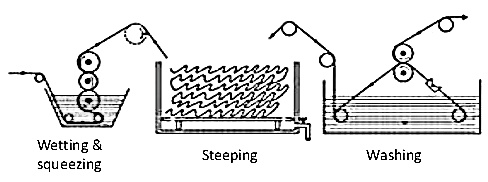
Enzymes behave nothing like the conventional chemicals they’ve replaced across much of wet processing. A conventional chemical’s activity generally scales predictably with dosage and temperature. An enzyme has a narrow window where it works well, and drifting outside that window doesn’t reduce its effect gradually, it can shut activity down almost entirely, or in some cases damage the fiber the enzyme was meant to treat gently. Getting real value from enzymatic processing means understanding those windows, not just following a dosage number on a product data sheet.
Cellulase Enzymes: Bio-polishing and Denim Wash
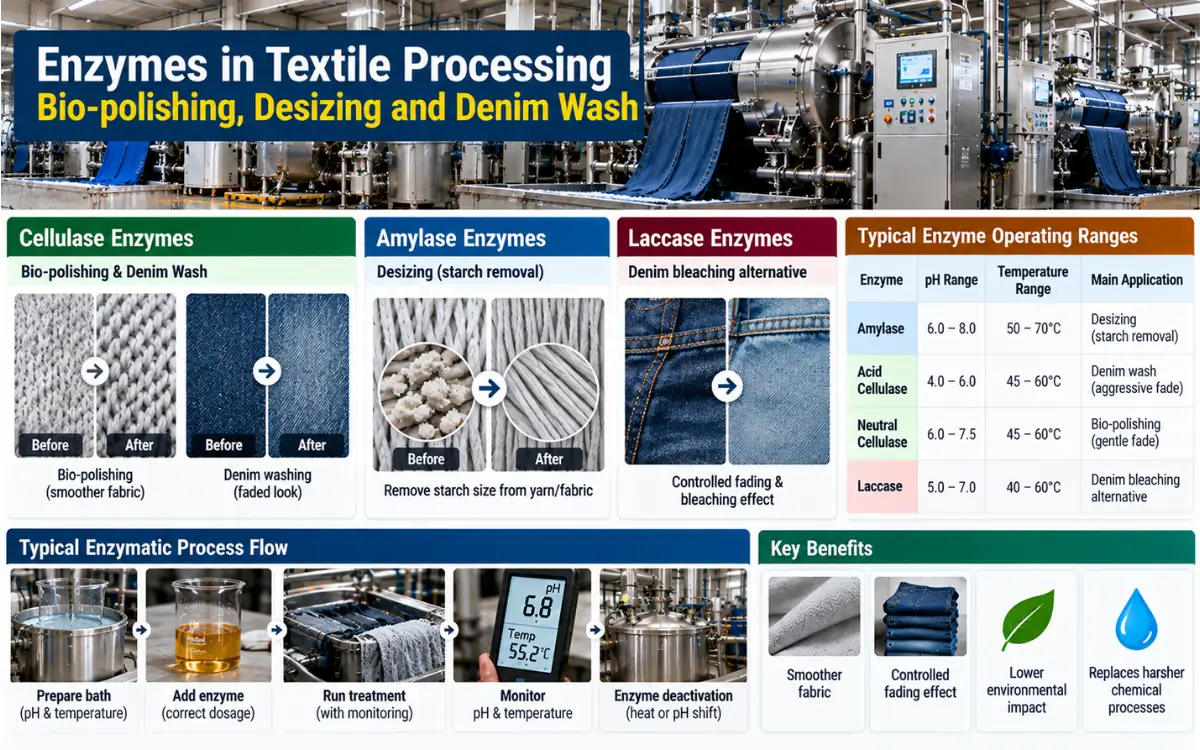
Cellulase enzymes break down cellulose, which makes them the enzyme of choice for two related but distinct applications on cotton and cotton-blend fabrics. Bio-polishing uses cellulase to remove surface fuzz and protruding fiber ends from fabric, producing a smoother, cleaner surface hand feel and reducing pilling tendency in the finished garment. Denim enzyme washing uses cellulase to achieve a faded, worn appearance by selectively attacking dye at the fiber surface, replacing or supplementing older methods like stone washing that relied on mechanical abrasion instead.
Two broad cellulase types dominate current practice: acid cellulase, which works at lower pH and tends to produce a more aggressive, higher-contrast fading effect, and neutral cellulase, which works closer to neutral pH and generally produces a softer, more even fading with less fiber strength loss for a comparable degree of visual effect. The choice between them depends on the specific wash effect a denim style is targeting, with neutral cellulase often preferred where fiber strength retention matters as much as the visual fade effect itself.
Amylase Enzymes: Desizing
Amylase enzymes break down starch-based sizing agents applied to yarn before weaving, with practical dosing guidance covered in a dedicated recommendations piece on efficient enzyme desizing, making them the standard tool for enzymatic desizing covered in more depth in the pretreatment article. Amylase only works effectively on starch-based sizes. Synthetic sizing agents need a different removal approach entirely, which is why knowing what sizing agent was actually used upstream matters before selecting a desizing method.
Laccase Enzymes: Denim Bleaching Alternative
Laccase enzymes, working through an oxidative mechanism rather than the hydrolytic mechanism cellulase and amylase use, have found a specific niche in denim processing as an alternative or supplement to conventional bleaching methods for achieving localized fading and specific wash-down effects. Laccase’s oxidative action can achieve certain visual effects with a different environmental profile than conventional oxidative bleaching agents, which has made it increasingly attractive as denim buyers push for lower-impact processing methods.
Dosage, pH and Temperature: Why the Window Matters
Every enzyme product has a defined optimal pH and temperature range specific to its formulation, and operating meaningfully outside that range doesn’t just reduce efficiency gradually the way it might with a conventional chemical. Enzymes are proteins, and conditions far enough outside their optimal range can denature them, effectively switching off their activity entirely regardless of how much additional enzyme or processing time is added afterward.
This is the core practical difference from conventional pretreatment or wash chemistry: an enzymatic process needs its pH and temperature actively controlled and monitored through the treatment cycle, not just set at the start and assumed stable, since drift during a long treatment cycle can silently reduce or eliminate the enzyme’s intended effect partway through.
Illustrative Enzyme Operating Windows
The table below gives illustrative operating ranges for the three enzyme classes covered above, useful as a starting reference before consulting the specific product’s data sheet, which should always take precedence.
| Enzyme | Typical pH Range | Typical Temperature Range | Primary Application |
|---|---|---|---|
| Amylase (desizing) | Near neutral to slightly alkaline | Moderate | Starch size removal |
| Acid cellulase | Acidic | Moderate | Denim fading, aggressive bio-polishing |
| Neutral cellulase | Near neutral | Moderate | Bio-polishing, gentler denim fading |
| Laccase | Near neutral, mediator-dependent | Moderate | Denim bleaching alternative |
Drift outside any of these ranges, even by what seems like a modest margin, risks the denaturing problem covered above, which is exactly why active pH and temperature monitoring through the treatment cycle matters more for enzymatic processes than for most conventional chemical treatments, where a similar drift would reduce effectiveness gradually rather than risking a sudden, complete loss of activity.
Enzyme Deactivation: The Step That’s Easy to Forget
Once an enzymatic treatment has achieved its intended effect, the enzyme needs to be deactivated, typically through a controlled temperature increase or a pH shift outside the enzyme’s stable range, to stop its activity before it continues reacting beyond the intended endpoint. Skipping or under-running deactivation is a genuine risk, particularly in cellulase treatments, since continued, uncontrolled cellulase activity after the intended treatment window closes can progressively weaken fabric strength beyond what the recipe intended, sometimes not becoming apparent until later strength testing or, worse, until the garment fails prematurely in wear.
Enzyme Storage and Shelf Life
Unlike many conventional textile chemicals, enzymes are biological products with a genuine, often relatively short shelf life, and storage conditions affect that shelf life meaningfully. Most enzyme products require storage within a specified temperature range, generally cooler than typical chemical storage areas, and exposure to elevated temperature during storage or transport can degrade enzyme activity before the product ever reaches the dyebath, producing weaker or inconsistent results that look like a dosage or process problem but actually trace back to a product that lost potency before use. Mills running enzymatic processes benefit from treating enzyme storage with the same discipline applied to any temperature-sensitive input, checking storage area conditions periodically rather than assuming ambient factory storage is automatically adequate, and rotating stock on a first-in-first-out basis given that even properly stored enzymes lose activity gradually over time even under ideal conditions.
Why Enzymes Have Displaced Harsher Alternatives
Beyond the process control considerations above, enzymes have gained ground across textile wet processing largely because they achieve comparable or better results under milder conditions than the conventional chemical treatments they’ve replaced, generally meaning lower process temperature, reduced water and energy consumption in some applications, and a gentler effect on fiber integrity when the process is properly controlled. This aligns well with the broader compliance and sustainability pressure covered elsewhere, and it’s part of why enzyme-based processing has moved from a specialty technique to close to standard practice across much of cotton wet processing.
Practical Guidance for Working With a New Enzyme Product
Any new enzyme product entering a mill’s process, whether replacing an existing product or introducing a new treatment entirely, deserves a proper trial establishing the actual optimal pH and temperature window for that specific formulation, rather than assuming a “similar” enzyme’s known parameters will transfer directly. Enzyme formulations vary between suppliers even within the same broad category, and a trial-based approach to establishing working parameters, rather than relying purely on a generic data sheet figure, catches formulation-specific differences before they show up as an inconsistent or damaged production batch.
Building Enzyme Expertise on the Floor
Because enzymatic processing behaves so differently from the conventional chemistry it replaced, mills getting real value from enzyme-based processing generally invest specifically in building this expertise among floor technicians, rather than assuming staff experienced with conventional pretreatment and finishing chemistry will transfer that experience directly. Understanding why an enzyme process needs active pH and temperature monitoring, why deactivation timing matters as much as the treatment itself, and how to recognize early signs that an enzyme batch is underperforming its expected activity, is a genuinely different skill set from managing conventional chemical processes, and treating it as a distinct area worth dedicated training pays off in more consistent results and fewer batches lost to enzyme-specific process errors.
Frequently Asked Questions
Why can’t enzyme dosage just be increased to compensate for a weak result?
Enzymes are proteins with a narrow optimal pH and temperature window, and operating outside it can denature the enzyme entirely rather than just reducing efficiency, so more enzyme added outside the right conditions won’t fix the problem.
What’s the difference between acid and neutral cellulase in denim washing?
Acid cellulase produces a more aggressive, higher-contrast fade, while neutral cellulase produces a softer, more even fade with generally less fiber strength loss for a comparable visual effect.
Why does enzyme deactivation matter after treatment is complete?
Without a controlled temperature or pH shift to stop enzyme activity, particularly with cellulase, continued uncontrolled activity can progressively weaken fabric strength beyond what the recipe intended, sometimes not becoming apparent until later testing or garment failure.
Do enzymes need special storage conditions?
Yes. Enzymes are biological products with a genuine shelf life, and storage outside the specified temperature range can degrade activity before the product ever reaches the dyebath.