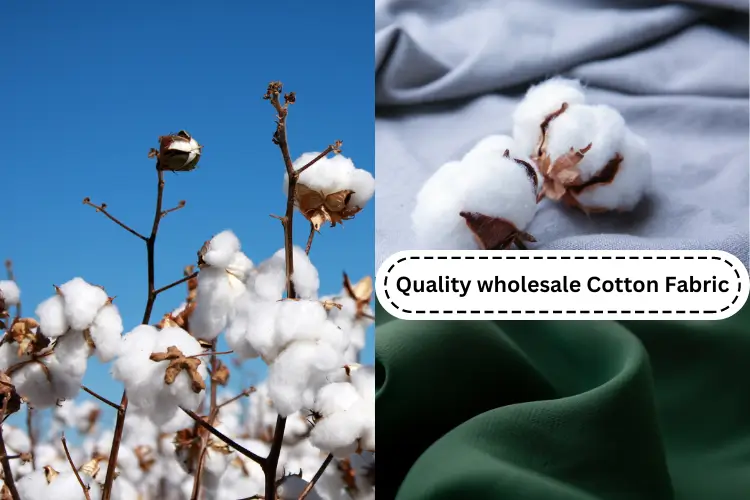
Underwear is the one garment that touches your skin all day, every day. It deals with sweat, heat, movement and repeated washing. So knowing which is the best fabric for underwear matters more than most people think. A fabric that feels fine in a shop can feel clammy by afternoon, or lose its shape after a few washes.
This guide compares the common fibres and knits used for underwear, explains why moisture, stretch and softness behave the way they do and shows how to read a label. A short look at a lab study of knitted underwear fabrics is included, and a worked example calculates the fibre weights and the moisture held in a pair of briefs for two different blends. If you want to see the styles first, our guide to the types of men’s underwear and the page on the parts of underwear show how cut and construction link to fabric.
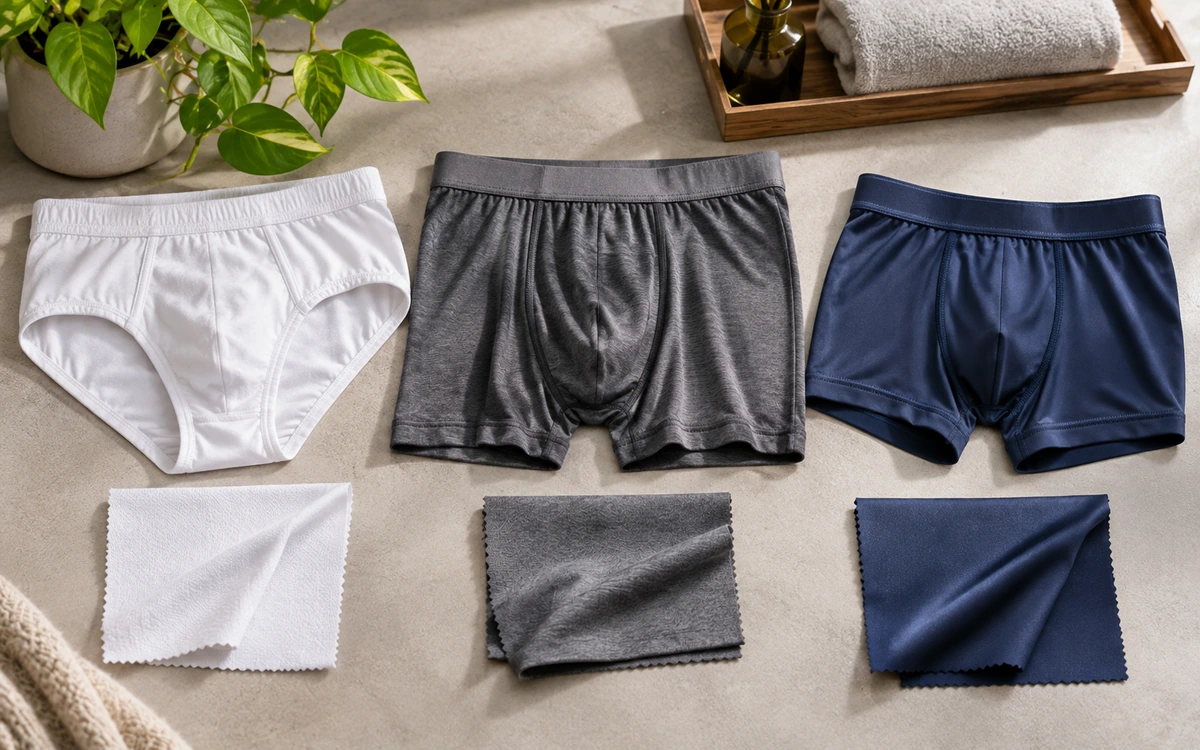
What should underwear fabric do?
A good underwear fabric should do six things.
- Feel soft on the skin, including at seams and the waistband.
- Handle moisture. It should absorb or move sweat so the skin does not stay wet.
- Let air through, so heat does not build up.
- Stretch and recover. It must move with the body and then return to shape.
- Survive washing. Colour, size and shape should hold after many cycles.
- Fit your use, whether that is everyday wear, sport, sleep or travel.
No fibre wins on all six. That is why many underwear fabrics are blends, with a main fibre for comfort and a little elastane for stretch.
A quick word on moisture regain
Moisture regain tells you how much water a fibre holds from the air in normal room conditions. It is shown as a percentage of the fibre’s dry weight:
Regain (%) = (conditioned weight − dry weight) ÷ dry weight × 100
A fibre with high regain takes up more moisture from sweat vapour and feels less clammy at first. A fibre with very low regain does not absorb much, so sweat tends to stay on the surface unless the fabric is built to move it away. One published table lists these values:
| Fibre | Moisture regain |
|---|---|
| Cotton | 7 to 11% |
| Viscose rayon | 13% |
| Silk | 11% |
| Wool | 17% |
| Nylon 6 and 6.6 | 4% |
| Acrylic | 1 to 2% |
| Polyester | 0.4% |
Regain is only one piece. The way a fabric is knitted, the fineness of the yarn and the finish all change how fast it pulls sweat away and dries. We return to this below.
Cotton
Cotton is the classic underwear fabric. It is soft, breathable and familiar. It absorbs sweat well, which suits daily wear in mild or warm weather.
Strengths: soft feel, good breathability, easy care, widely available, usually affordable.
Weak points: it dries slowly when wet, so it can feel damp after heavy sweating. Plain cotton can lose shape without elastane, and it can shrink in a hot wash. For more on how cotton compares, read our guide to cotton vs polyester and our page on cotton fabric for T-shirts, which covers cotton jersey, a common underwear cloth too.
Combed cotton is smoother than carded cotton, and it is used in better underwear. You can see why in our guide to combed yarn manufacturing.
Modal and micro modal
Modal is a man-made fibre made from wood pulp. It is a type of regenerated cellulose, close to viscose but with higher wet strength. It feels smooth and silky, drapes well and is popular in premium underwear. Micro modal uses finer fibres for an even softer touch. Our guide to modal fabric and its applications explains it in detail.
Strengths: very soft, smooth, good drape, holds colour well.
Weak points: costs more than basic cotton, and it can be less durable if it is very thin. As a cellulose fibre, it may also shrink if washed too hot.
Viscose and bamboo viscose
Viscose (rayon) is another regenerated cellulose. It feels soft and cool, and it has a regain of about 13 percent, higher than cotton. Much “bamboo” underwear is actually viscose made from bamboo pulp. Our guide to bamboo fabric and viscose explains how to read the label.
Strengths: very soft, good drape, absorbs well.
Weak points: weaker when wet, so wash gently. Some items stretch out or shrink if handled badly.
Nylon and microfibre
Nylon, also called polyamide, is a strong, smooth synthetic fibre. In fine microfibre knits, it feels silky and dries fast. It is common in sport underwear, styles with a no-seam look and women’s lingerie. Our guide to nylon 6 vs 66 covers the fibre.
Strengths: strong, smooth, light, quick drying, keeps shape.
Weak points: lower regain (about 4 percent) than cotton, so a plain nylon fabric can feel less breathable if it is not made with airflow in mind. Some people find synthetic underwear warmer in hot weather.
Polyester and polyester microfibre
Polyester is the most used synthetic fibre. In very fine yarns it makes soft, light knits that move moisture along the surface. Its regain is very low, about 0.4 percent, so it holds almost no water inside the fibre. Our page on polyester fibre and its uses gives the background.
Strengths: dries quickly, holds colour, resists shrinking, and costs less.
Weak points: can feel less breathable than cotton for some wearers, and some people find that it holds odour more than natural fibres. Experiences vary, and finishing matters.
Silk and wool
Silk is a smooth, light protein fibre with a regain near 11 percent. It feels luxurious. It costs more and needs gentle care. See our guide on protein fibres such as wool and silk.
Fine wool (such as merino) has the highest regain in the table, about 17 percent. It is used in thermal underwear and cold-weather base layers. It can feel warm and soft in fine grades, though some people find coarser wool itchy.
Elastane (spandex)
Almost every modern underwear fabric has a little elastane in it. This is the stretch fibre known by the brand name Lycra. A small share, often a few percent, gives the cloth stretch and recovery, so the waistband and leg openings fit without sagging. Higher shares go into close-fitting styles. Our guide to spandex, elastane and Lycra explains how it is used.
Elastane is weakened by high heat, chlorine and some chemicals, so wash gently and keep the dryer low.
What a lab study found
A published lab study of six knitted underwear-type fabrics compared how they handle moisture. The fabrics included cotton with spandex (97/3), viscose with spandex (94/4), modal with spandex (95/3), polyester with spandex (89/11 and 88/12) and nylon with spandex (89/11). The researchers measured how fast a drop of water spread, how well the fabric absorbed it and how well it moved moisture from one side to the other.
Key points in the paper:
- The polyester and spandex fabrics showed the fastest wetting and spreading, and the highest absorption rates.
- Most of the fabrics had a very good overall moisture management capability. The exceptions were one cotton and spandex fabric and the nylon and spandex fabric.
- Finer filament yarn, smaller thickness and higher air permeability linked to shorter wetting times and better moisture management.
- The warp-knitted polyester fabric did better at moving moisture than the others.
The lesson is useful. Regain by itself does not decide comfort. Fine yarns, thin knits and good air permeability can make a “low regain” polyester feel drier in use than a thick, dense cotton. The study covers six fabrics, so avoid reading too much into it. Different knit structures and finishes would give different results.
Fabric comparison at a glance
| Fabric | Softness | Breathability | Moisture handling | Stretch and shape | Typical use |
|---|---|---|---|---|---|
| Cotton (with elastane) | High | High | Absorbs, dries slowly | Good with elastane | Everyday wear |
| Modal (with elastane) | Very high | High | Absorbs well | Good | Premium everyday wear |
| Viscose or bamboo viscose | Very high | High | Absorbs well, weak when wet | Fair | Soft basics, sleepwear |
| Nylon microfibre | High | Medium | Dries fast | Very good | Sport, smooth-look styles |
| Polyester microfibre | Medium to high | Medium | Moves moisture, dries fast | Very good | Sport, travel |
| Silk | Very high | High | Absorbs, dries slowly | Fair | Luxury, special wear |
| Fine wool | High | High | Absorbs a lot | Good | Cold weather, outdoor |
These ratings are general. The knit and the finish can move any fabric up or down.
How to read an underwear label
Look for three things:
- Fibre content. For example “95% cotton, 5% elastane”. The main fibre sets the feel. The elastane sets the stretch.
- Fabric weight, if shown. A thin, light knit breathes better. A thick one is warmer and lasts longer. Our guide to GSM meaning and calculation shows how weight is measured.
- Care symbols. They tell you the wash temperature and drying limits. Gentle care helps elastane last.
A worked example: fibre weights and moisture in a pair of briefs
Let us compare two pairs of briefs and see how much water each fibre holds at room conditions. All figures are examples. For simplicity, we treat the fibre weights as dry weights, as regain is defined on dry weight. The regain values come from the table above.
Given
- Fabric weight: 175 GSM
- Fabric area in one pair of briefs: 0.20 m²
- Brief A: 95% cotton, 5% elastane
- Brief B: 89% nylon, 11% elastane
Step 1: Weight of fabric in one pair
Weight = area × GSM = 0.20 × 175 = 35 g
Step 2: Fibre weights in Brief A
- Cotton = 0.95 × 35 = 33.25 g
- Elastane = 0.05 × 35 = 1.75 g
Check: 33.25 + 1.75 = 35.00 g
Step 3: Fibre weights in Brief B
- Nylon = 0.89 × 35 = 31.15 g
- Elastane = 0.11 × 35 = 3.85 g
Check: 31.15 + 3.85 = 35.00 g
Step 4: Moisture held at room conditions
Moisture held = dry fibre weight × regain. The table gives a range for cotton (7 to 11 percent), so use 8 percent as an example. Nylon is taken as 4 percent. Elastane is ignored, since no regain value is listed for it here.
- Brief A, cotton: 33.25 × 0.08 = 2.66 g
- Brief B, nylon: 31.15 × 0.04 = 1.25 g
If Brief B were polyester instead of nylon, at 0.4 percent regain:
31.15 × 0.004 = 0.12 g
Step 5: What the numbers say
Brief A holds about twice as much moisture in its fibres as Brief B (2.66 ÷ 1.25 = 2.1), and about 21 times as much as a polyester version (2.66 ÷ 0.12 = 22). Even so, the amounts are tiny, a few grams in a garment that weighs 35 g. The real difference shows when you sweat. Cotton soaks up the sweat and holds it, so it feels damp for longer. A fine polyester or nylon knit holds little inside the fibre and may pass sweat along the surface to dry faster. This is the same pattern the lab study found for some synthetic knits.
Brief B has 11 percent elastane (3.85 g), which makes it more stretchy and snug than Brief A, with 5 percent. A tight, sporty pair is sensible with the higher figure. A relaxed everyday pair is fine with less.
Matching fabric to your day
| Situation | Good fabric choices |
|---|---|
| Hot, humid weather, light activity | Cotton, modal, light viscose |
| Gym, running, sport | Nylon or polyester microfibre with elastane |
| Long travel | Quick-drying microfibre, or merino for odour comfort |
| Sleep | Soft modal, cotton or viscose |
| Cold weather | Fine wool or thermal blends |
| Sensitive skin | Soft, smooth cotton or modal, with flat or covered seams. See a doctor for skin problems |
| Daily office wear | Cotton or modal blend with a little elastane |
For hot-weather picks outside underwear, our guide to the best fabric for hot weather lists more options.
Care tips that keep underwear fabric in shape
- Wash new pairs before the first wear. Dye and finishing agents can stay on new cloth.
- Use warm or cool water and a mild detergent.
- Skip fabric softener on stretch and microfibre fabrics, since it can coat the fibre.
- Do not use bleach on coloured items or on those with elastane.
- Air dry or tumble dry on low. Heat shortens the life of elastane.
- Replace worn pairs when the elastic is loose or the fabric thins out.
- For tips on avoiding shrinkage, see how to prevent clothes from shrinking.
For brands and sourcing teams
A brand choosing an underwear fabric balances comfort, cost and production. Things to check include:
- Fibre blend and elastane share. Make sure it matches the style and the target stretch.
- Knit structure. Single jersey, interlock, rib and warp knit behave differently. Our guide to knitted rib fabric covers one common option.
- Shrinkage and stretch recovery after repeated washing.
- Colour fastness to washing, rubbing and perspiration, since underwear sits against the skin. See our guide to colour fastness tests.
- Seams and trims. Soft elastic and flat seams matter as much as the cloth.
- Claims. Words such as “cooling”, “antibacterial” or “odour free” need proof. Test them before you print them.
Final thoughts
The best underwear fabric depends on your day. Cotton is soft and breathable for everyday wear. Modal and viscose are silky and absorb well. Nylon and polyester microfibres dry fast and suit sport. Silk and fine wool serve special needs. Nearly all of them include a little elastane to hold shape.
Our worked example showed a 35 g brief holding about 2.66 g of moisture in its cotton, against 1.25 g for nylon and 0.12 g for polyester at room conditions. Regain is only part of the story, so look at the knit, the yarn fineness and the care label as well. Pick the fabric for the way you live, and your underwear will feel better for longer.
Frequently asked questions
It depends on use. Cotton is a popular everyday choice for its softness and breathability. Modal is a soft premium option, and nylon or polyester microfibre suits sport and travel.
Both are soft and breathable. Modal feels smoother and more silky and usually costs more. Cotton is more familiar and widely available. Neither is better for everyone.
A small share of elastane gives stretch and recovery, so the waistband and leg openings fit well and keep their shape after washing.
Not necessarily. Fine polyester knits dry fast and keep their shape. Some people find them less breathable or more prone to hold odour than natural fibres, so comfort varies from person to person.
It is the water a fibre holds from the air at room conditions, shown as a percentage of dry weight. Cotton is about 7 to 11 percent and polyester about 0.4 percent. It is one clue to comfort, but knit structure and yarn fineness matter too.
Most bamboo fabric is viscose rayon made from bamboo pulp. Check the fibre line on the label for the words viscose or rayon.
Replace pairs when the elastic is loose, the fabric is thin or worn, or the shape no longer holds. The time depends on fabric, care and use.