Pick up two hoodies with identical artwork and the same price tag on the website. One feels substantial the second it leaves the mailer. The other feels like a gym giveaway.
Nothing about the print explains the gap. The difference sits in six or seven construction decisions your customer never reads about but registers instantly. Most new brands never specify any of them, which means the factory picks defaults, and defaults are built to hit a price.
Here is what actually separates the two, and what to ask for when you place your next order.
Start with the fabric weight
Two numbers decide how a hoodie feels before anyone touches a stitch: the fabric weight and the fabric type.
Weight is measured in GSM. Around 280gsm you get a standard midweight hoodie, comfortable and unremarkable. At 350 to 400gsm the garment starts holding its own shape on a hanger, which is the weight most premium streetwear sits at. Push past 450gsm and you enter the dense, almost jacket-like territory that carries a real price premium and a real shipping cost.
Type matters just as much. French terry leaves the interior loops uncut, so it feels smooth, breathes well, and drapes cleanly. Brushed fleece runs those loops through a brushing process, which makes the inside soft and warm but also more prone to pilling if the cotton underneath is cheap.
Neither is better. A 340gsm French terry hoodie and a 400gsm brushed fleece hoodie are two different products for two different customers. Choose one on purpose instead of letting a quote decide for you.
Check which cotton you are getting
This one rarely appears on a spec sheet, and it should.
Open-end cotton, sometimes called carded, spins fast and cheap. The yarn ends up coarser, so the fabric feels slightly rough and pills faster. Ring-spun cotton runs the fibres through a longer twisting process, producing a finer, smoother, stronger yarn. Combed ring-spun goes one step further and strips out the short fibres before spinning.
Same GSM, same color, completely different hand. Two hoodies can both say “400gsm 100% cotton” and feel a class apart because one used open-end yarn and the other used combed ring-spun.
Ask which one your quote is based on. If the answer is vague, that is your answer.
Why cuffs stretch out first
Ribbing is where budget hoodies fail first, and customers notice because a stretched cuff makes the whole garment look worn out.
Recovery comes from elastane. Ribbing with roughly 3 to 5% spandex snaps back after being pushed up your forearm a hundred times. Pure cotton ribbing stretches and stays stretched. The same applies to the waistband, which is why some hoodies start riding up and bunching after a few washes.
Specify the elastane content in your ribbing, not just the color. It costs very little and it is the difference between a hoodie that still looks right after a winter and one that does not.
Look at the back of the hood
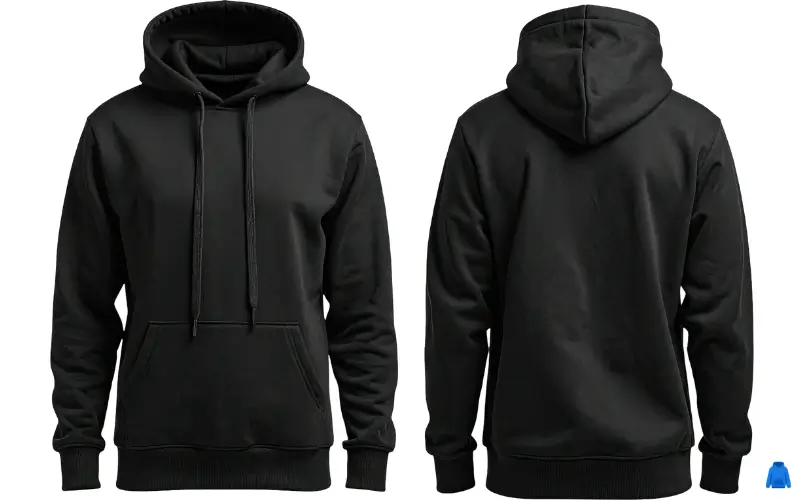
An expensive hoodie usually has a centre panel running between two side panels. A cheap one uses two panels stitched together down the middle.
The three-panel build gives the hood volume and structure, so it sits up properly instead of collapsing flat against your neck. It costs slightly more in fabric and labour, and it changes the silhouette more than almost any other single detail.
While you are there, decide on the lining, the drawcord, and the eyelets. A flat cord reads more premium than a thin round one. Metal eyelets last longer than stitched holes, though they add cost and can rust on a cheap finish. These are small choices that stack.
Side seams or no side seams
A tubular hoodie is knitted as a single tube with no side seams. It is cheaper to produce and it is why some hoodies start pulling to one side after a few washes, with the side seam area spiralling around the body.
Side-seamed construction costs more and holds its shape. It also lets the factory shape the body, which matters if you want a boxy or cropped fit rather than a straight tube.
If your brand sells a specific silhouette, you need side seams. If you are producing cheap promotional stock, tubular is fine. Just know which one you are buying.
Stitching, pockets and shrinkage
A few finishing choices quietly separate the good from the forgettable.
Double-needle stitching at the hem and cuffs holds up far better than single-needle under stress. Bartacks at the corners of the kangaroo pocket stop it tearing away, and their absence is the single most common failure point on cheap hoodies. Preshrunk or compacted fabric keeps your sizing honest, because untreated cotton fleece can lose three to five percent of its length in the first wash and turn your large into a medium.
Garment dyeing is worth mentioning too. Dyeing the finished hoodie rather than the fabric gives you that slightly faded, lived-in tone streetwear buyers pay for, though it adds cost and some variation between pieces.
How to put this in your order
Knowing the specs only helps if your factory receives them.
Send a written spec with your artwork rather than a description. Name your GSM and fabric type, state ring-spun or open-end, give the elastane percentage in your ribbing, specify a three-panel hood and side seams, and confirm the fabric is preshrunk. Seven lines of text remove almost every assumption a factory would otherwise make on your behalf.
Then check whether the factory can actually deliver it. Plenty of custom clothing manufacturers quote heavyweight fleece and produce something noticeably lighter, so ask for fabric swatches at your stated GSM before you approve anything. Weigh one if you want to be sure.
Sample the full spec before bulk. Wash the sample three times at the temperature your customers use, then measure it against your original numbers and check the cuffs, the pocket corners, and whether the body twisted. That single garment tells you more about a factory than any capability page.
If you are ordering custom Hoodies for a first drop, keep the run small while you dial the spec in. Fixing a fleece weight or a hood shape costs one sample. Discovering it across 300 units costs the drop.
A spec sheet you can copy
Take this to your next quote:
- Fabric weight in GSM, stated as a target, not a range
- French terry or brushed fleece
- Ring-spun, combed ring-spun, or open-end cotton
- Elastane percentage in cuffs and waistband
- Two-panel or three-panel hood, lined or unlined
- Drawcord type and eyelet finish
- Side-seamed or tubular body
- Double-needle stitching at hem and cuffs
- Bartacks on pocket corners
- Preshrunk or compacted fabric confirmed
Before you place the order
The gap between a $25 hoodie and a $120 hoodie is not branding. It is fleece weight, yarn type, ribbing recovery, hood panels, side seams, and a handful of stitches at the points that take the most stress.
Write those decisions down, send them with your artwork, and check them on the sample. Your customer will not know the words for any of it. They will just notice that your hoodie feels like the expensive one.
Questions buyers ask
What GSM should a premium hoodie be?
Most premium streetwear hoodies land between 350 and 450gsm. Below 300 the garment feels light in the hand, and above 500 it gets heavy to wear and expensive to ship.
Is French terry or brushed fleece better?
Neither. French terry breathes better and drapes cleaner, while brushed fleece feels softer and warmer inside. Match the choice to your market and your season.
Why do my hoodie cuffs stretch out?
Almost always missing elastane in the ribbing. Specify 3 to 5% spandex in your cuffs and waistband and the problem disappears.
How much shrinkage should I expect?
Untreated cotton fleece can lose three to five percent after the first wash. Preshrunk or compacted fabric keeps that in a much tighter range, which is why it matters for sizing accuracy.
Can I check fabric weight myself?
Yes. Cut a small square from a swatch, weigh it in grams, and scale it up to a square metre. It takes five minutes and catches a lighter fabric than the one you paid for.