
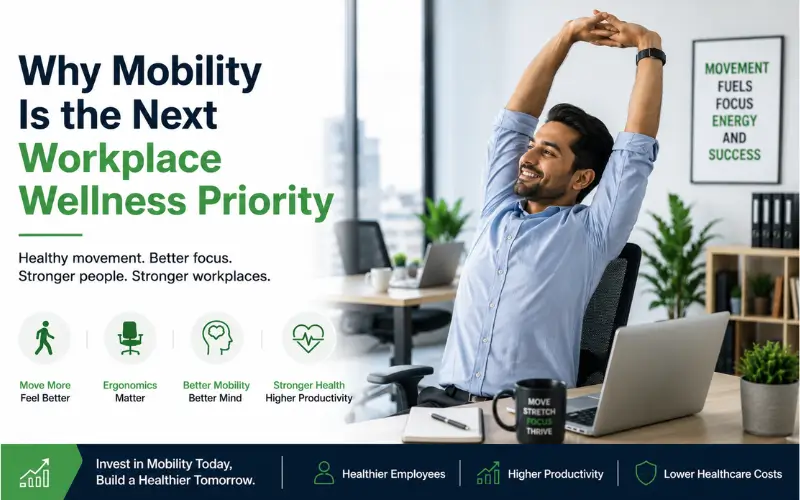
Mobility is the final frontier in workplace wellness. Two decades ago, workplace wellness primarily consisted of annual health screenings, gym discounts, healthier food options, and some additional programs to tackle mental wellness. Today, the evolution of workplace wellness encompasses mental health support, flexible working arrangements, assistance for building ergonomic workstations, and even offering stress management activities.
Mobility, however, is largely in the shadows, and it shouldn’t be. Mobility refers to the body’s capacity to move about that is unrestricted and unencumbered by pain. Mobility is a prerequisite for the fulfillment of a wide array of work functions. The work environment’s increasing digitization coupled with an increasingly sedentary lifestyle means that the preservation of workplace mobility is critical for the health of employees and even the productivity of the workplace.
While simple mobility exercises and regular movement can help reduce discomfort, persistent leg heaviness, swelling, or visible varicose veins may indicate an underlying vein condition, and seeking relief from painful varicose veins in Romulus can help individuals address symptoms before they begin limiting everyday movement.
Sitting all day, even if previously standing or moving about, is becoming increasingly commonplace across most industries, as is the opposite challenge of prolonged standing, for workers in manufacturing, retail, healthcare, and hospitality.
Workplace Mobility is the New Frontier of Workplace Wellness
Mobility is the next frontier of workplace wellness for two primary reasons. First, there is increasing evidence that workplace wellness programs focused on mobility (e.g. reducing the workplace’s sedentary hours, improving employees’ ergonomic workplace arrangements, including flexibility exercises and mobility workouts) show a positive return on investment. Second, there is an increasing understanding personally and professionally that preserving one’s mobility today will preserve one’s freedom tomorrow.
Both ends of the spectrum significantly strain the skeletal and circulatory systems. Stiffness and discomfort in the joints and other symptoms like reduced range of motion and muscle fatigue will develop over time due to limited movement and repetitive postures.
Mobility Includes More than Physical Activity
Mobility is most commonly associated with stretching and the training of athletes. Mobility stretches far and wide beyond the realm of physical activity and athletics.
A healthy range of motion and mobility not only benefits joints and muscles but improves posture, balance, and coordination. Mobility positively impacts the day-to-day activities of every single person. It helps you ease the tasks that you do every day and helps you build confidence to do them like commuting, carrying groceries, playing with kids, and exercising.
Poor mobility is the result of many small incremental changes over time. It begins with small changes like stiffness and ultimately results in a lack of confidence in your movement.
The goal is to retain your range of motion and mobility for the quality and independence of your life and not for the sake of avoiding and preventing injuries.
Sedentary Work is Affecting the Health of Employees
The negative health impacts of excessive sitting have been well documented. Extended sitting causes a decrease in muscle activity, an increase in the stiffness of joints, slower circulation, and can initiate changes to your metabolism that are associated with chronic diseases. If you are inactive for the duration of your work day, you can experience the negative impacts of excessive sitting, even with a regular exercise routine.
The body operates most optimally when movement is frequent and exercise is not limited to a single session.
Frequent movement, such as short walking breaks or shifting positions to face or speak towards a new work colleague, is effective to stop the impact of excessive sitting.
These small changes are now the focal point of the new wellness initiatives of many workplaces.
Challenges of Standing All Day
Though office workers are often criticized for a sedentary lifestyle, employees in healthcare, education, retail, manufacturing, and hospitality are known to work long hours standing.
Prolonged standing can create discomfort in the lower back and knees, and can increase pressure in the feet and lower leg veins. Standing in the same position can cause blood to stagnant in the lower legs, increasing the feeling of discomfort and fatigue.
Standing all day can create soreness in the legs and muscle swelling and the feeling of heaviness can linger even after the work day is done.
Long term standing can create physical challenges in the workplace and can be countered if the employer and employee are committed to reducing the physical issues.
Movement, Mobility, and Mental Wellness
The act of moving has a profound impact on mental health. Improved circulation as a result of movement can aid in the performance of the brain and can elevate the mood and reduce the stress, and as a result, improve cognitive performance. Movement can even aid in the increase of concentration and creativity.
Chronic pain can result in a host of negative mental health issues including sleep problems and a lack of motivation.
Healthy movement can improve physical health and increase mental health and satisfaction in the workplace.
Mobility and Circulation
Movement requires an adequate supply of healthy circulation. The muscles of the calf provide a mechanism to move blood to the heart from the legs with every step. Standing in the same position can make movement become restrictive and cause a negative impact on circulation.
Early symptoms including swelling, aching, heaviness, cramps that happen at night, and visible veins can frequently be dismissed as just a part of the job. But if certain symptoms linger, they might signal a venous problem that shouldn’t be ignored.
Here, vein specialists will assess and evaluate circulation with the latest diagnostic tools and imaging and offer custom treatment solutions for comfort and long-term vascular health.
Often, the early treatment of venous problems enables patients to be active and prevents further vascular problems and symptoms from developing.
Employers Are Putting Money on Movement
Healthy employees are evidence of a robust business to the modern employer. Increasingly, companies are providing walkable workspaces, active workstations, and breaks designed for the active reduction of workplace lethargy, along with on-site or in-company wellness and fitness programs.
These ‘perks’ are actually cost-saving measures undertaken by businesses that aim to boost productivity and morale while reducing absenteeism and healthcare costs.
Physically well employees are engaged and focused at work.
Incremental Changes Lead to Improved Movement
You don’t have to overhaul your lifestyle to be more mobile.
Movement can be improved with a number of small and simple habits.
These can be: a small stretch to kick off the workday; standing while on the phone; taking the stairs; lapse-free posture; supportive shoes; and regular, daily exercise.
The most important part of any of these is that they are sustained over time. Small daily actions help strengthen movement patterns to improve circulation and flexibility. With repetition, the small daily actions become significantly sustained, and long-term benefits are achieved.
Looking Ahead: The Future of Workplace Wellness
Workplace shifts such as remote work, artificial intelligence, and digital collaboration will likely continue making intentional movement more necessary than in previous generations.
Wearables, posture apps, ergonomic tools, and wellness programs assist employees in knowing how unhealthy their habits are.
The regular movement that technology is supposed to replace will be impossible to achieve.
Workplace wellness of the future will smartly merge health technology with plausible strategies to encourage movement within the working day.
Investing workplace mobility today will mean the future workplace will have a more resilient and healthy workforce.
Conclusion
Movement may be the most crucial concern for workplace wellness because of the impact it has on the aspects of both physical and mental health. Healthy movement also contributes to the wellness of circulation and posture, as well as productivity, your energy levels, and your quality of life in the long term.
A concern for mobility can easily lead to positive outcomes. Regular movement will help as well as prompt symptom care, and the everyday use of ergonomic workspaces.
Change in the workplace will elevate the importance of movement to preserve the wellness of both your professional life and personal life. If you tackle movement daily you can preserve your lifelong desire to live a life as active and fulfilling as you wish.