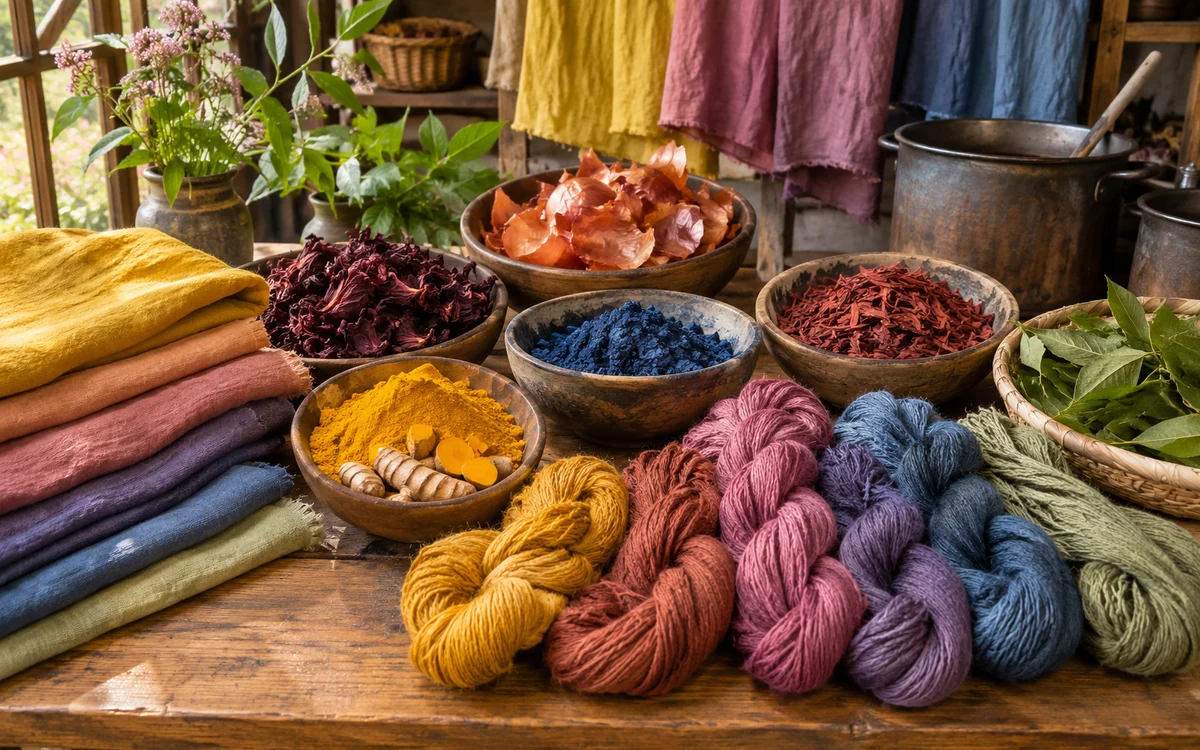
Open a kitchen and you find colour everywhere. Red cabbage turns a pot of water purple. Beetroot stains a chopping board for days. Onion skins leave a golden brown on your fingers. It is natural to ask whether you can really learn how to dye fabric with vegetables. The short answer is yes, but with a catch. Vegetable dyes will colour fabric, and some of them do it well, but many fade fast in light or in the wash.
This guide explains which vegetables work, which ones are weak, why a mordant matters, how to prepare fabric, how to run a dye bath step by step and how to look after the result. A worked example near the end calculates the amounts of skins, mordant and water for a batch of cotton fabric by fibre weight. If you want the wider picture of plant, animal and mineral colour sources, our guide to natural dyes, their sources and examples covers it.
What are vegetable dyes?
Vegetable dyes are colours made from plant parts such as skins, peels, roots, leaves and flowers. The word is used loosely. Some people mean kitchen vegetables only, such as onions and red cabbage. Others mean any plant dye, including madder root, indigo and weld. For this guide we use the narrower meaning, with a short look at the wider group at the end.
A dye is a coloured substance that bonds with the fibre. Our guide to what a dye is and the page on classification of dyes explain how dyes work. Vegetable dyes belong to the natural dye group. They need help from a metal salt called a mordant, or from a fibre treatment, to stay in the cloth.
An honest warning about colourfastness
Not all plant colours are equal. Some dyers divide plant material into two groups.
- Stable dyes. Madder, weld, indigo, woad, logwood, fustic and similar plants are known for lasting colour. These are the traditional dye plants.
- Fugitive colours. Many kitchen vegetables fall here. One dyer’s guide lists beetroot, red cabbage, black beans and turmeric as kitchen items that fade, along with berries. The same guide says that “things you can eat usually don’t dye well”.
This does not mean kitchen dyeing is pointless. It means you should set your expectation. A cloth dyed with beetroot may look lovely for a week and pale after a few washes or a few days in the sun. If you want a lasting colour, pick a better plant or accept a soft, changing shade.
Light and wash resistance is measured in textile labs with tests such as ISO 105-B02 for light. If you want to learn the grading, read our guide to colour fastness tests and the page on colour fastness to light.
Vegetables and what you can expect
| Vegetable | Typical colour | What to expect |
|---|---|---|
| Onion skins (yellow or red) | Gold, orange, brown | A classic starter dye. Often gives a pleasant, usable colour |
| Red cabbage | Purple, blue or grey-blue, depending on pH | Pretty in the pot, but known to fade |
| Beetroot | Pink to red-brown | Strong at first, but fades quickly |
| Turmeric | Bright yellow | Vivid, but known to fade in light and wash |
| Avocado stones and skins | Pale pink to peach | Popular, and the stones are simmered for 1 to 2 hours in some recipes |
| Coffee and tea | Beige to brown | Used as simple stain dyes, and tannin-rich, so useful with other dyes |
Colours vary with the fibre, the water, the mordant and the amount of plant used. Treat the table as a guide, not a promise.
Which fabrics take vegetable dyes best?
Natural dyes bond best with protein fibres such as wool and silk. Cotton and linen, which are cellulose fibres, can be dyed too, but they often give paler results and may need a tannin step first. This is common practice among natural dyers. Polyester and other synthetics resist natural dyes almost completely, because the fibre does not take up this kind of dye.
Always start with natural, undyed, unfinished cloth. Fabric with a stain-resistant, wrinkle-free or water-repellent finish will not take colour evenly. Our guide to reactive dyes on cotton shows how industrial dyeing handles the same fibre with stronger dyes.
What is a mordant?
A mordant is a metal salt that helps the dye stick to the fibre. It forms a bridge between the dye molecule and the cloth. Without it, many natural dyes wash out quickly.
- Alum (aluminium salt) is the most common mordant for home use. It gives clear, bright colours.
- Iron darkens and “saddens” colours toward grey and brown, so use it with care.
- Tannin-rich plants (oak galls, tea, some barks) can help cellulose fibres take mordant.
Mordant amounts are given as a percentage of the fibre’s dry weight, written “% WOF”. One popular recipe uses alum at 2 oz per lb of fibre, which is 12.5 percent. Another version for half a pound of fibre lists 1 to 2 oz of alum, which is 12.5 to 25 percent. Because recipes differ, begin at the low end.
Safety matters. Use pots, spoons and tools that you will never use for food again. Wear gloves and a dust mask when you weigh mordants. Keep chemicals away from children and pets. Dispose of used dye and mordant liquid with care, and check your local rules rather than pouring large amounts down a garden drain.
Step by step: dyeing with vegetables
Step 1: Scour the fabric
New fabric holds oils, waxes or size that block the dye. Wash it first. One dyer’s guide scours cotton in a washing machine at 90°C with a spoon of baking soda, and wool in a pot at 60°C with wool detergent for about an hour, cooled slowly so the wool does not felt. Follow the care label of your cloth, since not every fabric can take that heat.
Step 2: Mordant the fabric
Dissolve the alum in hot water, add cool water, put in the wet fabric and simmer gently for 30 to 60 minutes. Rinse the fabric. You can use it right away or let it dry for later.
Step 3: Make the dye bath
For onion skins, cover them with water, bring to a boil and cook for about an hour. Strain the liquid and let it cool. For other vegetables, chop or shred them, cover with water and simmer in the same way.
A beginner rule from one source is to start with equal weights of dye material and fibre, then adjust. A paler shade needs less plant, and a deeper shade needs more.
Step 4: Dye
Put the damp, mordanted fabric in the strained liquid. Heat gently to a simmer (not a hard boil) and keep it there for 30 to 60 minutes, stirring now and then. Turn off the heat and let the fabric sit in the bath, even overnight for deeper colour.
Step 5: Rinse and dry
Rinse in water of a similar temperature until it runs clear. Dry in the shade. Do not use a hot dryer or strong sun for the first drying.
Step 6: Cure (optional)
Some dyers let the cloth rest for a few days before the first wash, so the colour can settle. This habit is common, but opinions differ, so treat it as optional.
The red cabbage trick
Red cabbage contains pigments that change colour with acidity. In an acidic bath (add a little vinegar), the colour moves toward pink and red. In a basic bath (add a little baking soda), it moves toward blue, green and then yellowish. This is the same reason the juice is used as a science-class indicator. It is fun to try, but the colour does not last well on cloth, so do it for learning, not for a favourite shirt.
Looking after naturally dyed fabric
- Wash the first time alone, in cool water, with a mild detergent.
- Avoid bleach, strong alkaline soaps and hot water. They shift or strip natural colours.
- Dry in the shade and away from heat.
- Store away from long exposure to sunlight.
- Expect some change over time. Natural colours often soften, and some people like that.
Our guide on how to wash a denim jacket without shrinking lists cold-wash habits that help any dyed garment keep its colour.
Do vegetable dyes make factories greener?
Many buyers like the idea of dyeing with plants. Factories look at it more carefully, for three reasons.
- Volume. Plant material is bulky, and a large dye house would need huge amounts of raw material.
- Consistency. A natural dye changes from batch to batch with crop, season and soil. A buyer who wants a repeatable shade finds this hard. See our page on shade variation in fabric.
- Mordants. Metal salts bring their own waste issues if not handled well.
So vegetable dyes mostly stay in craft, small brands and special collections. They are often a story as much as a colour. If you sell such a product, check the claims and test the fastness before you print a promise on the label.
Mistakes to avoid
- Skipping the scour. Oils and finishes cause patches.
- Crowding the pot. The fabric needs room to move.
- Boiling hard. A rolling boil can felt wool and dull some colours.
- Using too little plant. The shade will be pale and uneven.
- Skipping the mordant on cotton. The colour will wash out.
- Expecting kitchen colours to last for years. Many do not.
- Drying in strong sun. Light fades many natural dyes.
Better choices for lasting colour
If you want colour that stays, think beyond the fridge. Madder (red), weld (yellow), indigo (blue) and a few other plants have a long record of good fastness. Many are sold as extracts, which makes them easier to measure and repeat. Test any dye on a small swatch before you commit a whole garment.
Final thoughts
Vegetable dyes turn kitchen scraps into colour, but the results depend on the plant, the fibre and the mordant. Onion skins are a friendly place to start. Beetroot, red cabbage and turmeric give striking colour that does not last well. Protein fibres take natural dye more easily than cotton, and a mordant such as alum is what holds the colour in the cloth.
Our worked example used 200 g of cotton, 200 g of onion skins, 25 g of alum and about 6.7 L of water. Weigh the fabric, keep a record and test a small swatch for wash and light before you trust the colour on something you love.
Frequently asked questions
Onion skins, red cabbage, beetroot, turmeric and avocado stones can all give colour. Onion skins are often the most reliable. Beetroot, red cabbage and turmeric are known to fade.
Many do, especially without a mordant. Using a mordant such as alum, washing gently in cool water and drying in the shade all help the colour last longer.
A mordant is a metal salt, usually alum, that helps natural dye bond to the fibre. It improves colour depth and wash resistance.
Wool and silk take natural dyes well. Cotton and linen can be dyed, but often give paler colour and may need extra preparation. Synthetic fibres such as polyester resist natural dyes.
Cover the skins with water, boil for about an hour, strain and cool. Then add mordanted, damp fabric, simmer gently for 30 to 60 minutes and let it rest in the bath.
A common starting point is equal weights of plant and dry fabric. Use less for pale shades and more for deeper colour.
The plant material is usually mild, but mordants and hot pots need care. Use tools you will not use for food, wear gloves when handling chemicals and dispose of used liquid responsibly.