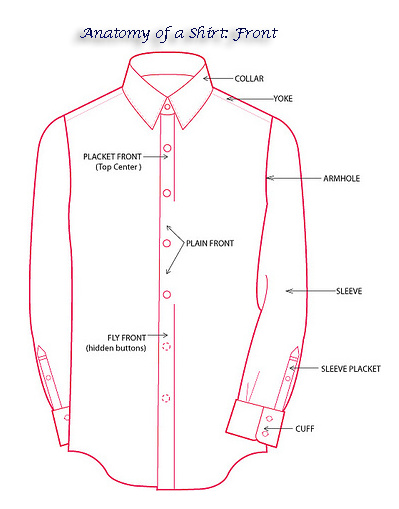
A shirt looks perfect on the hanger. Then the buyer lays the front panel next to the sleeve and sees that the two are not quite the same color. One looks a little greener. The shirt fails, even though every seam is straight. This is shade variation, and it is one of the most common and costly faults in dyed fabric.
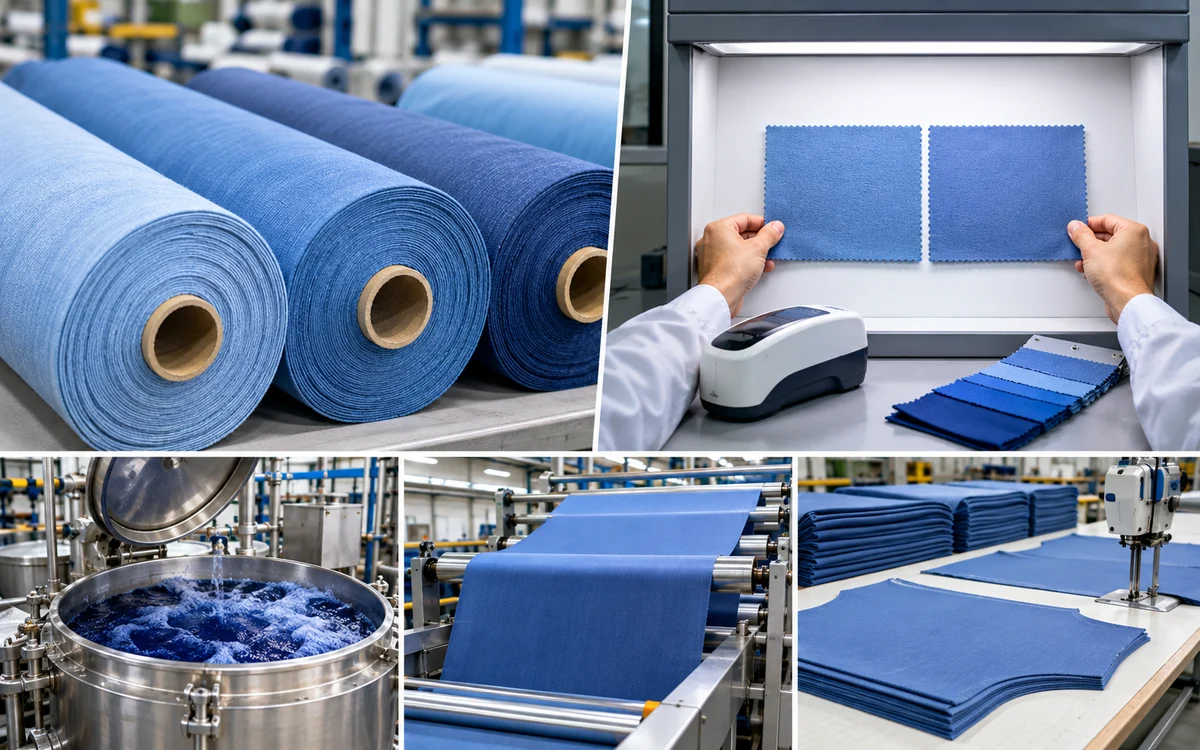
This guide explains what shade variation in fabric is, the types, the causes, how to measure it and how to control it from the dye house to the sewing line. It includes simple worked numbers you can reuse. If you want the buyer approval side of shade, read our article on shade band submission and approval.
What is shade variation
Shade variation is a difference in color between parts of the same fabric, between rolls of the same lot or between lots that should match. The difference may be small. The human eye is very good at spotting color differences between two pieces placed side by side, so even a small gap can lead to rejection.
Shade variation is not the same as color fastness. Fastness is about how the color holds up in use. Shade variation is about how even the color is at the start. Our article on color fastness tests covers the second topic.
Types of shade variation
| Type | Where the difference shows | Typical cause |
|---|---|---|
| Side to side | Left edge differs from right edge | Uneven dye uptake across the width |
| Center to selvedge | Middle differs from the edges | Uneven temperature or finishing across the width |
| End to end | Start of the roll differs from the end | Dyeing changes over time, or tailing in a continuous run |
| Face to back | One side differs from the other | Different finish or dye penetration |
| Roll to roll | Rolls in one lot differ | Different batches or machines |
| Lot to lot | A new lot does not match the last | Different dye lot, raw material or process |
| Piece to piece | Cut pieces from different plies differ | Mixed rolls in one lay |
You may also hear of metamerism. This is when two fabrics match in one light but not in another. A pair that looks the same in daylight can look different under shop lights. It happens when different dyes are used to reach the same color.
Causes of shade variation
In the fiber and yarn
- Different cotton lots or blends in the same fabric
- Uneven yarn twist or count, which changes how much dye enters
- Different spinning mills for the same style
- Mixed fibers that take dye differently
In the fabric
- Changes in fabric tightness or weight from one roll to the next
- Residual size, wax or oil that blocks dye
- Uneven pre-treatment, such as poor scouring or bleaching
In the dye house
- Wrong liquor ratio, temperature or time
- Dye added too fast, so it goes on unevenly
- Poor water quality, such as hardness or iron
- Wrong pH or salt dosing
- Different machines giving different results
- Changes in dye strength between batches
- Poor recipe control or manual mistakes
In finishing
- Uneven drying on a stenter
- Different finishing temperatures
- Softener or resin that alters shade
- Heat setting that shifts color
In storage and handling
- Fabric exposed to light, which fades some dyes
- Damp storage
- Rolls stored near chemicals or fumes
How shade is judged
Visual checks
The first check is by eye, but only in controlled light. Use a light box with standard light sources. Many buyers name daylight (D65) and a store light such as TL84 or similar. A third source, such as incandescent, is used to check for metamerism. Look at the fabric at the same angle against a neutral gray background. Do not judge shade under random lights.
Tips for fair visual checks:
- Keep the fabric flat, with the pile or nap in the same direction.
- View samples side by side, not one after the other.
- Rest your eyes and look at a neutral gray between checks.
- Use the same inspector or two trained inspectors.
- Check under at least two light sources.
Instrument checks
A spectrophotometer measures color as numbers. The key result is delta E, written as dE. It is the total color difference between a standard and a sample. A smaller number is a closer match.
Several formulas exist, such as CIELAB, CMC and CIEDE2000. Buyers name the one they use. The commercial limit is also set by the buyer. As a rough idea, many buyers want a dE of around 1.0 or below under CMC for a close match, with a looser limit for dark shades or less critical uses. Always use the number in your buyer’s specification.
Instruments help because they do not get tired and they give a record. But they should support visual checks, not replace them. Some colors can pass on dE and still look different in a certain light.
A shade grading system
Most factories group rolls into shade bands, often called A, B, C and so on. Each roll is compared with a master standard and placed in a band. Rolls in the same band can be used together in a garment. Rolls from different bands must not be mixed in one garment or one bundle.
A worked example
A lot of 20 rolls arrives for a shirt order. The standard is the approved shade. The inspector measures each roll at the start and the end and records dE.
| Roll group | Rolls | dE range | Band |
|---|---|---|---|
| Group 1 | 1 to 8 | 0.2 to 0.5 | A |
| Group 2 | 9 to 15 | 0.6 to 0.9 | B |
| Group 3 | 16 to 18 | 1.1 to 1.4 | C |
| Group 4 | 19 and 20 | 1.8 and above | Hold |
Group 1 and 2 are acceptable against a buyer limit of 1.0, but they are in different bands, so the factory cuts them in separate lays and never mixes them in one garment. Group 3 is over the limit, so the factory asks the buyer for a decision or returns the rolls. Group 4 goes on hold for a claim. Notice that the factory used the same rule for all rolls and kept a record.
Controlling shade variation
Control must happen at every step. Fixing shade at the sewing stage is too late.
In the dye house and mill
- Use one dye lot for one order where you can.
- Keep dye recipes and process times fixed.
- Test water quality and correct it.
- Make a lab dip and bulk dip before full production.
- Check shade during the dye run before dropping the batch.
- Keep a record of every batch.
- Clean machines on schedule.
At fabric receiving
- Inspect rolls under standard light and compare them with the approved standard.
- Measure with a spectrophotometer when you have one.
- Mark each roll with its shade band.
- Keep rolls from the same lot together.
- Record side to side and end to end differences. See our fabric inspection procedure.
In the cutting room
- Never mix shade bands in one lay.
- Spread the fabric in the same face direction on every ply.
- Cut the parts of one garment from the same lay or same band.
- Number each ply or bundle so you can trace it. Our guide on the cutting section SOP shows how to set routines.
- Use ticket numbers on each bundle, so shade stays together on the line.
- Check the first cut parts for shade against the standard.
In sewing and finishing
- Keep bundles with the same shade together.
- Do not swap panels between bundles.
- Use the same thread lot for matching thread color.
- Check a few garments at the end of the line, under standard light.
In storage and shipping
- Store rolls and cut parts away from sunlight.
- Keep the cartons closed.
- Pack by shade band when the buyer asks for it.
Shade risk by dyeing method
Not every dyeing method carries the same risk.
| Method | Shade risk | Why |
|---|---|---|
| Batch (exhaust) dyeing | Batch to batch | Each batch is a new run with its own conditions |
| Continuous dyeing | End to end, tailing | Dye bath concentration can drift during a long run |
| Pad dyeing | Side to side | Uneven squeeze pressure across the width |
| Garment dyeing | Piece to piece | Pieces in one load sit in different spots |
| Yarn dyeing | Cone to cone | Package density changes dye flow |
Knowing the method tells you where to look first. For continuous runs, check the start, middle and end of the roll. For garment dyed items, check pieces from different positions in the load.
Training inspectors
Shade checking depends on people, so train them. A good inspector knows how to set up the light box, how to compare two samples side by side and how to record a decision. Test vision for color from time to time. Keep a set of reference samples at the inspection table, one lighter and one darker than the standard, so the team shares the same idea of an acceptable limit. When two inspectors disagree, measure the sample with an instrument and keep the result on file. This keeps arguments short and records clear.
Common problems and solutions
| Problem | Cause | Fix |
|---|---|---|
| Sleeves look different from body | Panels from different rolls | Cut all parts of one garment from one band |
| Edges darker than center | Uneven temperature in the dye machine | Check machine circulation, load size, finishing |
| Shade changes along the roll | Tailing in a continuous dye line | Check feed and chemical dosing, sort rolls |
| A new lot does not match | Different dye lot | Request bulk dip, keep lots separate |
| Fabric looks different in store lights | Metamerism | Check under multiple light sources before approval |
| Collar and body differ | Different fabrics or interlining | Match the shade of trims and interlining |
| Garment dyed pieces differ | Different loads in a garment dye machine | Control load size and process |
Shade variation and costs
Shade variation drives waste. Say a factory cuts 10,000 shirts from a lot. After checking, 4 percent of cut sets cannot be used together because the panels do not match. That is 400 shirts. If each shirt uses 1.5 meters of fabric costing 3 dollars a meter, the fabric loss is 400 × 1.5 × 3 = 1,800 dollars, without counting labor, delay or air freight to fix the shipment. A shade check at receiving costs far less.
These numbers are examples. Use your own data.
Making a simple shade control sheet
A control sheet helps teams act fast. Include these columns:
- Order, style and color
- Lot and roll number
- Length of the roll
- Shade band
- dE value if measured
- Side to side note
- End to end note
- Inspector name and date
- Decision: accept, hold or reject
Keep the sheet with the fabric records and share it with cutting.
Final thoughts
Shade variation in fabric is small to start with and large by the time it reaches the buyer. Stop it early. Control the dye house, inspect rolls under standard light, group rolls into shade bands and never mix bands in one lay. Keep records so each decision can be traced. Matching color is not luck. It is a routine that every step follows.
Frequently asked questions
It is a difference in color between parts of a fabric, between rolls or between lots that should match.
Common causes are different dye lots, uneven dyeing, changes in yarn or fabric, poor water quality, uneven finishing and mixing rolls in cutting.
You can check by eye in a light box with standard light. A spectrophotometer gives a number called delta E, which shows the color difference from a standard.
Delta E is a number that shows the total color difference between a standard and a sample. A smaller number means a closer match.
It is when two colors match in one light source but look different in another.
A shade band is a group of rolls that match the standard closely enough to be used together. Rolls from different bands should not be mixed in one garment.
Sometimes the fabric can be re-dyed or stripped and dyed again, but it costs money and may harm the fabric. Prevention is better.