The American beauty industry has crossed a threshold that few analysts predicted so soon. With the prestige segment alone valued at over $36 billion, consumer spending habits are shifting in ways that reveal something deeper than trend cycles — they reflect a fundamental change in how Americans think about skincare, self-investment, and the brands they trust. Understanding where that money is flowing requires looking beyond the surface of bestseller lists and into the motivations, demographics, and ingredient philosophies driving purchase decisions at every price point.
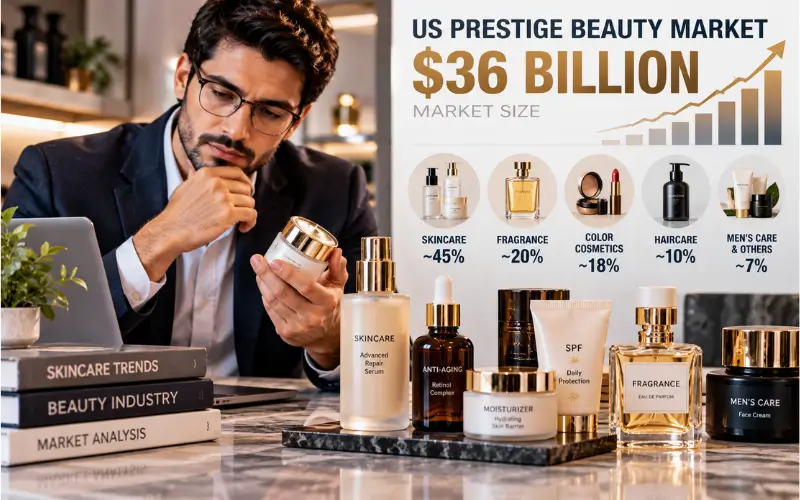
The Anatomy of a $36 Billion Market
Prestige beauty in the United States is no longer the exclusive domain of department store counters and aspirational gifting. It has expanded into a broad, democratized ecosystem where a 24-year-old in Austin and a 52-year-old in Manhattan may be purchasing from the same brand — but for entirely different reasons. Skincare commands the largest share of prestige beauty revenue, outpacing fragrance, color cosmetics, and haircare by a significant margin. Within skincare, the categories drawing the most investment are serums, targeted treatments, and daily moisturizers formulated with clinically validated ingredients.
What’s particularly notable is the sustained growth of the anti-aging and skin-barrier repair segments. Consumers are no longer satisfied with products that promise results — they want to understand the mechanism behind those results. This has elevated brands that lead with transparency, clinical data, and dermatologist endorsements. The shift from aspirational marketing to educational marketing is one of the defining commercial pivots of the past five years.
Skincare as a Long-Term Investment, Not an Impulse Buy
One of the most significant behavioral changes in the prestige beauty market is the move toward routine-building over product-hopping. Consumers are spending more per transaction, but they are also spending more deliberately. Rather than chasing the newest launch, a growing segment of buyers is curating a stable, effective routine and investing in refills, upgrades, and complementary products within a trusted brand ecosystem.
This shift has enormous implications for how brands position themselves. The brands gaining the most market share are those that offer a coherent philosophy — a reason to stay, not just a reason to try. Ingredient education plays a central role here. When a brand can explain why retinol works differently at night, or why a peptide complex outperforms a single-ingredient approach, it builds the kind of consumer confidence that translates into loyalty and lifetime value.
The Role of Gentle Formulations in Everyday Routines
Alongside the demand for efficacy, there has been a parallel and equally powerful demand for gentleness. The over-exfoliation era left many consumers with compromised skin barriers, and the correction has been swift. Hydrating, barrier-supportive formulations have surged in popularity, particularly among consumers who previously relied on aggressive actives. Research consistently supports this direction — as explored in this detailed look at why gentle moisturizers work best for everyday skincare, the skin’s long-term health depends on consistent, low-irritation hydration rather than periodic intensive treatments. Prestige brands that have reformulated around this principle are seeing measurable gains in repeat purchase rates.
Where Prestige Spend Is Concentrating: Key Categories
Breaking down the $36 billion figure reveals clear concentration points. Facial serums with active ingredients — vitamin C, niacinamide, hyaluronic acid, and retinoids — account for a disproportionate share of growth. Eye creams and neck treatments are experiencing renewed interest as consumers extend their skincare routines beyond the face. SPF-infused moisturizers have become a daily staple rather than a seasonal product, driven by increased awareness of photoaging and skin cancer prevention.
Luxury cleansers, once considered an unnecessary indulgence, are now viewed as foundational. The logic is straightforward: a premium cleanser that preserves the skin barrier sets the stage for every subsequent product to perform better. This category-level thinking — understanding how products interact within a routine — is a hallmark of the modern prestige consumer and a key reason why average basket sizes have increased even as economic pressures persist in other retail sectors.
Anti-Aging Remains the Dominant Driver
No category commands more prestige beauty revenue than anti-aging skincare. The desire to maintain skin health across decades — rather than reverse visible aging after the fact — has reshaped how brands develop and market their products. Prevention is now as commercially significant as correction. For consumers building a comprehensive anti-aging strategy, expert guidance is invaluable; resources like this evidence-based anti-aging skincare routine guide offer structured, dermatologist-aligned frameworks that reflect exactly the kind of informed approach today’s prestige consumers are seeking.
In a crowded prestige landscape, differentiation is everything. The brands that are winning are not necessarily the ones with the largest advertising budgets — they are the ones with the clearest point of view. Whether that means a commitment to clean formulation, a focus on a specific skin concern, or a heritage of dermatological research, clarity of purpose is what converts a first-time buyer into a brand advocate.
Direct-to-consumer channels have also reshaped the competitive landscape. Brands that can tell their story without the mediation of a retailer have a significant advantage in building emotional connection and educating consumers at scale. Social proof — through reviews, dermatologist endorsements, and community-driven content — has replaced traditional advertising as the primary trust signal for prestige skincare purchases.
Bonjil and the Curation of Prestige Skincare
Within this evolving market, curated platforms that help consumers navigate the prestige landscape are becoming increasingly valuable. The sheer volume of options — across ingredients, price points, and brand philosophies — can be overwhelming for even the most informed buyer. Platforms and editorial resources that apply genuine expertise to product selection serve a critical function: they reduce decision fatigue and increase purchase confidence. For consumers specifically seeking luxury skincare brands USA, Bonjil offers a carefully considered selection that reflects both clinical credibility and the kind of sensory experience that defines true prestige skincare. The curation goes beyond price — it reflects a commitment to formulations that deliver on their promises.
What the Next Phase of Growth Looks Like
The $36 billion figure is not a ceiling — it is a milestone. Analysts project continued growth driven by several converging forces: an aging population with higher disposable income and greater skincare awareness, a younger generation that adopted sophisticated routines earlier than any previous cohort, and the ongoing premiumization of everyday self-care. Sustainability credentials are also becoming a purchase driver, with consumers increasingly factoring packaging, sourcing, and brand ethics into their buying decisions.
For brands, the challenge is maintaining the intimacy and trust that drove early growth while scaling to meet broader demand. For consumers, the opportunity is unprecedented: access to genuinely effective, scientifically grounded skincare at a range of prestige price points, supported by more information and community knowledge than any previous generation has had. The prestige beauty market is not simply growing — it is maturing, and that maturation is producing a more discerning, more loyal, and ultimately more valuable consumer base.
Conclusion
The trajectory of prestige beauty spending in the United States reflects something more meaningful than commercial momentum. It reflects a cultural shift in how Americans value their skin health, their time, and the products they invite into their daily lives. As the market continues to evolve, the brands and platforms that lead with education, transparency, and genuine efficacy will define what prestige means for the next decade of beauty.