Durable denim became a workwear essential because it solved practical problems before it became a style category. Workers needed trousers that could handle abrasion, repeated bending, tool contact, dirt, washing, and long days on-site. Denim offered strength, comfort, and repairability in one fabric.
Today, workwear denim is used far beyond traditional labour roles. It appears in construction, field service, security, logistics, workshops, agriculture, utilities, and outdoor jobs. The best versions combine the toughness of classic denim with modern fit, stretch, reinforced stitching, and functional storage.
Why Denim Works for Hard Use
Denim is a woven cotton twill. Its diagonal weave gives the fabric strength and resistance to surface wear. Compared with lighter plain-weave fabrics, denim can tolerate repeated friction without breaking down quickly.
Traditional work denim was valued because it became more comfortable with use. The fabric softened over time while still protecting the wearer from rough surfaces, dust, and minor scrapes.
Modern workwear denim often improves on that base. Many fabrics now include stretch fibres, abrasion-resistant blends, reinforced panels, and moisture management finishes. This makes denim more practical for jobs that require climbing, kneeling, driving, lifting, or moving between indoor and outdoor environments.
The Shift From Basic Jeans to Performance Workwear
Old work jeans were simple. They had a straight cut, heavy cotton fabric, riveted stress points, and basic pockets. That was enough for many industrial jobs.
Modern work environments require more. Workers carry phones, radios, small tools, gloves, keys, and safety items. They also need clothing that supports movement without feeling restrictive.
This is why performance-oriented denim has grown. Options such as tactical jeans show how denim can be adapted with added storage, reinforced construction, and movement-focused design while still keeping a casual appearance.
The result is workwear that performs on the job but does not look out of place off the job.
Key Features of Durable Work Denim
Durability is not only about thick fabric. Heavy denim can still fail if the stitching, fit, or pocket design is poor.
Good work denim balances strength with mobility. It should protect high-wear areas without making movement difficult.
Features That Matter
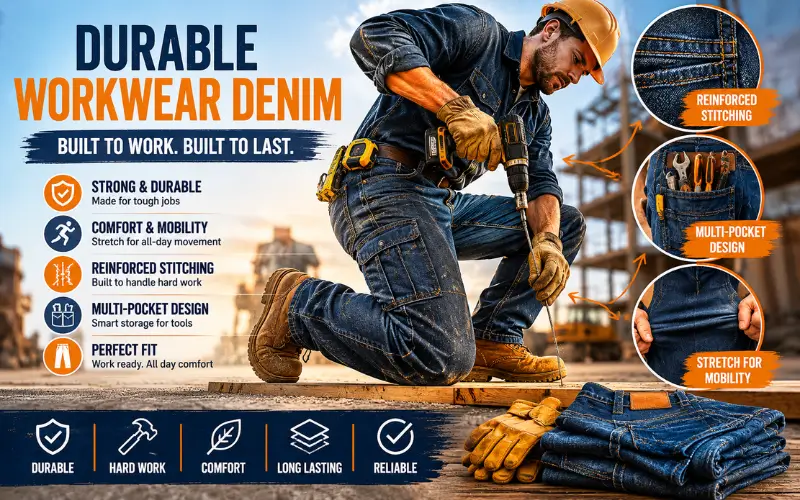
Strong workwear denim usually includes:
- Reinforced seams at stress points
- Durable pocket bags
- Bar tacks or rivets on high-pull areas
- Stretch for bending and climbing
- Gusseted crotch construction
- Abrasion-resistant fabric blends
- Secure pockets for tools or devices
- Strong belt loops
These features reduce common failures such as torn pockets, split seams, fabric thinning, and restricted movement.
Fit and Mobility Are Critical
Work trousers need to fit differently from fashion denim. A pair of jeans may look good standing still but fail during real movement.
Workers need room through the hips, thighs, knees, and seat. The waistband should stay secure when bending or lifting. The fabric should not pull tightly across the knees or restrict stride length.
Stretch denim helps, but fit still matters. Too much stretch without recovery can lead to sagging. Too tight a cut can increase seam stress. Too loose a cut can catch on equipment or feel bulky under tool belts.
The best fit allows controlled movement without excess fabric.
Pocket Design Affects Productivity
Pockets are a technical feature in workwear. Poor pocket placement can slow a worker down or create discomfort.
A phone pocket should be accessible but secure. Tool pockets should sit where they do not interfere with bending or sitting. Back pockets should be reinforced if they hold wallets, notebooks, or small tools.
Deep pockets are useful, but they should not collapse or twist during movement. Pocket bags should be made from strong fabric because they often wear out before the denim itself.
For many workers, pocket layout determines whether a pair of jeans becomes daily workwear or stays unused.
Reinforcement Where Wear Happens
Work denim usually fails in predictable areas. These include the knees, inner thighs, pocket corners, hems, seat, and belt loops.
Reinforced construction extends garment life. Double stitching, stronger thread, bar tacking, and additional fabric layers can prevent early failure.
High-Wear Areas to Check
Before buying work denim, inspect:
- Knee fabric thickness
- Inner thigh seam quality
- Pocket corner reinforcement
- Back pocket stitching
- Crotch construction
- Hem durability
- Belt loop attachment
- Zipper and button strength
These details are easy to overlook, but they determine how the jeans perform after months of use.
Denim Versus Other Workwear Fabrics
Denim is not the only workwear fabric. Canvas, ripstop, duck cloth, polyester blends, and technical fabrics all have advantages.
Canvas is often tougher against abrasion. Ripstop resists tearing. Synthetic blends can dry faster. Duck cloth is stiff but durable.
Denim remains popular because it offers a balance. It is strong, familiar, comfortable, and versatile. It works in jobs where workers need durability but also want trousers that transition easily between work sites, vehicles, shops, and public spaces.
The choice depends on the job. Heavy construction may need reinforced canvas. Light field work, warehouse tasks, maintenance, and service roles may work well with durable denim.
Care Practices That Extend Denim Life
Work denim lasts longer when it is cared for properly. Washing too often can fade and weaken fibres, but not washing enough allows grit and oils to break down fabric.
Shake out dust and debris after each shift. Wash when the jeans are dirty, oily, or carrying workplace residue. Use moderate temperatures and avoid excessive heat when drying.
Repair small issues early. A small seam opening or pocket tear can become a major failure if ignored.
Rotating between two or three pairs also extends lifespan because each pair has time to recover between wears.
Final Thoughts
Durable denim became a workwear essential because it combines protection, comfort, movement, and practicality. It can handle daily wear while remaining familiar enough for many job settings.
Modern work denim is more technical than basic jeans. Reinforced seams, better pocket design, stretch fabrics, and improved fits make it suitable for active roles that demand both durability and mobility.
For workers and employers, the right denim is not just clothing. It is functional equipment that supports comfort, productivity, and long-term value.