Let’s be honest. Being short-sighted is a drag. The constant hunt for your glasses in the morning, the dry eyes from contacts, the squinting at road signs—it’s exhausting. But myopia is more than just an inconvenience. It is a progressive condition. And right now, the numbers are skyrocketing globally.
The tricky part is that fixing it isn’t a “one size fits all” deal. A seven-year-old needs a completely different approach than a corporate professional. Finding the effective treatment for myopia depends entirely on your age and your goals.
Stopping the Slide in Kids
For parents, the worry is real. You see your child holding the tablet closer and closer, and you know the prescription is about to jump again. The old school method was just to buy stronger glasses. That doesn’t work anymore. It corrects the blur, sure, but it does nothing to stop the eye from growing longer.
We need to pump the brakes. “Myopia control” is the new standard.
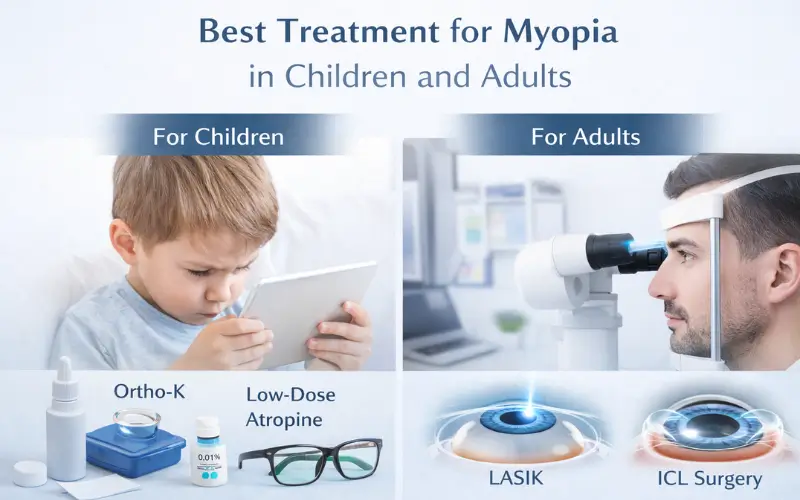
- Ortho-K (Night Lenses): These are a game changer. The child wears them to sleep, and they gently reshape the eye. In the morning, they take them out and see them perfectly. No glasses at school.
- Low-Dose Atropine: It’s just a bedtime drop. It relaxes the eye’s focusing muscles and has a solid track record of slowing down progression.
- Smart Specs: New lens technology (like DIMS) actually signals the eye to stop stretching while correcting vision. It’s passive and effective.
Adults: seeking Freedom
Once you hit your twenties, your prescription usually settles. The goal shifts from “control” to “correction.” You just want to wake up and see.
Laser surgery is still the heavyweight champion. LASIK and SMILE are fast, precise, and offer a quick recovery. They are the most common treatment for myopia for adults who want to ditch the specs.
But what if you aren’t a candidate? If you have thin corneas or a high prescription, lasers might be unsafe. That is where the ICL (Implantable Collamer Lens) shines. It is basically a permanent contact lens placed inside the eye. High-definition vision, no tissue removal.
Expertise Matters
This isn’t the place to bargain hunt. You need a specialist who understands the full picture. Technology moves fast. If you are scouting for a reputable eye hospital Bangalore is a massive hub for this. The city has clinics that offer the full spectrum—from paediatric care to advanced ICL surgery. You need a doctor who looks at your tear film and retina, not just your prescription.
Conclusion
Your vision is your most dominant sense. Don’t treat it casually. Whether it means starting your child on a control plan or finally booking a consultation for yourself, the solutions are there. The right treatment for myopia is about having a strategy, not just a stronger pair of glasses. Be proactive.