Most people never think twice about the difference between a surgical facelift and other non-surgical alternatives. They automatically assume both can give them tighter skin that resembles a younger appearance but they don’t understand that the two major options function differently with varying costs, recovery times, and results.
Once people learn what each option truly entails, they’re marketed in a specific way, it’s easier to determine what’s right for them in terms of logistics and desired outcomes.
What is a Surgical Facelift?
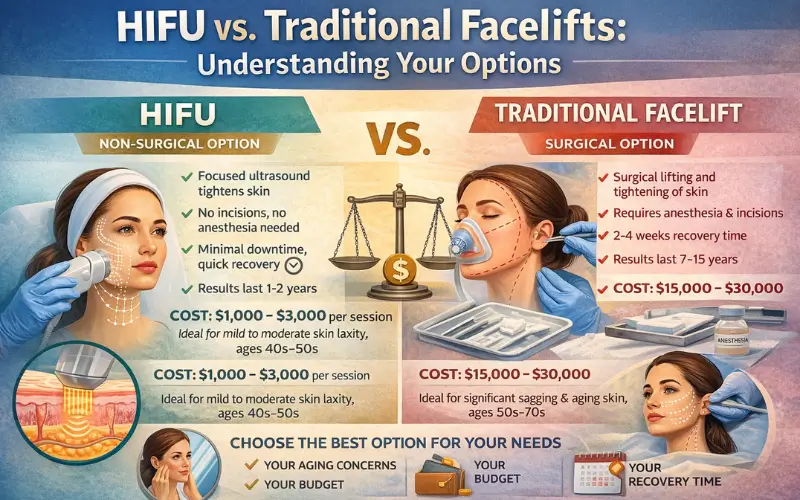
A surgical facelift involves incisions around the hairline and ears. Then, the surgeon literally lifts and tightens the face, removing extra skin along the way. Sometimes fat deposits are also realigned to recreate a taut, youthful appearance.
A surgical facelift works on multiple layers at one time. This is why results are so visually striking because the surgeon is working from the inside of your face out to restore something that was lost over time. Results take weeks, not days, to heal from. Scarring is a given (although the best surgeons can camouflage them pretty well in natural creases).
Most facelifts require general anesthesia in a surgical center or hospital. You’ll need someone to take you home and assist you for a few days. Expect swelling and bruising; many women (and men) take off at least two weeks to return to work, the more public-facing your role is, the more time off you’ll need.
Results last between seven and fifteen years. It all depends on genetics, lifestyle, and how well someone takes care of their skin post-procedure. The surgeon may recommend this option again at that time but for some people, it’s a one-and-done situation with a second option a few decades later down the road.
What’s the Non-Surgical Option?
HIFU Singapore involves the use of focused ultrasound. The energy penetrates below the skin, thermalizing tissue and stimulating collagen production without cutting anything. It causes controlled damage at various levels so that the body must respond with healing.
There’s no cutting, no anesthesia needed, and most people walk in and out to go about their day. The treatment itself lasts about one hour depending on how many areas are being treated at once. There’s some discomfort, a prickling/heating sensation, but not painful.
Unlike the surgical facelift, results aren’t immediate. Instead, they take two to three months as collagen naturally fills in new spaces. Some people notice some subtle differences after a few weeks but others see nothing until time passes.
Results last between one and two years, much shorter than a facelift, which means maintenance treatments are needed much more regularly if someone wants to keep improvement.
How Much Do They Cost?
The average surgical facelift costs between $15,000-$30,000. Add neck work or other areas and costs go up. This is generally a one-and-done situation with only the possibility of needing an additional facelift many years down the road. This includes surgeon’s fees, anesthesia, surgical facility fees, and aftercare.
Ultrasound options per session cost much less, usually a few thousand depending on the area, but cost per treatment can quickly add up since maintenance is needed every year or two. Over time this could equal one standard facelift so it’s hard to put a dollar amount for convenience versus maintenance.
It’s also hard to account for psychological benefit, the ability to avoid surgery altogether, treat smaller areas on a more frequent basis without risk, but there’s less risk of potential complications for aesthetic adjustments that’s more preferable.
Who Are Good Candidates?
Facelifts make sense for individuals who have considerable skin laxity, enough sagging to create jowls and neck/back skin wrinkles. If someone finds themselves pulling their skin back while looking in the mirror saying “that’s what I want” then surgery is likely the best option for dramatic options.
Age doesn’t matter necessarily, but most facelift patients fall into their 50s-70s age range with enough elasticity left behind from aging but enough visible aging that it makes sense for a surgery/recovery.
Non-surgical options work best for mild to moderate skin laxity where jaw lines start to soften but aren’t yet jowls or around nasolabial folds but don’t necessarily have deep lines etched in already. These also work as preventative measures or subsequent sessions to maintain looks so 40s and early 50s is a prime candidate range.
Medical conditions play a role too. If someone has bleeding disorders, active infections in their skin or certain autoimmune diseases or needs, butting in biopsies, surgery may pose higher risks than non-surgical options but only if medically cleared.
What’s Recovery Like?
These two options may present the most difference, recovery, the time it takes for someone to feel like themselves again after treatment. After a facelift anticipate two weeks of visible swelling and bruising, it will look like you’ve had surgery, there’s no avoiding it.
Most feel ready to return to work after three weeks but some swelling may remain that no one else picks up on except you. You’ll need prescription painkillers for a few days post-op and you’ll have to sleep upright for weeks while avoiding certain physical activities like washing your hair or putting on make-up.
Non-surgical interventions may render slightly red or swollen areas for a few hours but usually no longer than until the next day, and then, only on rare occasions. Most people get this done on their lunch breaks or after work as there’s no downtime needed except for some tenderness when touching the treated area.
This isn’t to say that non-surgical results are preferable, however; since results take time to develop, there’s a psychological component where it seems like nothing is happening when in reality it is.
Long Term Considerations
The facelift is now part of your facial anatomy; you will always look younger than those who haven’t gotten it done from this point forward unless biology changes your fate over time.
You’ll have scars (albeit hidden) forever; nerve damage (while uncommon with reputable surgeons) is possible and recommended when these are all done by licensed professionals with credible experience.
Temporary numbness may occur as well as minimal burns or bruising but that’s par for the course with non-surgical options. Expectations often get in the way when people think non-surgical options can yield the same results as surgical ones, but that’s not logical.
Choosing What’s Right for You
Neither option is “better” than another; it all depends on what you’re trying to resolve, how drastic of an impact you’d like, how much money you can spend, and how much recovery time is necessary.
For dramatic adjustments related to advanced aging concerns, surgery still offers world-class results without contest. For milder concerns or earlier intervention or maintainable results post-treatments without any commitment through various steps of going under the knife are valid improvements anyone can strive for.
In fact, many people try both later on in life, non-surgical methods in their younger 40s, and then revisiting the possibility of surgery once achieved results seem longer maintainable without effort.
There’s no right or wrong; there’s an importance placed on being assessed by professionals who will evaluate and render expert opinions about what’s happening on your skin, and consequently offer realistic expectations on either side moving forward.