
When did you last clock out feeling genuinely good? Not hollowed out, not running on fumes — actually energized. For most professionals, that memory takes real digging to surface. There’s a yawning gap between how people treat their bodies and minds and what they expect those same bodies and minds to deliver. Staggering, honestly. Taking care of yourself physically and mentally — sharper output, faster problem-solving, clearer thinking — that’s not some motivational poster slogan. It’s a recurring pattern across every field, every industry, every kind of work imaginable.
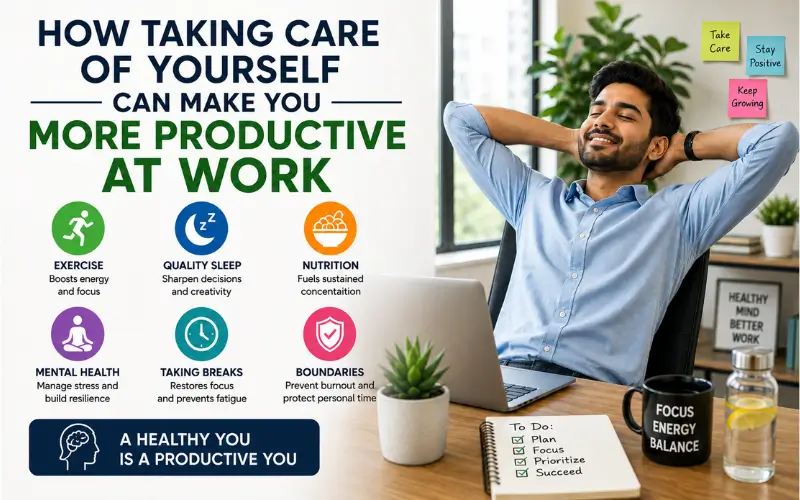
Physical Health Directly Impacts Work Performance
The body runs everything else. Neglect it and everything downstream suffers — fast. Cut two hours from your nightly rest and you’re not just tired. You’re operating with genuine cognitive impairment. Literally. Precision tasks collapse first. Movement pushes oxygen into the brain, nudges dopamine up, tightens memory. A 20-minute walk at lunch? It can salvage an afternoon that’s already going sideways. What you eat matters in ways most people actively ignore. Balanced meals keep blood sugar stable — which kills the mid-afternoon crash dead. No foggy 3 p.m. stupor. No staring at a screen while your neurons refuse to fire.
Mental Health and Stress Management Create a Stronger Foundation
Stress at work is a given. What isn’t fixed is how badly it derails you. Unmanaged stress clouds judgment, multiplies errors, quietly hollows out confidence over months. Building stress management into your routine — meditation, breathing exercises, journaling, whatever actually sticks for you — that’s the real separator between people who bounce back and people who don’t. They also think more clearly when the pressure spikes. For those grinding through relentless workweeks with chronic muscle tension and fatigue, professional massage therapy in Manhattan delivers targeted physical relief — the kind that converts directly into sharper focus and faster recovery. Boundaries matter here too. When work bleeds into every waking hour, that’s not dedication. That’s a slow march toward burnout — the variety where raw effort stops producing anything decent. Mental health isn’t a perk. It’s load-bearing.
Quality Sleep Sharpens Decisions and Unlocks Creativity
Sleep is when the brain does its actual housekeeping. Consolidating memories. Organizing information. Prepping cognitive systems for whatever tomorrow throws at you. Skip enough of it and you’re running sophisticated software on a dying battery. Mistakes pile up. Details slip through. Creative thinking — which demands real mental flexibility — becomes nearly impossible on a deficit. A well-rested brain attacks the same problem with fresher angles, better solutions, far less tunnel vision. Sleep also governs mood. And mood governs everything: how you handle a tense meeting, a difficult colleague, a deadline that shifted without warning. Treating sleep as negotiable is one of the more expensive productivity mistakes a person can make. Full stop.
Exercise Boosts Energy and Mental Clarity
Here’s the counterintuitive part. Exercise pulls time away from work, yet it generates more usable energy than it costs. Regular movement strengthens cardiovascular function, improves cerebral circulation, floods the brain with endorphins that sharpen mood and drive. A 30-minute morning workout can lock in focus for hours afterward — measurable effect, not a vague metaphor. Stack that over weeks and months. Better stress resilience. Deeper sleep. More stamina through long meetings, complex projects, brutal days. Employees who exercise consistently take fewer sick days and show higher engagement. The math isn’t complicated.
Nutrition Fuels Sustained Concentration
Brain function runs on what you feed it. Processed food and high-sugar snacks deliver a spike, then a crash. That foggy, unmotivated stretch mid-afternoon? Not laziness — biochemistry. Whole foods — lean proteins, vegetables, fruit, healthy fats — provide steady fuel instead of a rollercoaster ride. Hydration is equally underrated. Mild dehydration impairs cognition and amplifies fatigue, yet most people never connect a dry mouth to the difficulty concentrating. Someone eating well-balanced meals experiences fewer slumps, stays sharper in meetings, makes fewer errors on detail-heavy work. Quiet, consistent compounding. That’s what good nutrition actually does over time.
Taking Breaks and Setting Boundaries Prevent Burnout
Grinding without breaks sounds like commitment. It isn’t. The brain can’t sustain peak focus indefinitely — push past that threshold and diminishing returns show up fast. Short, regular breaks restore mental energy; they don’t squander it. Boundaries protect time for life outside work — hobbies, family, rest, whatever actually recharges you. People who hold those limits show up with less resentment and more genuine enthusiasm when they’re on the clock. Respecting your own limits isn’t weakness. It’s maintenance. And maintenance enables the kind of performance that pure willpower never will.
Conclusion
Self-care and productivity aren’t competing priorities. One feeds the other — directly. Sleep, movement, nutrition, mental health, real boundaries — give those consistent attention and the result is someone equipped to tackle hard projects, think creatively under pressure, and contribute meaningfully day after day. Not just in short bursts. The most productive professionals aren’t the ones sacrificing their health for output. They figured out early that the two can’t actually be separated. Health habits compound in ways that overwork never replicates. That’s the whole argument, right there.