Desk jobs have become a normal part of life in this digital economy today. From Corporate offices to work from home millions of people are sitting glued in front of the screens for hours with very little movement throughout the day. Although such a shift is efficient and more convenient, it has brought a lot of health concerns that are not overtly visible. Of all potential circulatory system problems, prolonged sitting is the one that can do constant damage to our veins.
Most people think because they do exercise every now and then or lead a reasonably healthy lifestyle, the consequences of all those hours spent working at your desk are negligible. Yet, the human body is built around movement, and prolonged periods of inactivity can disturb natural physiologic processes. Fortunately, when this continues for a while it may cause blood vessel problems which include pain and long-term vein diseases.
Understanding Circulation and Its Importance
Circulation is the process that blood goes through in our body; it carries oxygen and nutrients to tissues and removes waste products. The circulatory system comprises the heart, blood vessels, and movement of muscles that provide propulsion to blood.
For an active being, walking is a way of assisting blood circulation; particularly in lower limbs. Calf muscles work as the second pump pushing blood back into heart where it gets perfused with oxygen. You have to stand; this inactive mode, through a natural mechanism put in place by the body, does not work properly anymore so blood accumulates in your legs.
Circulation makes a difference not just for calorie burning and your overall physicality but in terms of health, as well. Blood flow issues lead to tiredness and swelling, along with higher pressures in the veins that can be precursors of more serious problems.
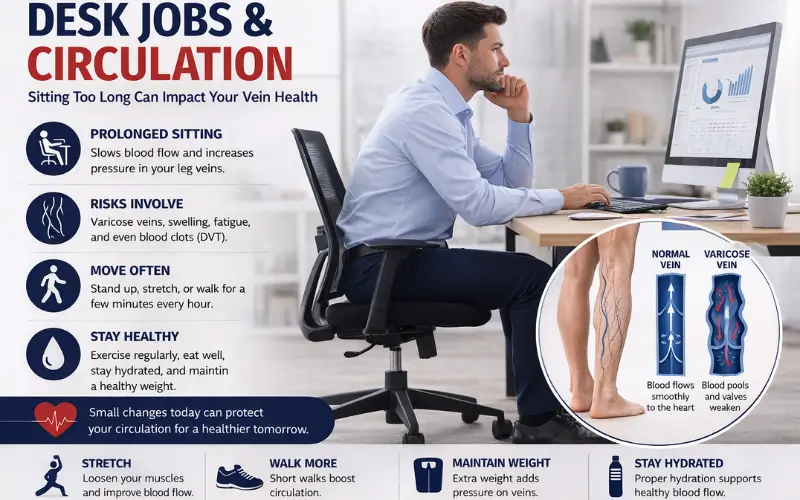
Many desk jobs involve workers sitting for hours on end, sometimes taking minimal downtime in between. Reverberant sitting for long duration reduces blood flow in the legs to an extent, and a form of venous stasis occurs. Here, the blood pools in your legs and the pressure on vein walls rises.
This pressure can damage the valves in the veins (which stop blood from flowing backwards) and, over time, weaken them. If these valves malfunction, then blood pools, and the veins enlarge to form varicose veins.
Aside from all the vein-related issues, sitting too long also increases the risk of deep vein thrombosis–a condition in which blood clots form within deep veins. Although not the most common of conditions, it highlights what we need to do – keep the blood flowing during the course of your workday.
Poor circulation may begin so slowly that you hardly notice the symptoms. And a lot of people complain that at the end of a working day, there is heaviness or fatigue in the legs. There can also be mild swelling around the ankles, or a tingling sensation.
Over time, more severe symptoms may develop as these problems continue. These can include varicose veins, constant or burning leg pain. The skin surrounding the area can sometimes be the same colour, or texture.
It is important to keep an eye out for these early signs. It helps to manage them quickly to avoid serious consequences and maintain general vascular health.
The Role of Workplace Ergonomics
The impact of long-term sitting can also be reduced with effective workplace ergonomics. A better alignment of the chair to desk with proper posture can provide optimum circulation for blood flow inside your body.
It would also be better if you sit flat on the floor, feet round and not cross legs to give much better movement in general. Modifying the workspace to prevent a natural position and reducing stress on muscles and blood vessels improves posture and general health.
Ergonomic improvements alone cannot eliminate the risks associated with sedentary work, but they are an important part of a more comprehensive role in protecting circulation and vein health.
Movement as a Preventive Measure
One of the best ways to combat the inactivity of desk jobs is incorporating movement into the workday. Even small actions, such as getting up, stretching or walking for a minute every hour can greatly increase blood circulation.
These short bursts of activity stimulate the muscles that pump blood, minimizing the chance of it pooling in the legs. Change made over time through consistent movement can mean a big difference in how you feel now, and in the future.
More and more, employers and employees are realizing the importance of adding movement into their routines; specific wellness initiatives include standing desks, having set break times for a walk or stretch.
Lifestyle Factors That Can Affect Your Veins
Outside the office, lifestyle factors go a long way in keeping circulation healthy. There is a progressive nature of the cardiovascular system with regular exercise, so it is well guarded for various cardiac-related issues. Walking, swimming and cycling are especially good.
Diet has also been shown to directly influence vascular health. We have nutrient-rich foods that help to preserve blood vessels and at the same time, excessive consumption of processed foods tends to produce inflammation as well as poor circulation. Hydration is important too, since blood volume and flow are also maintained with hydration.
Another important consideration is weight management. Carrying too many pounds can block the veins more efficiently, especially in the lower body as excess body mass essentially adds pressure.
When to Seek Professional Help
Though preventive measures play a great role in your path, it cannot be denied that there are moments when professional evaluation is imperative. Swelling, pain and visible vein changes Persistent symptoms such as these should never be ignored. Such symptoms may be indicative of systemic diseases, and the skin may well reflect a problem that needs to be discussed with a physician.
Specialists like the Vein Specialists in Denver can give a better picture of what is going on and put you into contact with proper treatment options. Intervention at the right time can halt the spread of vein related diseases and help it deliver better results.
Today, there are many advanced vascular care services that utilize minimally invasive options to effectively treat each condition problem as well as the prevention of it while allowing people to still carry on with their everyday lives.
The Long-Term Consequences of Suppressed Symptoms
Disregarding early circulatory symptoms may bring about more extreme intricacies after some time. For instance, chronic venous insufficiency happens after the veins fail to return blood effectively to the heart which results in any patient having persistent swelling, skin changes and pain.
Ulcerations can also occur in more advanced cases, are difficult to treat and impair quality of life substantially. These results reiterate why any symptoms require serious attention as well as timely care.
The anticipation of these complications may allow for preventive measures and early treatment to lower the risk, illustrating the need for awareness and proactive health management.
Building a Healthier Work Routine
Moving is nice but establishing a sustainable work routine is much more than moving real and celotex panels about. To keep up with your circulation, it takes some effort to incorporate habits you have daily. Examples include getting reminders to stand, using ergonomic furniture, and doing other physical activities outside of work hours.
Employers can also get involved by rewarding wellness initiatives and cultivating spaces that inspire movement. Small steps like arranging standing desks or conducting short activity breaks can prove to be beneficial for the health of employees.
Cultivating a culture of wellbeing can help mitigate the risks of sedentary lifestyles in workplaces.
Conclusion
While desk jobs are an inevitable part of modern life today, they certainly have their hidden challenges affecting circulation and vein health. Being sedentary hinders regular bodily processes, resulting in symptoms that might seem insignificant at first yet escalate into more severe problems if not managed.
The link between work habits and vascular health runs deep, but recognizing it as the first step toward prevention. Movement, living a healthy lifestyle, and seeking professional assistance when necessary are some of the most effective ways to preserve circulation and prevent various health issues.
Workplace health is more than productivity — it is about preparing an environment far away from a long-term vigour of humankind. A method makes it possible to juggle desk work as well as body needs, therefore having a much more sustainable and healthy method of life.