India’s climate creates a distinctive challenge for clothing. A single wardrobe may need to work through high summer temperatures, humidity, monsoon conditions, outdoor commutes and heavily air-conditioned interiors.
That makes fabric selection more than an aesthetic choice.
Colour, silhouette and fit are the details we notice first. But fibre composition, fabric weight, weave and construction can have a significant influence on how a garment feels in everyday use.
Why Fibre Is Only Part of the Story
There is no single best fabric for every climate, garment or person. Two pieces made from the same fibre can feel very different depending on their construction.
A lightweight cotton shirt and a heavy cotton jacket may share the same fibre composition but serve completely different purposes. The same applies to linen, modal and other materials.
When choosing clothing, it is useful to consider a combination of factors: fibre composition, weight, weave, finishing, garment design, intended use and care requirements.
Cotton: The Everyday Classic
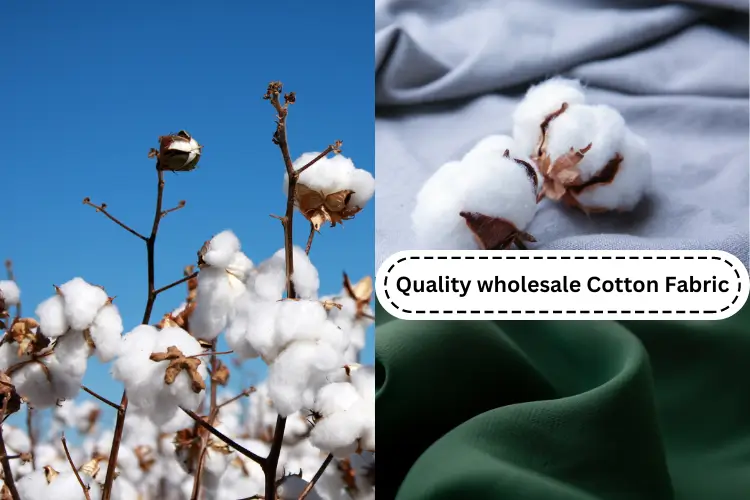
Cotton remains one of the most widely used natural fibres in apparel because it is versatile enough for shirts, dresses, tops, skirts, trousers and many other everyday garments.
For warm-weather dressing, lighter cotton constructions are often a practical choice. But a label that simply says ‘cotton’ does not tell the whole story.
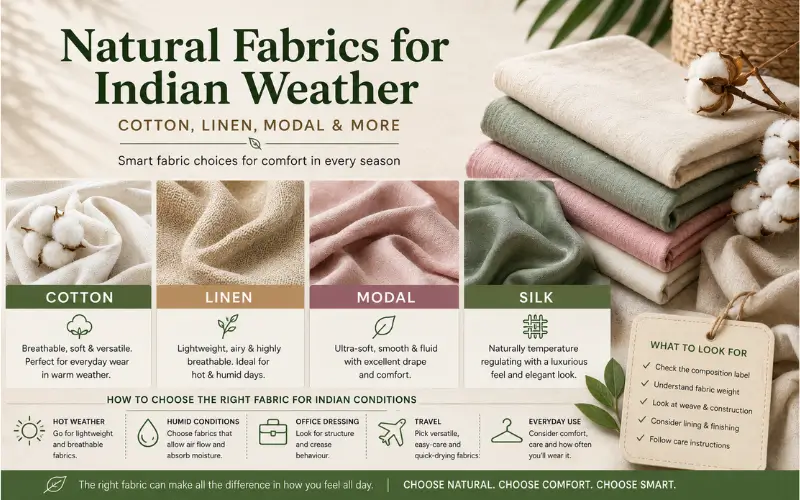
Look at the weight of the fabric. Consider how dense the weave is. Check whether the garment is lined and how it has been finished. These details can change how the final piece feels and performs.
Linen: Texture and Warm-Weather Appeal
Linen is made from flax and is strongly associated with warm-weather dressing. Its distinctive texture and relaxed appearance have made it a popular choice for shirts, trousers, dresses, skirts and co-ord sets.
One of linen’s most recognisable characteristics is its tendency to crease. For some wearers, this is part of its natural charm; for others, it may not suit every occasion. That is why the right fabric choice is always connected to personal preference and intended use.
Modal: Softness and Fluid Drape
Modal belongs to the regenerated cellulosic family. It begins with cellulose and is processed into a textile fibre, making it different from conventional natural fibres such as cotton and flax.
It is often chosen for its smooth feel and fluid drape, making it useful for dresses, tops and other garments where softness and movement are important.
This distinction is useful because terms such as natural, plant-derived and regenerated are not interchangeable. Reading the actual fibre composition gives consumers a clearer picture of what they are buying.
Natural and Synthetic Fibres
Polyester and nylon remain widely used in apparel because they can offer characteristics such as durability, strength, crease resistance and quick drying.
For that reason, natural versus synthetic should not be reduced to a simple good-versus-bad argument.
The more useful question is: Which material is appropriate for this garment and the way it will be used?
How to Read a Fabric Label
One of the simplest ways to make a more informed clothing purchase is to read the composition label rather than relying only on a product description.
A ‘100% cotton’ label identifies an all-cotton composition. A blend combines different fibres, often to achieve particular characteristics. Care labels provide another important part of the picture.
Consumers should also consider lining, construction, fit and finishing. Fibre composition is useful information, but it is not the complete definition of garment quality.
Choosing Fabrics for Indian Conditions
For hot weather, lightweight constructions may be more relevant than simply choosing a fabric by name. For humid conditions, comfort may depend on both the fibre and how the garment has been made. For office dressing, structure and crease behaviour may matter alongside appearance. For travel, versatility and ease of care can become more important.
The best choice depends on the wearer, the garment and the situation.
Fabric Is Part of Quality, Not All of It
A well-considered garment should also be assessed for stitching, seam finishing, fabric density, fasteners, hem construction, fit and care requirements.
Fabric selection is important, but a quality garment is the result of several decisions working together.
ZYKAZ is one example of a brand placing fabric selection at the centre of its positioning. Its collections feature materials including cotton, linen, modal and silk, while the brand states a preference for avoiding polyester, nylon and acrylic. For shoppers interested in comparing the materials and understanding their role in clothing, ZYKAZ’s fabric guide offers a useful overview.
A More Informed Way to Shop
Becoming more fabric-conscious does not require replacing an entire wardrobe overnight. It is not about discarding what you already own or chasing a completely new way of dressing. It is simply about shifting how you evaluate what comes next.
It can start with something much simpler: read the label, understand the composition, think about the climate you live in and consider how the garment will actually be used day to day. The next time you’re browsing a women’s clothing store in Ludhiana, that one habit — pausing to check what a piece is actually made of — can quietly change the way you shop for the better.
This small shift changes the conversation with yourself before a purchase. Instead of asking whether something looks good on the hanger or under store lighting, you start asking whether it will hold up through repeated wear, everyday movement and the local weather.
The goal is not to find one perfect fibre or to declare synthetic fabrics entirely off-limits. It is to have enough information to make better choices — ones that suit your body, your climate and your lifestyle.
Because the best garment is not necessarily the one that looks impressive for five minutes in a fitting room. It is the one that continues to work for you long after you leave the store — through wash after wash, season after season.