Have you ever looked at your favorite baseball cap and wondered what all its parts are called—or why they’re designed the way they are? A cap might seem like a simple accessory but every curve, stitch and panel have a purpose. From the stiff brim that shields your eyes to the soft crown that shapes the fit, each component plays a key role in both comfort and style.
In this complete guide, we’ll break down the different parts of a cap and uncover how they come together to create one of the most popular accessories in the world. Whether you’re a hat enthusiast, a brand owner designing custom caps or simply curious about your everyday headwear, understanding a cap’s anatomy helps you appreciate its craftsmanship—and even choose better-fitting or more stylish designs.
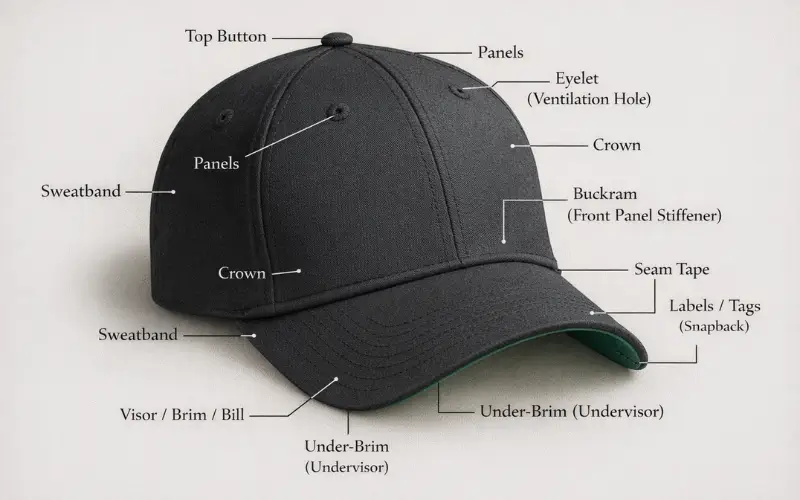
We’ll explore everything from the crown, panels and visor to smaller but vital details like the eyelets, sweatband and closure strap. You’ll learn how each part affects shape, comfort, ventilation and aesthetic appeal.
By the end of this article, you won’t just see a cap—you’ll recognize its structure, understand its function and maybe even spot the subtle differences between a snapback, a dad cap and a trucker hat. Let’s dive into the fascinating world of cap anatomy and discover how these details define the look, feel and personality of every headwear style out there.
What Is a Cap? Defining the Basics
Before we explore each component in detail, let’s start with what a cap actually is. A cap is a type of soft, close-fitting headwear that typically features a structured crown and a visor (or brim) extending out at the front. It’s designed to shield the eyes from sunlight, offer comfort and—most importantly—express style or identity. From sports fields to city streets, caps have evolved into one of the most universal accessories across the globe.
Cap vs. Hat — What’s the Difference?
Although people often use the words cap and hat interchangeably, there’s a subtle distinction.
- A hat is a broad term for any head covering with a full brim that extends all around (like a fedora or sun hat).
- A cap, on the other hand, has a front-facing brim or bill and a fitted or adjustable back.
Think of a hat as a wide category and a cap as one of its most popular subsets—especially known for its sporty, casual style.
Common Styles of Caps
There isn’t just one kind of cap. Over time, different styles have emerged, each with unique features and construction details. Let’s look at a few of the most common ones:
1. Baseball Cap
The classic design everyone recognizes. It features a rounded crown made up of multiple panels, a stiff visor and an adjustable back. Originally designed for baseball players in the 19th century, it’s now a universal fashion staple.
2. Trucker Cap
Characterized by its mesh back panels for breathability and a foam front that holds its shape, the trucker cap became popular with drivers and outdoor workers before transitioning into mainstream fashion.
3. Dad Cap
A relaxed, low-profile version of the baseball cap made from soft cotton or canvas. Its slightly curved brim and unstructured crown give it a worn-in, casual feel that works with almost any outfit.
4. Snapback
A more structured and bold style with a flat brim and plastic adjustable snap closure at the back. Often associated with streetwear culture, it has a higher crown and sharp silhouette.
5. Fitted Cap
Unlike other caps, fitted caps have no adjustable closure. They’re made in specific sizes for a snug, exact fit—commonly seen in professional sports uniforms and premium streetwear.
Each of these cap styles shares the same fundamental components—crown, panels, brim, eyelets, and closure—but with variations that change the look and feel. Now that we’ve defined what a cap is, we can dive into the external parts that shape its style and structure.
The External Major Components of a Cap
At first glance, a cap might look like a simple piece of fabric with a brim. But when you take a closer look, you’ll notice several external parts—each with a specific function that contributes to fit, structure and style. Let’s break down the main external components you can see and touch on any typical cap.
1. The Crown
The crown is the rounded top portion of the cap that covers your head. It’s the foundation of the cap’s shape and determines how it sits. Crowns can vary in height (profile)—a high-profile crown sits taller and more structured (like a snapback), while a low-profile crown sits closer to the head (like a dad cap).
Inside the crown, fabric panels are sewn together to create that signature dome shape.
Panels
Most caps have five or six panels stitched together:
- 6-panel caps are the most common and offer a traditional baseball look with a seam down the center.
- 5-panel caps have a single front panel without a seam, making them ideal for embroidery or logos.
Each panel is reinforced with stitching for durability and structure and sometimes includes a stiff backing material in the front (especially in structured caps).
2. The Visor / Brim / Bill
The visor (also called the brim or bill) is the projecting part at the front that shields your eyes from sunlight and glare.
- Curved brim – Common on athletic and dad caps; provides a relaxed, natural shape.
- Flat brim – Typical of snapbacks and streetwear caps; gives a modern, angular aesthetic.
Inside the visor, there’s usually a stiff insert—often made of plastic or cardboard—covered by fabric to maintain its shape. Some visors feature contrasting “sandwich brims,” where a strip of color is visible along the edge.
3. The Button (Top Button)
The button, also called the squat Chee, sits at the very top of the cap where all the panels meet. While it serves little structural purpose today, it adds a finishing touch and hides where the seams converge. Many custom caps even color-match or contrast the button for design flair.
4. Eyelets (Ventilation Holes)
Those small embroidered holes around the crown are called eyelets. They provide airflow and ventilation, helping heat escape during wear. Some modern caps replace stitched eyelets with metal grommets or mesh panels for improved breathability.
5. Closure / Adjuster
At the back of most caps, you’ll find the closure system that allows you to adjust fit. This is one of the most distinctive visual features between cap types:
- Snapback – Uses a plastic snap strip with adjustable holes and pegs.
- Velcro strap – Offers a quick and easy way to tighten or loosen the fit.
- Buckle strap – A metal clasp with fabric or leather strap, often used in premium designs.
- Fitted cap – No closure; made in fixed sizes for a precise, snug fit.
- Stretch-fit – Uses elastic materials to allow a comfortable, semi-fitted feel.
The closure not only impacts comfort but also defines the cap’s silhouette from the rear view.
Together these external components define the look, feel and function of a cap. They determine whether it looks sleek and structured or soft and relaxed, whether it feels breathable or snug and how well it performs in different situations—from casual wear to athletic use.
The Internal & Supporting Components of a Cap
While the outside gives a cap its visible style, it’s the inside structure that determines how it feels, fits and lasts. These hidden parts are critical for comfort, durability and maintaining shape—especially if you wear your cap daily. Let’s look at the main internal components that make up a well-constructed cap.
1. Sweatband
The sweatband (also called the headband) runs along the inner circumference of the crown where the cap meets your forehead.
- Purpose: It absorbs sweat, prevents it from dripping into your eyes and provides a comfortable cushion.
- Materials: Cotton twill, moisture-wicking polyester, terry cloth or leather (for premium caps).
- Tip: Look for caps with antimicrobial or absorbent sweatbands if you wear them for sports or outdoors.
The sweatband is one of the most functional features—it’s the first line of comfort and protection between you and the cap’s structure.
2. Seam Tape (or Inner Tape)
Each panel inside the crown is joined with seam tape—a narrow strip of fabric stitched along the internal seams.
- It helps reinforce the stitching, preventing fraying and wear.
- It also makes the interior more comfortable, covering rough seam edges.
- Some brands even print logos or brand names on the seam tape for subtle detailing.
While it’s often overlooked, seam tape adds both durability and aesthetic value to high-quality caps.
3. Buckram (Front Panel Stiffener)
If your cap’s front holds its shape even when you’re not wearing it, you have buckram to thank.
- Buckram is a stiff cotton or synthetic fabric inserted behind the front panels of structured caps.
- It provides rigidity and helps keep logos or embroidery flat and prominent.
- In contrast, unstructured caps skip the buckram layer, giving a softer, relaxed appearance.
This component determines whether a cap stands tall (structured) or slouches naturally (unstructured).
4. Labels, Tags and Branding Elements
Inside every cap, you’ll usually find one or more labels or tags, which serve both functional and branding purposes:
- Main label: Displays brand name or logo, often stitched into the seam.
- Size label: Indicates the cap’s size or “one-size-fits-all” tag.
- Care label: Provides washing and maintenance instructions.
These might seem like small details, but for manufacturers and collectors, labels often help identify authenticity and quality craftsmanship.
5. Under-Brim Fabric (Undervisor)
The underside of the brim is called the undervisor. While visible from the outside, it’s technically part of the internal design.
- Originally intended to reduce glare (often green in vintage caps), modern undervisors come in contrasting colors or patterns for visual appeal.
- It can also be a place for sublimated prints or custom graphics in branded or promotional caps.
Together, these hidden components contribute to how a cap feels on your head—its comfort, breathability and longevity. A quality cap isn’t just about external looks; it’s built from the inside out.
How Each Part Affects Fit, Style & Function
Every cap component plays a role beyond simple appearance. The shape of the crown, curve of the brim and even the choice of closure can drastically change how a cap feels on your head, how it looks from different angles and how practical it is for daily wear. Understanding these relationships helps you pick the perfect cap for your purpose—whether it’s fashion, comfort or performance.
1. Fit & Comfort
The fit of a cap determines how it sits on your head and how comfortable it feels over time. Several elements work together here:
- Crown profile:
- High-profile caps sit taller, leaving more space between the top of your head and the fabric—stylish but less snug.
- Low-profile caps hug the head closely, offering a more casual and secure fit.
- Sweatband: The material of the sweatband affects both comfort and moisture management. Soft cotton is breathable but retains sweat; performance polyester or mesh blends wick moisture away during active wear.
- Closure type: Snapbacks provide firm sizing adjustments, while buckle or Velcro straps offer micro-adjustability for a custom fit. Fitted caps eliminate adjustment entirely but give a clean, seamless look—if you get the right size.
- Panel construction: The number and stitching of panels influence flexibility. Fewer panels (like in 5-panel caps) mean fewer seams pressing against the scalp, while 6-panel builds offer more contour.
2. Style & Aesthetic
Caps are as much about personality as practicality. Each external element contributes to overall style:
- Brim shape:
- Curved brims lend a relaxed, athletic vibe.
- Flat brims project boldness and modern streetwear flair.
- Crown height & structure: Structured crowns (with buckram) appear crisp and boxy—perfect for showcasing embroidered logos. Unstructured crowns drape naturally for a vintage or lived-in feel.
- Panel count & seams: The layout of panels can subtly alter the cap’s silhouette. For instance, a 5-panel cap presents a flat front ideal for large graphics, while 6-panel caps offer symmetry and a classic baseball look.
- Color & materials: Cotton twill exudes timeless appeal, mesh adds sportiness, wool feels premium and leather or suede create luxury statements. Designers often contrast button or brim colors for character.
3. Performance & Practical Function
For many wearers—especially athletes, outdoor enthusiasts and workers—caps serve a functional purpose:
- Ventilation: Eyelets or mesh panels improve airflow, preventing overheating during active use.
- Sun protection: The brim shields your face from direct sunlight, while a longer bill offers greater UV protection.
- Durability: Reinforced stitching, strong seams, and quality materials ensure longevity, even after repeated wear or washing.
- Sweat management: Modern caps often include antimicrobial or quick-dry sweatbands to combat odor and moisture buildup.
4. Customization & Branding Potential
For brands, teams, and events, caps double as wearable advertising. The crown, brim and closure provide multiple spots for customization:
- Embroidered or 3D puff logos on the front panel
- Woven patches or printed labels
- Branded taping on interior seams
- Custom underbrim prints for unique flair
Even small design decisions—like the color of the eyelets or the texture of the strap—can communicate a specific brand identity.
Every design choice, from the panel layout to the closure, balances these three pillars: fit, style and function. Once you understand how each part contributes, you can easily choose a cap that matches both your comfort needs and your personal expression.
Variations Across Cap Types
Though most caps share the same core anatomy—crown, panels, visor and closure—different styles emphasize certain features to achieve distinct fits and aesthetics. Understanding these variations helps you choose the right type for your personal style, activity or brand identity.
1. Snapback Cap
The snapback is instantly recognizable by its flat brim, high-profile crown and plastic snap closure at the back.
- Style: Sharp, bold and structured—favored in streetwear and sports fashion.
- Construction: A reinforced (buckram-backed) front panel keeps the shape upright, ideal for bold logos and embroidery.
- Fit: Adjustable via a plastic snap band, making it one-size-fits-most.
- Best for: Urban fashion, hip-hop culture, promotional wear or anyone who loves a crisp, structured silhouette.
Pro Tip: Pair a snapback with modern, casual outfits—it’s meant to stand out.
2. Trucker Cap
A blend of function and casual flair, the trucker cap is defined by its mesh back panels and foam front.
- Style: Light, breathable, and slightly taller in front.
- Construction: Usually a 5-panel build with a stiff foam front and plastic snap closure.
- Fit: Provides maximum ventilation, making it ideal for hot climates or outdoor work.
- Best for: Summer wear, outdoor brands, or anyone prioritizing airflow and comfort.
Fun Fact: Originally designed for truck drivers in the 1970s, this cap became a pop-culture icon thanks to its retro look and practicality.
3. Dad Cap
The dad cap embodies casual simplicity.
- Style: Low-profile, unstructured crown with a gently curved brim.
- Construction: Usually made of soft cotton or canvas with minimal reinforcement.
- Fit: Features an adjustable strap—buckle or Velcro—for a relaxed, easygoing feel.
- Best for: Everyday wear, minimalists or brands seeking an approachable aesthetic.
Pro Tip: Because of its relaxed shape, dad caps look best slightly worn-in—comfort and character grow over time.
4. Fitted Cap
The fitted cap is all about precision and professionalism.
- Style: Structured and form-fitting with no closure at the back.
- Construction: Typically made of multiple stitched panels with a firm buckram front.
- Fit: Available in specific head sizes for a snug, clean look.
- Best for: Sports uniforms, premium streetwear and those who prefer a tailored appearance.
Note: Getting the right size is essential—too tight causes discomfort, too loose ruins the sleek aesthetic.
5. Flex fit or Stretch-Fit Cap
A modern evolution of the fitted design, flex fit caps use elastic materials for stretchable comfort.
- Style: Clean and fitted like a traditional cap but more forgiving.
- Construction: Incorporates spandex or elastic banding within the sweatband.
- Fit: Conforms gently to your head shape—semi-fitted rather than fully fixed.
- Best for: Athletes, active users or those who want the fitted look without exact sizing.
6. 5-Panel Cap
Compact and versatile, the 5-panel cap is popular in both streetwear and outdoor adventure gear.
- Style: Flat or slightly curved brim, low profile and seamless front panel for artwork or patches.
- Construction: Fewer seams mean lighter weight and a unique, angular silhouette.
- Fit: Adjustable via strap or buckle closure.
- Best for: Skate wear, creative brands or anyone looking for minimalist, artistic flair.
Each of these cap types takes the same essential blueprint and tweaks it for a specific lifestyle, aesthetic or purpose. Whether you prefer the boldness of a snapback or the relaxed comfort of a dad cap, understanding these variations helps you make smarter style choices—or design better products.
How to Choose the Right Cap Based on Its Anatomy
Now that you know the anatomy and different types of caps, the next step is figuring out which one fits your purpose, style and comfort. Whether you’re buying for yourself, designing custom merchandise or curating products for a brand, each cap component contributes to the ideal match. Let’s break it down by need and context.
1. Choosing for Fashion vs. Function
For Fashion:
- Opt for a structured crown (with buckram) if you want a crisp, defined shape—great for streetwear and bold logos.
- Choose a flat or semi-flat brim for a modern, trendy aesthetic.
- Experiment with color contrasts, embroidered patches or printed underbrims for visual impact.
For Function:
- Prioritize comfort, breathability and protection.
- Look for mesh panels, curved brims and moisture-wicking sweatbands if you plan to wear your cap outdoors or during physical activity.
- Go for a low-profile crown for better fit and stability during movement.
2. Selecting by Use Case
Different occasions call for different cap builds:
| Purpose | Recommended Cap Type | Key Features |
| Outdoor sports or running | Trucker or Flexfit | Lightweight, breathable mesh, moisture-wicking band |
| Streetwear or fashion | Snapback or fitted | High-profile crown, flat brim, structured front |
| Casual everyday wear | Dad cap | Soft cotton, unstructured, curved brim |
| Corporate or promotional use | 6-panel or 5-panel custom cap | Large logo area, balanced design |
| Travel or adventure | 5-panel or camper cap | Compact, adjustable, easily packable |
3. Fit Considerations
A cap that looks good but fits poorly will end up forgotten in your closet. Keep these comfort rules in mind:
- Crown height: If you have a smaller head, go for a low-profile crown to avoid a “puffed-up” look.
- Closure type: Adjustable closures (snap, Velcro or buckle) are best for flexibility. Fitted caps require exact sizing—measure your head before buying.
- Sweatband: Soft and absorbent materials (like cotton or terry cloth) are best for comfort; performance users may prefer quick-dry polyester.
4. For Custom Branding or Merchandise
If you’re designing caps for your company, event or brand line, the right anatomy can enhance your logo visibility and brand perception:
- Front panels: Opt for structured caps with a smooth surface for clean embroidery or printing.
- Brim shape: Flat brims look more contemporary and urban, while curved brims communicate approachability.
- Color placement: Contrast the button, brim, and eyelets for subtle design accents.
- Internal branding: Add custom labels, printed seam tape or underbrim graphics for professional detailing.
5. Checklist: What to Inspect When Buying a Cap
Before purchasing or producing caps in bulk, use this quick quality checklist:
- Even stitching along seams and panels
- Secure button and closure attachment
- Smooth, firm visor curve (not warped)
- Comfortable sweatband with no rough edges
- Clean, aligned logo embroidery
- Proper ventilation via eyelets or mesh
- Materials appropriate for intended use (cotton for casual, polyester mesh for sports)
The perfect cap isn’t just about looks—it’s a combination of thoughtful design, anatomy and intent. Once you understand how each part contributes, you can confidently pick a cap that matches your lifestyle, expresses your style, and stands the test of time.
Care & Maintenance of Cap Components
A well-made cap can last for years—if you treat it right. Whether you’re rocking a favorite dad cap, a premium fitted hat, or a structured snapback, regular cleaning and proper storage protect both form and function. Here’s how to care for the key parts of your cap’s anatomy.
1. Cleaning the Sweatband and Inner Parts
The sweatband is one of the first components to show wear because it constantly absorbs oils and moisture from your skin.
How to clean it properly:
- Spot clean using a damp cloth, mild soap and cool water. Gently rub along the band to lift sweat stains.
- Avoid soaking the entire cap, especially if it has cardboard in the brim—it can lose shape.
- For deeper cleaning, use a soft-bristle toothbrush and a mix of water and gentle detergent.
- Let it air dry (never use a dryer). Place the cap on a rounded object like a bowl to preserve shape.
Tip: A small amount of white vinegar or baking soda in the cleaning mix can help remove stubborn odors and stains.
2. Maintaining the Brim Shape
The brim (or visor) gives your cap its iconic silhouette, so preserving its curve or flatness is key.
- Avoid bending or crushing your brim unnecessarily—store caps on a flat surface or cap rack.
- If your curved brim starts to flatten, reshape it by wrapping it gently around a round object (like a can) and securing it with rubber bands overnight.
- For flat brims, ensure they stay pressed flat and away from humidity.
Warning: Never put your cap in a washing machine or dishwasher—hot water and agitation can warp the brim permanently.
3. Storing to Preserve Crown Shape
The crown defines a cap’s fit and structure. Improper storage can lead to dents or deformities.
- Store your caps on cap hooks, hat racks, or shelves—avoid piling them.
- Use cap shapers or inserts to help structured caps (like snapbacks and fitteds) maintain their crisp profile.
- Keep them away from direct sunlight to prevent color fading.
If your crown does lose shape, lightly steam it (without soaking) and mold it back by hand while it’s warm, then let it dry in position.
4. Fixing Minor Damage
Even the best caps can experience wear and tear over time. Here’s how to handle small issues:
- Loose stitching: Use a needle and matching thread to reinforce short sections or apply clear fabric glue for temporary fixes.
- Frayed panels or eyelets: Carefully trim stray threads and seal with a fabric sealant to prevent further unraveling.
- Discolored sweatbands: Lightly scrub with gentle detergent and a damp cloth. Avoid bleach—it can damage fabrics and embroidery.
5. Long-Term Preservation Tips
If you collect or customize caps, maintaining them long-term is essential:
- Store in a cool, dry place—humidity can cause mold or discoloration.
- Rotate your collection—don’t wear the same cap daily to let materials “breathe.”
- Use odor-absorbing sachets or silica gel packs to keep interiors fresh.
- Clean your caps seasonally even if they’re not visibly dirty—body oils and dust can break down fabrics over time.
Proper maintenance doesn’t just keep your caps looking great—it extends their lifespan, preserves shape and color and ensures each part (from brim to buckle) performs as intended. Whether it’s your go-to daily cap or a prized collectible, a little care goes a long way.
Frequently Asked Questions (FAQs)
1. What are the different parts of a cap called?
A cap typically consists of a crown (top part covering the head), panels (fabric sections that make up the crown), a visor or brim (the stiff front piece that provides shade), a button on top, eyelets for ventilation, a sweatband inside and a closure at the back for adjusting fit.
2. What is the difference between a hat and a cap?
The main difference lies in structure and brim design. A hat usually has a full brim that encircles the crown, while a cap features a single, forward-facing brim and a fitted or adjustable back. All caps are hats, but not all hats are caps.
3. What is the top part of a cap called?
The top part is known as the crown. It’s made from multiple panels stitched together, often with a small button (called a squatchee) where the panels meet. The crown determines the cap’s shape and profile.
4. What is the front stiff part of a cap called?
That’s the buckram—a stiff fabric lining placed behind the front panels in structured caps. It helps maintain shape and supports embroidery or logos.
5. What is the bill of a cap?
The bill, also called the visor or brim, is the extended part that shades your face. It’s typically reinforced with plastic or cardboard and can be curved or flat, depending on the cap style.
6. What are the holes on top of a cap for?
Those are called eyelets. They provide ventilation, allowing heat and moisture to escape for added comfort. Eyelets can be stitched or metal-rimmed and some caps replace them entirely with mesh back panels.
7. How many panels does a baseball cap have?
Most baseball caps have six panels, though some styles use five panels for a smoother front suitable for large logos or patches. The panel count influences the cap’s shape and fit.
8. What’s the difference between a snapback and a fitted cap?
A snapback features an adjustable plastic snap closure and a flat brim, giving a one-size-fits-most fit. A fitted cap has no closure—it’s made in specific sizes for an exact, tailored fit and often used in professional sports.
9. How can I clean my cap without ruining it?
Avoid washing machines or dishwashers. Instead, use gentle hand cleaning with mild soap and a soft brush. Focus on the sweatband and let the cap air dry on a rounded surface to maintain its shape.
10. How do I reshape a deformed cap?
Use steam to relax the fabric and reshape it by hand. For structured caps, insert a form or small ball inside the crown as it cools. For curved brims, secure them gently around a round object overnight.
11. Can I customize or print my own cap?
Absolutely. You can personalize caps using embroidery, screen printing, heat transfer or woven patches. For the best results, use structured caps with a flat, smooth front panel.
12. What materials are best for caps?
- Cotton: breathable and comfortable for everyday wear.
- Polyester: lightweight and moisture-wicking for sports.
- Wool: durable and warm for colder climates.
- Mesh: great for ventilation (seen in trucker caps).
13. How do I know my cap size?
Measure the circumference of your head about 1 inch above your eyebrows using a soft measuring tape. Match that measurement (in centimeters or inches) to the sizing chart provided by the manufacturer.
14. How can I tell if a cap is high-quality?
Check for tight, even stitching, a firm visor, comfortable sweatband and clean seams. High-quality caps use sturdy materials and have consistent shape retention even after extended wear.
From the structured crown that defines its form to the flexible closure that ensures a perfect fit, every part of a cap is designed with purpose. Understanding the different parts of a cap not only helps you choose one that fits your style and comfort but also deepens your appreciation for the craftsmanship behind such a seemingly simple accessory.
Whether you’re customizing a cap, starting a hat brand or just want your favorite one to last longer, this knowledge empowers you to make smarter decisions—down to the last stitch and seam.