
Dog food toppers and dog treats sit in the same general category in most pet parents’ minds. Both are extras added on top of a dog’s regular diet. Both involve something dogs enjoy. That is roughly where the similarity ends. Toppers and treats serve different purposes, carry different nutritional profiles, and fit differently into a dog’s daily caloric budget. Understanding the distinction helps you make better decisions about what your dog actually needs rather than just what they want in the moment.
WagWell designs both food toppers and treats with that distinction clearly in mind. A single-ingredient freeze-dried beef topper designed to complement a complete diet is not the same product as a training reward, even if both look like small pieces of dried meat from the outside. This guide covers exactly how toppers and treats differ and how to use both correctly.
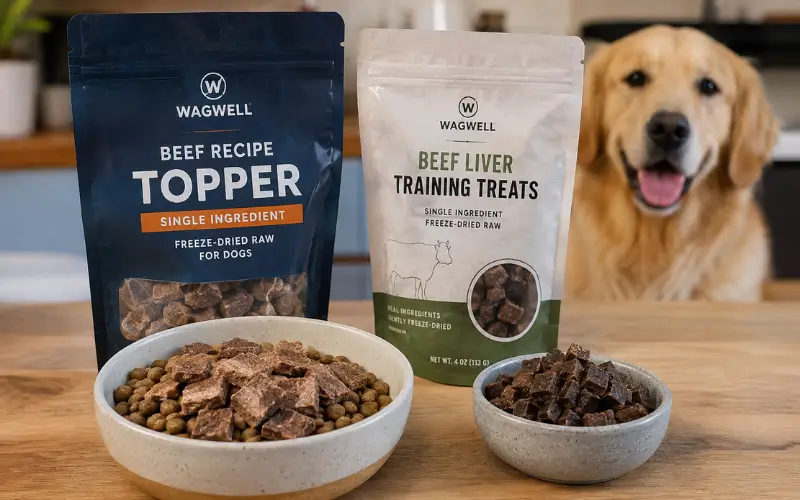
What Defines a Food Topper
A food topper is an addition to a complete and balanced meal. It sits on top of or is mixed into existing food with the goal of improving palatability, adding specific nutrients, or encouraging a dog to eat more readily. The key word in that definition is addition. A topper is not designed to replace any portion of the meal. It enhances it.
Toppers come in several formats including freeze-dried protein pieces, omega oil drops, broths, raw food additions, and single-ingredient dried ingredients. What distinguishes a quality topper from a random food addition is intentionality. A well-designed topper contributes something meaningful to the meal, whether that is a concentrated protein boost, essential fatty acids, or functional ingredients that support a specific health goal.
A peer-reviewed clinical review published by the National Institutes of Health evaluated how supplemental whole-food additives and freeze-dried protein toppers impact nutrient intake, skin health, and digestive balance in dogs. The review found that high-quality protein additions and functional ingredients produced measurable benefits when added to baseline diets, particularly in dogs with skin conditions or digestive sensitivities. The quality of the topper ingredient mattered significantly. Single-ingredient, minimally processed toppers delivered more consistent outcomes than heavily processed alternatives with multiple additives.
What Defines a Treat
A treat is a supplemental food item given separately from meals, most commonly as a reward, a training tool, or an expression of affection. Treats are not designed to nutritionally complete a meal. They are designed to be appealing enough to motivate a behavior or deliver a moment of enjoyment.
This distinction has practical implications for how you account for treats in your dog’s daily intake. Veterinary nutritionists at UC Davis School of Veterinary Medicine provide clinical guidelines applying the 10% rule to supplemental calories in dogs. No more than 10% of a dog’s total daily caloric intake should come from non-complete foods, which includes both treats and food toppers combined. For a 30-pound dog consuming roughly 700 calories per day, that means a maximum of 70 calories from all supplemental sources daily.
This rule exists because dogs eating significant portions of non-complete foods in addition to their full meal ration develop nutritional imbalances over time. The base diet is formulated to specific nutritional ratios. Regularly replacing or substantially supplementing those ratios with incomplete foods disrupts the nutritional architecture the diet was designed to provide.
How Toppers and Treats Fit Differently Into the Daily Caloric Budget
A food topper typically replaces a small portion of the base meal rather than adding on top of a full ration. If you add two tablespoons of freeze-dried beef topper to a bowl of kibble, the kibble portion should be reduced by an amount that accounts for the topper’s caloric contribution. This keeps total caloric intake consistent while improving the meal’s nutritional profile and palatability.
A treat operates differently because it is given outside the meal context. Training treats given throughout the day accumulate calories quickly, particularly if training sessions are long or frequent. High-calorie training treats given generously while maintaining a full meal ration is one of the most common causes of gradual unintentional weight gain in dogs.
The University of Illinois College of Veterinary Medicine advises carefully selecting dietary additions based on ingredient quality and total caloric contribution, particularly for dogs with food sensitivities. For allergic dogs, both toppers and treats require label scrutiny beyond just caloric content. A dog allergic to chicken should not receive chicken-based treats regardless of how small the serving size, because allergen exposure is not dose-dependent in the way caloric contribution is.
When Toppers Make More Sense Than Treats
Toppers are the better tool when the goal is nutritional rather than behavioral. A picky eater who refuses dry kibble is better served by a high-quality topper that increases palatability without substantially altering the meal’s nutritional composition than by mixing in random human food. A senior dog needing additional protein to maintain muscle mass benefits from a concentrated protein topper added to their complete senior diet more than from treats given between meals.
Toppers also serve dogs recovering from illness or transitioning between diets. A small amount of a familiar, appealing food addition helps maintain intake during periods when appetite is reduced. Freeze dried dog treats that work as both toppers and standalone rewards offer flexibility during these periods without requiring separate products for each use.
When Treats Make More Sense Than Toppers
Treats are the correct tool when the goal is behavioral. Training a reliable recall, rewarding a calm behavior during a veterinary visit, or reinforcing a new command requires a food reward given at the precise moment of the desired behavior. Mixing a topper into a bowl and walking away does not produce that behavioral reinforcement.
Training treats should be small, high-value, and easy to swallow quickly so the session’s momentum is not broken. Single-ingredient freeze-dried treats like 100% Wisconsin cheddar cheese or beef liver provide that high-value reward without the artificial additives that reduce ingredient quality in many commercial training treats.
The most effective approach for most dogs combines both tools deliberately. A quality protein topper added to one or two meals per week improves nutritional variety and palatability. Small treats given during training sessions reinforce desired behavior. Omega supplementation added daily as a food topper provides consistent fatty acid intake. Dog natural supplements that serve as daily food additions rather than between-meal rewards fit naturally into the topper category rather than the treat category, which matters for how you account for them within the 10% rule.
Reading Labels for Both
The same label-reading discipline applies to both toppers and treats. The ingredient list should begin with a named protein source, not a by-product, grain, or filler. Artificial preservatives, sweeteners, and coloring agents have no place in a quality product regardless of format. Calorie density should be listed clearly so you can calculate how much fits within the daily supplemental allowance.
Omega oil for dogs formulated for daily food addition provides a useful example of a topper designed with nutritional intent. Plant-based Ahiflower oil delivers omega 3, 6, and 9 fatty acids that support skin, coat, and joint health when added consistently to meals over time. That consistent, nutritionally purposeful daily addition is the defining characteristic of a topper used correctly.
Using Both Well
Dog food toppers and treats both have legitimate, useful roles in a thoughtfully managed feeding routine. Toppers serve nutritional and palatability goals within the meal context. Treats serve behavioral and motivational goals outside of it. Keeping that distinction clear, applying the 10% caloric rule to both combined, and selecting quality single-ingredient options in each category gives your dog both the nutritional foundation and the behavioral reinforcement they need without compromising the balance of their diet.