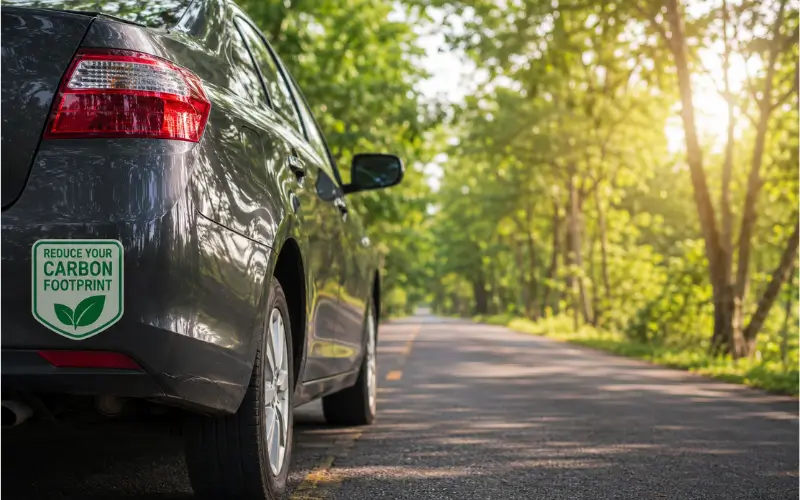
Owning a car makes everyday life considerably easier for many people, but it also comes with an environmental cost. Fuel consumption, manufacturing, maintenance, and the replacement of parts all contribute to the overall carbon footprint associated with driving.
Giving up a vehicle completely is not practical for everyone. Fortunately, sustainability does not have to be an all-or-nothing decision. Small changes to how frequently you drive, maintain your vehicle, and plan longer journeys can reduce your environmental impact while allowing you to keep the convenience of car ownership.
Combine Journeys Where Possible
One of the simplest changes is reducing the number of individual journeys you make. Instead of driving to several places on different days, consider whether errands can be combined into a single trip.
Planning ahead can make this surprisingly easy. Grocery shopping, collecting parcels, and other routine errands could potentially be completed during the same outing. Car sharing can also help when friends, relatives, or colleagues are traveling in the same direction. The objective is not necessarily to stop driving. It is to get more value from the journeys you already make.
Consider Alternatives for Long-Distance Journeys
Driving is not always the only practical way to get yourself and your vehicle from one place to another. When relocating or moving a vehicle over a substantial distance, it can be worth investigating whether a transporter is already making a similar journey.
For example, when comparing car transporters in Sacramento, you could look for a transporter with suitable space who is already traveling along the required route. Transport marketplaces can help match customers with providers making compatible journeys, potentially allowing available vehicle capacity to be used rather than requiring an entirely separate journey.
Meanwhile, the vehicle owner could use an existing public transportation service such as a train or bus to make their own journey where practical. Rather than several vehicles independently covering essentially the same route, combining transportation requirements and making use of services that are already operating can help reduce unnecessary additional mileage. The exact environmental benefit will depend on factors including routes, vehicle capacity and the transportation options available.
Keep Your Car Properly Maintained
Maintenance is not only about reliability. A vehicle that is properly looked after can also operate more efficiently. Checking tire pressure regularly is a particularly straightforward habit. Underinflated tires increase rolling resistance, which means the engine needs to work harder. Keeping them at the manufacturer’s recommended pressure can support better fuel efficiency.
Regular servicing is also worthwhile. Problems affecting the engine, brakes, or other components can reduce efficiency, while addressing mechanical issues promptly may help prevent a minor problem from becoming a larger one that requires additional parts and repairs.
Change the Way You Drive
Driving style can influence how much fuel a vehicle consumes. Rapid acceleration followed by heavy braking generally uses more energy than maintaining a smoother, more consistent pace. Looking further ahead in traffic can help you anticipate changes and avoid unnecessary acceleration. Where appropriate, maintaining a steady speed can also improve efficiency. Removing unnecessary weight from the vehicle can make a small difference too. There is little benefit in permanently carrying heavy equipment or other items that are rarely needed.
Walk or Cycle for Shorter Trips
Cars are particularly convenient for short journeys, which is precisely why it is easy to use them when another option would work almost as well. If the destination is nearby, walking or cycling can eliminate the vehicle emissions associated with that particular journey. These alternatives will not be practical for every person, route, or weather condition, but replacing even some short car trips can reduce overall mileage.
Public transportation provides another alternative, especially in areas with frequent services. A bus or train that is already running can carry many passengers without requiring each person to make the journey in a separate vehicle.
Keep Your Current Vehicle for Longer
Sustainability discussions often concentrate on fuel, but producing a new vehicle also requires energy and raw materials. Consequently, immediately replacing a functioning car is not always the most sustainable choice.
Maintaining an existing vehicle and keeping it in useful service for longer can sometimes make sense, depending on its condition, efficiency, and how frequently it is driven. When replacement eventually becomes necessary, fuel-efficient, hybrid and electric models can be considered according to budget and local charging infrastructure.
Make Small Changes That Last
Reducing your carbon footprint does not require redesigning your entire lifestyle overnight. Sustainable habits are more useful when they are realistic enough to continue over the long term. Consider combining errands, car sharing when journeys overlap, walking or cycling for suitable short trips, and choosing public transportation when it provides a practical alternative. Keep tires correctly inflated, maintain your vehicle properly, and drive smoothly to avoid unnecessary fuel consumption.
For occasional long-distance vehicle movements, consider whether existing transportation capacity can be used instead of automatically making a dedicated journey yourself. Individually, these changes may seem modest, but together they can reduce unnecessary travel and make car ownership a little more sustainable.