
For the most part, advice on increasing productivity has focused on the same thing: time management. Many systems and strategies for increasing productivity have resulted in the creation of many time management tools and techniques. Time management has proven to be an essential skill in the modern workplace. However, many working adults have discovered that having enough hours in the day is irrelevant if you do not possess the energy to make use of those hours.
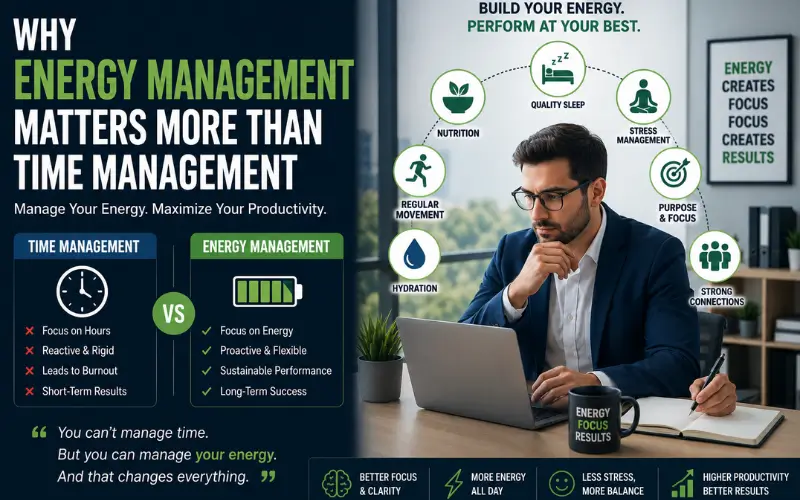
Time Management and Productivity
People can usually relate to the difference between having a productive 2 hours of work after a restful sleep, in contrast to 6 hours of work where someone just stares at their work in an unproductive state. The time spent in each scenario is measured the same, but the results for the hours of focus versus the hours of unproductive work is not even close to the same. The clock dwarfs performance. Creating time for us to think creatively and strategically is done through energy management. Productivity is at its best when the management of energy takes the front seat over the management of time.
Humanity has yet to figure out how to create more hours in a day. What is possible, however, is the cultivation of energy in the hours that we have at our disposal. In contrast to time, energy is malleable and can be changed based on a myriad of factors, from sleep and nutrition to stress balance and emotional state. It can also be restored through the cultivation of healthy habits.
This distinction highlights some of the borders of productivity systems. Having the ultimate system of time management does not help one dealing with chronic illness, fatigue or burnout. To reach goals successfully, the ability of the body to perform consistently must be maintained.
Realizing this shift allows one to stop asking, “How can I fit in extra work?” and start asking, “How can I maximize my performance in the time I have?”
The Four Dimensions of Energy
The term ‘energy’ is often misinterpreted as simply the physical realm of performance, but in reality there is a web of multiple realms of performance.
Physical energy can be defined by the quality of one’s sleep, nutrition, movement, health, and hydration. Mental energy is largely responsible for one’s ability to focus, learn, and be decisive. Emotional energy relates to one’s motivation, personal relationships, and ability to cope with stress. Lastly, energy of purpose helps one stay engaged with work and challenges. When persistent fatigue continues despite healthy habits, it may be worthwhile to seek support for hormone imbalance in Phoenix since hormonal health can significantly influence energy levels, mood, and overall performance.
When one of these energy realms is suffering, the rest are likely to be as well. One of the most damaging things to your performance is chronic stress. This leads to fatigue both physical and mental, irritability, and diminished productivity.
Energy is best managed by supporting these multiple realms rather than fixating on the number of hours worked.
The Hidden Cost of Constant Busyness
The prevailing work system seems to reward being busy. Having a full calendar or working late is often the hallmark of a committed or successful employee. Sadly, constant busyness is rarely synonymous with successful outcomes.
The brain can only function optimally for a set amount of time. A lack of rest increases busyness, productivity and efficiency of the brain decrease, and creativity, memory, and the quality of work decrease. Chronic stress leads to greater inflammation in the body, increased strain on the body, and an exhausted and weary emotional state.
Burnout affects your career and your relationships. It happens after consistently pushing through fatigue. The key to maximizing productivity is balance. Recovery during breaks is vital.
Sleep Is the Foundation of Sustainable Performance
No productivity scheme will help if an individual sleeps poorly. Sleep serves vital functions. Quality sleep improves memory and concentration. It even improves your body’s defenses against illness. Lack of sleep leads to decreased cognitive performance and increased reaction and concentration times.
Working through the night will backfire as a time saving scheme. Protecting sleep is good for business.
Seemingly small, everyday choices can lead to small but noticeable improvements. These include a change in sleep habit, reduced use of screens before sleep, and a better sleep environment.
Nutrition Fuels More Than the Body
Food impacts your mind just like your body. Health impacts your energy for sustained periods. Food that is overly processed and high in sugar leads to energy crashes. Safer choices are made when food is relied on to sustain energy for longer.
Water is vital. Concentration, fatigue and cognitive performance can all be negatively impacted by a lack of sufficient hydration.
Improved productivity can be achieved if the business is consistently well nourished, rather than heavily relying on caffeine.
Movement Creates Energy
It is often assumed that increased physical activity leads to a deficit in energy. This is actually untrue, and the opposite often holds.
Regular movement benefits overall physical health, mental health, and even cognition. Using breaks to walk during work hours has even been shown to lessen fatigue while improving focus.
The lifestyles of many modern workers are fatal to health and lead to sluggishness and fatigue by contributing to a lack of circulation, decreased endurance, and increased stiffness.
Movement becomes a part of everyday life, energy can be maintained without spending hours sweating at the gym.
Hormones Play an Important Role
Fatigue is often attributed to a general lack of discipline and poor motivation. There may in fact be underlying health issues that may be affecting energy more than sheer will.
There are several functions of the body that are influenced by hormones such as metabolic and muscle functions, cognitive health and even sleep and mood. Fatigue and even a general lack of well-being may be caused by an imbalance of hormones. This may also result in poor quality sleep and the individual’s inability to focus and even worsening weight issues.
Lifestyle changes are often helpful for maintaining long-term energy for those with fatigue, but a more effective option may be seeking greater hormonal health. In Phoenix, those with fatigue may find greater help from practitioners looking at hormonal imbalance so that they can bring a more integrated and comprehensive approach to their health.
Pursuing medical changes on the health spectrum is more beneficial than the many energy sustaining tips that fad productivity. Long-Term Performance is Affected by the Stress You Manage
Not all stress is bad. In fact, some is needed to improve focus and allow for peak performance.
Chronic stress is counterproductive.
Chronic stress may worsen sleep, compromise digestion and immunity, and worsen energy levels. Fatigue may worsen even when routines remain the same.
The regulation of stress response and preservation of emotional resilience can be achieved through many techniques, including; mindfulness, meditation, breathing exercises, pursued hobbies, physical exercise, and strong social connections. To avoid a performance decline, healthy recovery is imperative.
Adapt To Your Natural Energy Fluctuations
Natural daily energy rhythms tend to be the same for most people. Some people’s most productive hours are the early morning, while for others it’s the afternoon and evening. Knowing this can help a person align their most critical and demanding tasks with their peak productivity hours.
Using natural rhythms to tackle daily challenges, including the more menial tasks, can help improve both the efficiency of the challenge and the quality of the outcome.
Listening to natural signals can help create a sustainable cycle of productivity, as opposed to the more common practice of pushing against the signals.
The Future of Productivity Is Human-Centered
There is a growing recognition of the relationship between business performance and employee wellness.
More progressive businesses are now implementing wellness centric policies and programs such as offering flexible hours, supporting mental wellness, allowing movement breaks, and providing comfortable and adjustable workstations.
These businesses are beginning to place a premium on the overall health of employees and the quality of their performance, including creativity and collaboration, as opposed to simply counting hours worked.
This reflects the recognition that the truly productive employees are healthy, energized, and able to consistently perform at a high level.
Conclusion
Effective time management will always be a valued skill, but it is no longer sufficient on its own. The greatest indicator of performance is the interplay of time and energy, which affects resilience, creativity, and both mental and physical wellness.
To support energy, one must do more than employ productivity apps or create a thorough schedule. One must also safeguard sleep, support themselves nutritionally, move, manage stress, maintain social connection, treat and manage medical issues, and flow with the body’s natural rhythms.
Customers report that when they choose to prioritize energy in conjunction with time, they feel they achieve more, are less stressed, and are more fulfilled. The personal and professional achievement of the future will belong to those who manage to protect the energy that enables meaningful work, not to those who increase their hours of work.