Why are so many drivers still battling cabin heat, even after tinting their cars? The answer often lies in the type of tint, not just how dark it looks. In the growing debate around 3M Crystalline vs Ceramic, the focus has shifted from aesthetics to real-world function, especially when it comes to infrared blocking window film and solar heat rejection tint.
Both tints offer UV protection, and both claim advanced performance. But when it comes to surviving Dubai’s scorching climate, not all films behave the same. This Crystalline vs ceramic tint comparison explores which option delivers better results on the road, based on technology, not marketing.
What Is 3M Crystalline Tint?
The name shows up in nearly every premium car tint Dubai search, but what exactly makes 3M Crystalline Window tint Dubai different from the rest? This tint isn’t just about visual appeal; it’s designed to fight heat, glare, and signal interference without going dark. That’s why many call it a high-performance tint that UAE drivers rely on year-round.
How 3M Crystalline Tint Technology Works
This tint uses a different approach than most films in the market.
- Multi-layer optical film:
This isn’t your average dyed or metal tint. 3M Crystalline uses over 200 ultra-thin layers in a single film. The result? It behaves like armor against heat, without relying on darkness or mirror-like finishes. - Infrared rejection theory:
This tint specifically targets infrared light, the part of sunlight that makes your cabin unbearable. With up to 97% infrared rejection, it’s engineered for solar heat rejection tint without blocking visibility. - Non-metal film explanation:
Unlike traditional films, there’s no metal involved. That means zero interference with mobile signals, GPS, or Bluetooth. It’s what the industry calls a non-metallic IR tint, and yes, it’s smart.
Key Functions of 3M Crystalline Heat Rejection Film
When installed correctly, this film doesn’t just look clean; it works hard behind the scenes:
- Blocks IR:
The core of this film is infrared blocking window film technology. Less infrared = less heat sneaking into your dashboard and seats. - Reduces cabin load:
Less heat inside means your AC isn’t fighting a losing battle. That saves fuel and preserves long-term AC performance, especially in Dubai’s climate. - Low reflectivity:
Unlike some mirrored tints, Crystalline stays discreet. You get performance without drawing attention. - Maintains signal clarity:
No metallic layer means clear GPS navigation, uninterrupted Bluetooth calls, and steady network signals on the road.
Tip: Always confirm if you’re getting original 3M Crystalline, not a lookalike film labelled “nanotech” or “multi-layer.”
If you drive daily, park outside often, or simply hate that sticky seatbelt burn when you sit down, 3M Crystalline might be more than just a luxury. It’s engineered for comfort in places like Dubai, where solar load, glare, and UV exposure are brutal. But before calling it the winner, let’s see how it stacks up against automotive ceramic tint, because that one’s no slouch either.
What Is Ceramic Tint?
Ever stepped into your car after a long lunch and felt like you just opened an oven door? That’s the daily heat battle most drivers face. And it’s the reason why Car tint Dubai has become one of the go-to choices in Dubai.
Unlike traditional dyed films, or even metallic tints, ceramic tint is built for function first. It doesn’t just look clean; it fights infrared heat, cuts down glare, and keeps your dashboard from becoming a frying pan. In fact, many drivers compare it directly with 3M Crystalline vs Ceramic tint to find out which one actually handles Dubai’s sun better.
Let’s break down how this tech really works.
How Ceramic Tint Technology Works
It all starts with something you can’t even see: nanoparticles.
- Nano-ceramic particles:
Ceramic tints are infused with non-metallic ceramic compounds, invisible to the eye but powerful in function. These particles act like a shield that absorbs heat rather than reflecting it. - IR absorption process:
Instead of bouncing heat off like metallic films, ceramic tints absorb infrared radiation and disperse it before it can enter the cabin. That’s where you get that noticeable drop in temperature, especially during peak Dubai hours. - Signal-safe properties:
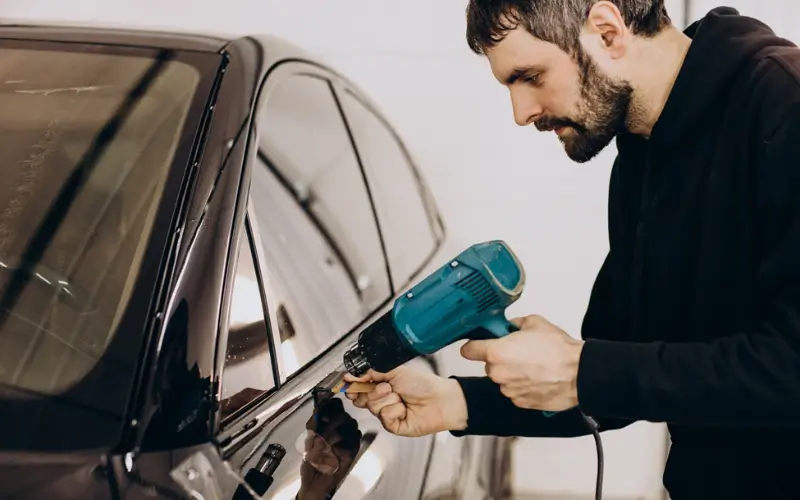
No metal means zero disruption. With ceramic film, you won’t lose GPS signal in the middle of Al Khail Road or struggle with dropped calls near Sheikh Zayed. It’s a non-metallic IR tint that keeps your tech functioning.
Key Functions of Ceramic Car Tint Dubai
So what does all that tech translate to on the road?
- Visible light handling:
Ceramic films can block a high amount of heat even with lighter shades. That means you get solid solar heat rejection without making your windows too dark, perfect for the UAE’s legal tint limits. - Cabin temperature control:
Fewer heat rays inside = less AC load = smoother drives. In short, ceramic helps stabilize internal temperatures without forcing your AC into overdrive. - UV filtering:
Most ceramic tints block up to 99% of UV rays, helping protect both your skin and your car’s interior materials from long-term damage. It’s a UV protection window film built for real-world daily exposure. - Glare handling:
This film also reduces sunlight glare and headlight dazzle, especially at low angles during morning or sunset drives. That’s why many classify it as a glare reduction window film, ideal for long-haul commutes in and around Dubai.
Idea: For drivers doing long highway commutes or family trips, ceramic tint offers a more consistent cooling effect, especially under direct sun.
Ceramic tint isn’t flashy. It doesn’t need to be. What it offers is quiet efficiency, steady heat control, strong infrared rejection, and long-term signal safety.
3M Crystalline vs Ceramic Tint Performance Breakdown
Let’s be honest, every tint sounds amazing until you’re crawling through Dubai traffic at 2 PM and sweating through your shirt. Marketing promises don’t mean much when the real sun hits your dashboard. That’s why we decided to look at 3M crystalline vs Ceramic in plain, real-world terms.
| What Really Matters | 3M Crystalline Tint | Ceramic Tint |
| IR (Infrared) Rejection | It’s a champ here, Crystalline blocks up to 97% of IR, even in lighter shades. That’s serious infrared blocking window film performance. You feel the difference at the second red light. | Ceramic’s solid, around 85–90% IR rejection if you’re using high-end stuff. Still does the job well, but slightly less punch in lighter variants. |
| Solar Heat Load | Performs better in sunlight-heavy setups like SUVs with sunroofs or glassy cabins. Let’s in more light but keeps the heat out, perfect balance. | Works best in darker shades. If you go light, it won’t cool as aggressively. But with darker films, heat rejection is strong. |
| On Long Drives (Desert, Highways) | This is where Crystalline shines. Whether it’s a Jebel Ali run or a long wait outside Global Village, the cabin stays noticeably cooler. | Ceramic holds up, but the cheaper ones may drop off after a few hours in full-blast sun. You’ll feel the seatbelt heat creeping back. |
| UV Protection | You’re covered, up to 99.9%. Crystalline is a legit UV protection window film. Keeps your skin and your leather seats safe. | Nearly the same here. Quality ceramic films also block 99% UV. Both tints stop interior fade and dash cracking if you’re parking outdoors. |
| Glare Handling | Minimal reflection but still cuts harsh midday glare. It’s great for people who want clarity without blacking out their windows. | Ceramic can reduce glare even more, especially in darker tints. If you hate squinting at sun bounces, this one gives you peace. |
| Day & Night Visibility | Crystalline is clearer, especially in lighter shades. No weird reflections. You see the road and mirrors just fine, day or night. | In bright daylight, ceramic’s great. But go too dark, and nighttime driving might feel dim, especially with side/rear views. |
| GPS & Bluetooth Signals | No issues. It’s a non-metallic IR tint, so you’re Google Maps, Spotify, and WhatsApp calls stay glitch-free. | Same. Ceramic films are also metal-free, so you won’t lose GPS in parking structures or tunnels. |
| Mobile Signal Quality | Perfect. Crystalline doesn’t block mobile reception. You’ll never blame your tint for dropped calls. | Equal performance here. Ceramic tints don’t interfere with signals, unless you’re using fake stuff, and then all bets are off. |
Who Wins in Dubai Heat?
If you’re main goal is maximum heat rejection with high visibility, and you’re willing to spend a bit more, 3M Crystalline feels like the better long-term partner. It’s built for harsh environments and handles solar heat, infrared, and glare with minimal compromise.
But if you’re focused on affordability, prefer darker aesthetics, or just want a strong ceramic film that gets the job done, automotive ceramic tint isn’t a downgrade; it’s just different. Especially if you go for top-tier ceramic, you won’t be disappointed.
Tip: In Dubai, don’t judge a tint by how dark it looks. Focus on what it blocks, infrared, not just sunlight.
Both are legal. Both are non-metallic. Both give serious cabin protection. It just depends on how hot your daily drive gets and how long you’re in it.
Durability & Lifespan of 3M Crystalline vs Ceramic Tint
Let’s keep it simple: both films hold up if you install the real thing, and not some knockoff sold as “Nano magic tint” in a back alley.
- 3M Crystalline is engineered for longevity. It’s known to last 7–10 years, even under Dubai’s brutal UV exposure. It resists bubbling, fading, and that annoying purple tint that cheap films develop over time.
- Ceramic tint, especially from a trusted brand, easily lasts 5–8 years with no discoloration or peeling. It doesn’t flake, and it handles frequent heat cycles well, if it’s installed right.
Fact: Bad installation ruins good film. No matter which tint you choose, prep and post-care matter more than people think.
So if you’re asking which one lasts longer? Crystalline has a slight edge, but only if you’re going for the real deal from a proper installer. Otherwise, even the best film can go bad in 6 months.
Whether you’re leaning toward the precision of 3M Crystalline or the solid value of ceramic tint, don’t leave the install to guesswork. A premium film in the wrong hands won’t protect you from Dubai’s heat; it’ll just peel faster. For drivers who care about infrared rejection, UV protection, and long-term clarity, it pays to get it done right.
Book your tint with experienced technicians at Car Tinting Heroes Dubai and get the performance your car deserves, no guesswork, no shortcuts.