Bangladesh has firmly established itself as one of the world’s leading apparel sourcing destinations, ranking among the top exporters of ready-made garments (RMG). In 2026, the country continues to play a critical role in the global fashion supply chain, serving some of the biggest retail brands across Europe, the United Kingdom, the United States, and emerging international markets. This article provides a comprehensive overview of the top garments buyers of Bangladesh in 2026, highlighting their sourcing strategies, product focus, and the role they play in shaping the country’s RMG industry.
Over the past decade, Bangladesh’s garment industry has undergone a significant transformation. What was once primarily known for low-cost manufacturing has evolved into a more compliant, efficient, and sustainability-focused industry. Today, Bangladesh is home to many of the world’s green-certified garment factories, advanced production facilities, and a skilled workforce capable of handling both high-volume orders and increasingly complex product categories.
Global buyers are drawn to Bangladesh for several key reasons:
- Competitive pricing combined with large-scale production capacity
- Improved workplace safety and compliance standards
- Strong expertise in knitwear, denim, and basic apparel
- Growing focus on sustainable and environmentally responsible manufacturing
In 2026, sourcing strategies of international brands are also shifting. Companies are actively diversifying away from overdependence on single markets, especially China, and are seeking reliable, scalable, and compliant alternatives. Bangladesh has emerged as a top choice in this transition.
From fast fashion giants like Inditex and H&M, to value retailers such as Primark, Pepco, and ASDA, and premium brands like Tommy Hilfiger and Calvin Klein, a wide spectrum of global buyers rely on Bangladesh to support their supply chains.
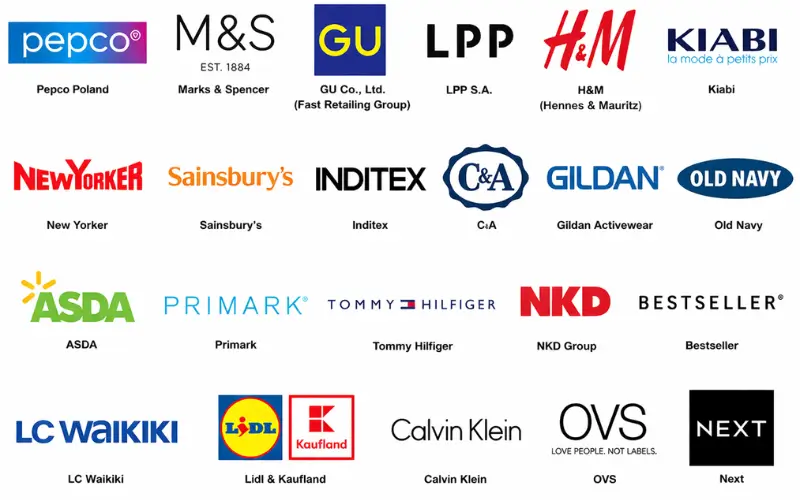
List of Top 22 Garments Buyer in Bangladesh
- Pepco Poland
- Marks & Spencer
- GU Co., Ltd. (Fast Retailing Group)
- LPP S.A.
- H&M (Hennes & Mauritz)
- Kiabi
- New Yorker
- Sainsbury’s
- Inditex
- C&A
- Gildan Activewear
- Old Navy
- ASDA
- Primark
- Tommy Hilfiger
- NKD Group
- Bestseller
- LC Waikiki
- Lidl & Kaufland
- Calvin Klein
- OVS
- Next
European Retail Giants
Europe remains the largest export destination for Bangladesh’s ready-made garments (RMG), accounting for more than 60% of total exports. European brands value Bangladesh for its scale, cost efficiency, and increasingly strong compliance standards. Below are the major European buyers and their sourcing dynamics:
Inditex (Spain) – Fast Fashion Leader
Inditex, the parent company of Zara, Bershka, Pull&Bear, Stradivarius, and Massimo Dutti, is one of the most influential buyers in Bangladesh.
- Sourcing Model: Fast fashion with short lead times and frequent replenishment cycles
- Product Focus: Trend-driven apparel, woven tops, denim, outerwear
- Strength in Bangladesh: Strong vendor base with vertically integrated factories
- Key Requirement: Speed, flexibility, and strict compliance
Inditex has significantly increased its sourcing from Bangladesh in recent years, especially as it diversifies away from overdependence on China. The company works with some of the most compliant and technically capable factories in the country.
H&M (Sweden) – Sustainability Pioneer
H&M is one of the largest and longest-standing buyers in Bangladesh.
- Sourcing Volume: Among the top buyers by volume
- Product Range: Knitwear, basics, denim, kidswear
- Focus Areas: Sustainability, circular fashion, worker welfare
H&M has played a major role in improving Bangladesh’s factory standards through its involvement in safety initiatives and sustainability programs. It actively promotes:
- Use of sustainable materials (organic cotton, recycled fibers)
- Fair wage initiatives
- Green factory development
Bangladesh is one of H&M’s most critical sourcing countries globally.
Primark (Ireland/UK) – High Volume Value Retailer
Primark is known for massive production volumes and competitive pricing, making Bangladesh a key sourcing destination.
- Product Focus: Basics, casual wear, kidswear, underwear
- Business Model: High volume, low margin
- Strength: Strong long-term supplier relationships
Primark has invested heavily in ethical trade programs, including worker training and safety initiatives. It maintains a large supplier network in Bangladesh and continues to expand its sourcing footprint.
Pepco (Poland) – Fast-Growing Value Chain
Pepco is rapidly emerging as a major European discount retailer, expanding across Central and Eastern Europe.
- Product Range: Casual apparel, kidswear, seasonal fashion
- Positioning: Low-cost, high-volume retail
- Growth Trend: Increasing sourcing from Bangladesh year-on-year
Pepco’s growth has created new opportunities for Bangladeshi manufacturers, particularly in the value segment where cost efficiency is critical.
Kiabi (France) – Family Fashion Specialist
Kiabi focuses on affordable fashion for the whole family.
- Product Focus: Family wear, basics, plus-size clothing
- Market: Strong presence in Europe and expansion in Asia
- Sourcing Strategy: Balanced approach between cost and compliance
Kiabi has been gradually increasing its sourcing from Bangladesh, especially for knit and basic items.
C&A (Germany/Belgium) – Sustainability-Focused Retailer
C&A is known for its strong commitment to sustainable and ethical sourcing.
- Key Strength: Leader in organic cotton usage
- Product Range: Casualwear, basics, denim
- Compliance: Very strict social and environmental standards
Bangladesh is a strategic sourcing hub for C&A, particularly for eco-friendly and certified products.
OVS (Italy) – Consistent Mid-Range Buyer
OVS is one of Italy’s largest apparel retailers.
- Product Range: Men’s, women’s, and kidswear
- Sourcing Focus: Cost efficiency with stable quality
- Presence in Bangladesh: Long-term sourcing partner
OVS maintains steady sourcing volumes and works with reliable Bangladeshi suppliers.
NKD Group (Germany) – Discount Fashion Retailer
NKD is a price-sensitive European retailer focusing on value fashion.
- Product Range: Everyday clothing, basics
- Strength: Consistent orders and repeat business
- Sourcing Approach: Cost-driven with moderate compliance requirements
Bangladesh serves as a key sourcing base due to its competitive pricing.
Bestseller (Denmark) – Multi-Brand Powerhouse
Bestseller owns popular brands such as Jack & Jones, Vero Moda, Only, and Selected.
- Product Range: Fashion apparel across multiple segments
- Sourcing Model: Mix of basics and fashion-forward items
- Key Advantage: Strong design-to-production pipeline
Bestseller sources significantly from Bangladesh, particularly for denim, knitwear, and casualwear.
LPP S.A. (Poland) – Rising European Giant
LPP owns brands like Reserved, Cropp, House, Mohito, and Sinsay.
- Growth: Rapid expansion across Europe
- Product Focus: Trend-based fashion at affordable prices
- Bangladesh Role: Key sourcing destination for volume production
LPP has been increasing its sourcing share from Bangladesh due to its scalability and efficiency.
New Yorker (Germany) – Youth Fashion Specialist
New Yorker targets the young and trend-conscious market.
- Product Focus: Fast fashion, streetwear
- Business Model: High turnover collections
- Sourcing Needs: Speed and cost balance
Bangladesh plays an important role in supplying volume-driven items.
Lidl & Kaufland – Retail Chains Expanding Private Labels
These German retail chains are increasing their private label apparel sourcing.
- Focus: Affordable, private-label clothing
- Sourcing Trend: Growing reliance on Bangladesh
- Advantage: Large-scale, repeat orders
UK-Based Buyers
The United Kingdom remains one of the most important individual country markets for Bangladesh’s garment exports. British retailers have long-standing sourcing relationships with Bangladeshi manufacturers and are known for their strong focus on compliance, quality, and ethical sourcing.
Marks & Spencer (M&S) – Premium Quality & Ethical Leader
Marks & Spencer is one of the most respected British retailers and a pioneer in responsible sourcing from Bangladesh.
- Positioning: Mid-to-premium retailer
- Product Range: Lingerie, formalwear, knitwear, kidswear
- Sourcing Focus: Quality, traceability, sustainability
M&S has been sourcing from Bangladesh for decades and works with a select group of highly compliant factories. Unlike fast fashion brands, M&S emphasizes:
- Long-term supplier partnerships
- Strict quality control systems
- Full traceability across the supply chain
Their “Plan A” sustainability program has influenced many factories in Bangladesh to adopt greener practices and better labor standards.
Next Retail Ltd. – Diversified & Technically Strong Buyer
Next is one of the UK’s largest fashion retailers and a key sourcing partner for Bangladesh.
- Product Range: Men’s, women’s, kidswear, home textiles
- Strength: Strong technical design and product development
- Sourcing Model: Balanced between basics and fashion
Next works with a wide range of Bangladeshi factories, from high-end compliant units to large-scale producers. It is known for:
- Detailed technical specifications
- Strong merchandising systems
- Consistent order flow throughout the year
Bangladesh plays a crucial role in Next’s supply chain, especially for woven and knit categories.
Sainsbury’s – Supermarket Retail with Growing Apparel Segment
Sainsbury’s operates clothing under its Tu brand, which has been steadily expanding.
- Positioning: Value to mid-range
- Product Range: Casualwear, kidswear, basics
- Business Model: Supermarket-driven apparel retail
Bangladesh is a major sourcing hub for Sainsbury’s due to:
- Cost efficiency
- Ability to handle large-volume production
- Strong compliance infrastructure
The brand focuses on delivering affordable fashion with reliable quality, making Bangladesh an ideal partner.
ASDA (George Brand) – High Volume Value Buyer
ASDA, through its George clothing line, is one of the largest volume buyers from Bangladesh.
- Positioning: Value retailer
- Product Range: Basics, schoolwear, casualwear, underwear
- Strength: Massive production volumes
ASDA is known for:
- Price competitiveness
- Large-scale, repeat orders
- Efficient supply chain management
Bangladesh is critical for ASDA’s sourcing strategy, particularly for cost-sensitive product categories like school uniforms and everyday essentials.
Primark (UK/Ireland) – Already Covered but UK-Relevant
Although discussed earlier, it’s important to highlight that Primark’s strong UK retail presence makes it one of the most influential buyers connected to the UK market.
- Operates a large number of stores across the UK
- Drives significant sourcing volumes from Bangladesh
- Maintains deep supplier relationships in the country
Key Trends Among UK Buyers
UK retailers sourcing from Bangladesh share several common priorities:
1. Ethical Sourcing & Compliance
Following past industry incidents, UK buyers enforce:
- Strict audit systems
- Worker safety and welfare programs
- Transparency in supply chains
2. Value-Driven Production
Most UK brands target the mid to value segment, making Bangladesh’s cost advantage highly attractive.
3. Long-Term Partnerships
Unlike some fast fashion models, UK buyers often:
- Maintain stable supplier bases
- Focus on consistent quality and reliability
American Buyers
The United States is one of the largest apparel markets in the world and a crucial destination for Bangladesh’s garment exports. Compared to Europe, US buyers tend to focus more on large-scale production, cost efficiency, and basics, although demand for compliance and sustainability is also increasing.
Old Navy, part of Gap Inc., is one of the largest American buyers sourcing from Bangladesh.
- Positioning: Affordable, family-focused fashion
- Product Range: Casualwear, denim, knit tops, activewear
- Strength: Extremely high-volume production
Old Navy relies heavily on Bangladesh for:
- Basic garments and essentials
- Denim production
- Large seasonal orders
The brand’s business model is built on mass production at competitive prices, making Bangladesh a key sourcing partner due to its scale and efficiency.
Gildan Activewear – Basics & Vertical Integration Leader
Gildan is a leading manufacturer and marketer of basic apparel and activewear, with a strong global supply chain.
- Product Focus: T-shirts, fleece, activewear, underwear
- Business Model: Vertically integrated production
- Market: Wholesale, retail, and promotional apparel
Unlike many fashion brands, Gildan focuses on:
- Standardized, high-volume products
- Cost optimization through efficiency
- Consistent quality across large orders
Bangladesh plays an important role in supporting Gildan’s global production network, especially for sewing and finishing operations.
PVH Corp. (USA) – Premium Global Brands
PVH Corp. owns globally recognized brands like:
- Tommy Hilfiger
- Calvin Klein
These brands represent the premium segment of buyers sourcing from Bangladesh.
Tommy Hilfiger – Lifestyle Fashion Brand
- Positioning: Premium casualwear
- Product Range: Polo shirts, shirts, denim, outerwear
- Sourcing Focus: Quality, branding, consistency
Tommy Hilfiger sources from Bangladesh for both basic and fashion items, working with highly compliant and technically capable factories.
Calvin Klein – Premium & Innerwear Specialist
- Product Range: Underwear, casualwear, denim
- Strength: Strong brand identity and product consistency
- Key Requirement: High-quality finishing and compliance
Bangladesh is especially important for innerwear and basic apparel production, where factories have developed strong expertise.
Key Characteristics of US Buyers
1. High Volume & Cost Sensitivity
American buyers prioritize:
- Competitive pricing
- Ability to handle very large order quantities
- Efficient production timelines
2. Focus on Basics & Core Products
Compared to Europe’s fast fashion model, US buyers often focus on:
- T-shirts, denim, fleece
- Everyday essentials
- Long production runs
3. Increasing Compliance Expectations
While historically less strict than European buyers, US brands are now emphasizing:
- Social compliance
- Environmental standards
- Supply chain transparency
Bangladesh’s Role in the US Market
Bangladesh has become a key sourcing destination for American brands due to:
- Its ability to produce large volumes at competitive costs
- Growing expertise in denim and knitwear
- Improved factory compliance and safety standards
As US buyers diversify sourcing away from China, Bangladesh continues to gain importance in their global supply chains.
Other Global & Emerging Buyers
Beyond the traditional European and American markets, Bangladesh is increasingly attracting a diverse group of global and emerging buyers. These companies are expanding their sourcing footprint as they seek cost efficiency, scalability, and reliable supply chains.
LC Waikiki (Turkey) – Rapidly Expanding Global Retailer
LC Waikiki is one of the fastest-growing fashion retailers, with a strong presence across Europe, the Middle East, and Asia.
- Positioning: Affordable family fashion
- Product Range: Men’s, women’s, kidswear
- Growth: Aggressive global expansion
Bangladesh has become a key sourcing destination for LC Waikiki due to:
- Competitive pricing
- Strong capacity for large orders
- Reliable supplier base
The company focuses on consistent quality and cost control, making Bangladesh an ideal partner.
GU (Fast Retailing Group, Japan) – Emerging Asian Buyer
GU is part of Japan’s Fast Retailing Group, which also owns Uniqlo.
- Positioning: Trendy, affordable fashion
- Target Market: Youth and mass consumers
- Growth Strategy: Expansion beyond Japan
Although still developing its sourcing base in Bangladesh, GU is gradually increasing its presence as it seeks to:
- Diversify sourcing locations
- Reduce dependency on China
- Improve cost competitiveness
This signals strong future potential for Bangladesh in the Asian sourcing market.
Lidl & Kaufland (Germany) – Private Label Expansion
These German retail giants are strengthening their private label apparel business.
- Business Model: Supermarket-led retail
- Product Focus: Basics, seasonal wear, functional clothing
- Key Advantage: Large-scale, repeat orders
Bangladesh is a preferred sourcing destination because it can deliver:
- High volumes at low cost
- Consistent quality across bulk production
- Strong compliance standards
Private label sourcing from these retailers is expected to grow significantly in the coming years.
New Dynamics in Global Sourcing
These emerging and non-traditional buyers highlight several important trends:
1. Diversification Beyond Traditional Markets
While Europe and the US dominate, buyers from:
- Turkey
- Japan
- Eastern Europe
- Global retail chains
are increasingly sourcing from Bangladesh.
2. Shift Toward Value Retail
Many of these buyers operate in the:
- Discount retail
- Supermarket fashion
- Mass-market segments
This aligns perfectly with Bangladesh’s strength in:
- Cost-efficient production
- High-volume manufacturing
3. Growing Importance of Asia
Asian brands like GU represent a new wave of buyers who:
- Are expanding internationally
- Need scalable sourcing solutions
- See Bangladesh as a long-term partner
Strategic Importance for Bangladesh
These buyers contribute to:
- Market diversification, reducing reliance on EU/US
- New business opportunities for manufacturers
- Expansion into non-traditional markets
As global sourcing continues to evolve, Bangladesh is positioning itself not just as a volume producer, but as a versatile and globally integrated apparel hub.
Future Outlook
As global supply chains evolve, Bangladesh is moving beyond basic garments toward value-added products, innovation, and sustainable practices. Buyers are increasingly prioritizing transparency, ESG compliance, and speed-to-market—areas where Bangladesh is making steady progress.
In 2026, the country is not just a manufacturing hub but a strategic partner for global fashion brands.
Conclusion
The presence of leading global buyers highlights Bangladesh’s critical role in the global apparel industry. With continued investment in sustainability, technology, and workforce development, Bangladesh is set to remain a top sourcing destination in the years ahead.