Owning a private well offers a level of independence that municipal water users simply do not have. However, that independence comes with the responsibility of managing your own utility. The heart of this utility is your well pump, a hardworking piece of equipment that operates out of sight but should never be out of mind.
Ensuring that your water remains pressurized and your system remains efficient requires more than just luck. It requires a basic understanding of how to spot the early warning signs of mechanical fatigue.
Efficiency Matters: Why Your Well Pump Impacts Your Utility Bills
A well pump is one of the largest consumers of electricity in a rural or off grid home. When a system is running at peak performance, it draws power only when necessary to fill the pressure tank. However, as components age, the motor often has to run longer and harder to achieve the same results.
If you notice your electricity costs creeping up without an increase in water usage, your pump might be struggling against internal wear or a clogged intake screen. Scheduling a routine well pump service is the most effective way to audit your system’s performance. A technician can measure the “amp draw” of your motor to determine if it is working within its designed limits or if it is on the verge of an expensive electrical failure.
4 Red Flags That Indicate an Imminent System Failure
To avoid being left without water at the worst possible time, watch for these common indicators that your system is under stress:
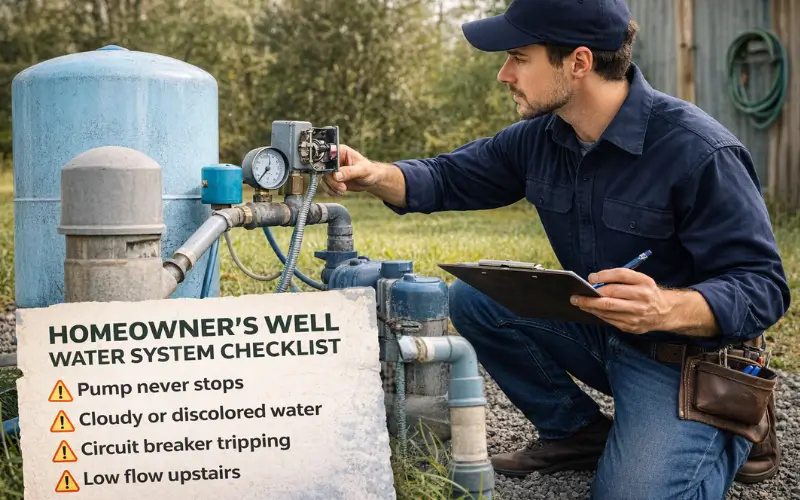
1. The Pump Never Shuts Off
A pump that runs continuously is a major red flag. This usually indicates a hole in the drop pipe, a worn out pump end that can no longer reach “cut-off” pressure, or a major leak in your underground water line.
2. Cloudy or Discolored Water
While water quality can fluctuate naturally, a sudden change often suggests that your pump is pulling in silt or sand. This sediment acts like sandpaper on the internal moving parts of your system and will quickly lead to a total mechanical breakdown.
3. Frequent Circuit Breaker Tripping
If the breaker for your well pump trips repeatedly, do not simply flip it back on. This is a sign that the motor is overheating or has a short circuit. Forcing a damaged motor to start can lead to a fire hazard or permanent damage to your electrical panel.
4. Low Flow in the Upper Floors
If you have great pressure in the basement but barely a trickle in the upstairs bathroom, your system is failing to maintain the necessary head pressure. This is a common sign of a failing pressure tank or a pump that has lost its efficiency.
The Importance of Having a Professional Response Plan
When your water stops flowing, every hour counts. Attempting to diagnose deep well issues without the proper hoisting equipment and electrical testing tools often leads to more damage than the original problem.
Having a relationship with a company that offers emergency well pump repair is vital for any property owner. Professional technicians have the specialized rigs needed to pull submersible pumps safely from hundreds of feet below the surface without risking a “lost pump” scenario where the equipment falls to the bottom of the well.
Invest in Your Property’s Future
A well maintained water system adds significant value to your property and ensures the health and comfort of everyone living there. By combining regular inspections with high quality replacement parts, you can enjoy a worry free water supply for decades.
With over 60 years of experience, the family-owned team at Desert Pump Company is dedicated to providing reliable water solutions. Whether you need a simple flow test or a complete system overhaul, the experts are here to help.