
Compliance is the foundation of fire safety. Every business must adhere to local, state, and national regulations that govern fire detection, alarm systems, evacuation planning, and documentation. Requirements vary by building type and industry, but failure to comply may result in fines, operational shutdowns, or serious safety risks. Staying updated on compliance standards ensures both legal protection and a safer workplace.
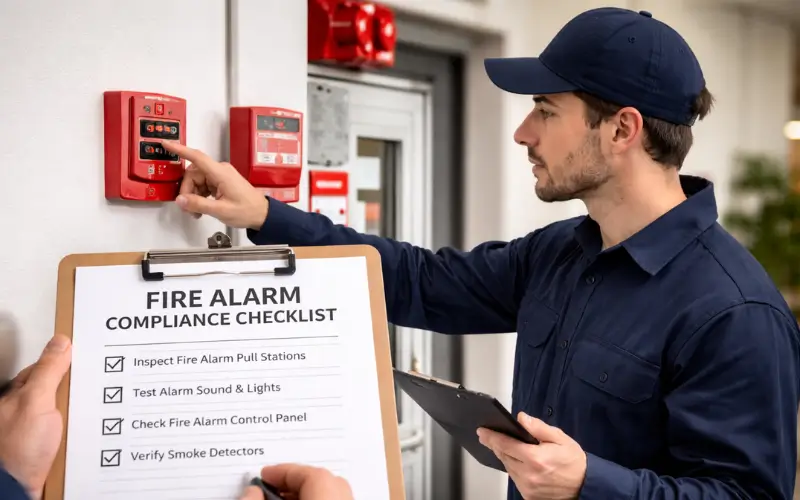
One of the first checklist items is ensuring that manual alarm features such as pull stations are correctly installed, visible, and operational.
Inspecting Alarms and Emergency Devices
Routine inspections help maintain compliance and prevent system failure. Fire alarm control panels should be checked for error messages, battery life should be verified, and audible and visual alarms must function correctly. Manual devices like a fire alarm pull station should be tested during professional inspections to confirm that they activate alarms properly and communicate with the control panel.
Inspection records should be maintained thoroughly to meet compliance requirements.
Maintaining Clear Pathways and Accessible Equipment
Compliance also means ensuring that emergency equipment is accessible at all times. Hallways should remain clear, exit signs must remain illuminated, and fire extinguishers should be mounted properly at the appropriate height. Emergency doors should never be locked in a way that prevents easy exit during a crisis.
Businesses should also avoid blocking manual triggers such as a pull up station, which must be reachable to anyone who needs to activate the alarm.
Employee Training and Evacuation Readiness
OSHA and fire codes require employees to be trained in proper emergency response. Training sessions should cover evacuation procedures, use of fire extinguishers, and communication protocols. Employees should know at least two exit routes and understand how alarms operate.
Documentation of training sessions confirms compliance and helps identify when retraining is necessary—particularly for new hires or after building layout changes.
Working With Certified Fire Alarm Professionals
To maintain full compliance, businesses should work with certified technicians for installation, inspections, and repairs. Fire alarm systems require professional support to remain reliable, accurate, and up to code. Professionals ensure all components function correctly and that the system complies with the most current regulations.
Conclusion
A fire alarm compliance checklist ensures businesses meet regulatory standards while maintaining a safe environment. Through routine inspections, employee training, and careful attention to emergency equipment, companies can significantly reduce fire risks. Commitment to compliance protects lives, assets, and the long-term integrity of the organization.