Modern-day workspaces have changed significantly over the decades. With a new rise in technology, doing most jobs behind a desk and spending many hours staring at screens without hardly moving during the day. Though these changes have produced many benefits in terms of efficiency and productivity in various industries, as well, they also present new workplace-related health challenges — most notably, circulation- and vein-health related issues.
Blood circulation is a vital part of the body energy, organ functioning and transporting oxygen and nutrients. When blood flow is impaired, people may develop symptoms like tiredness, swelling or pain in the legs or visible veins. Chronic venous insufficiency: Over the long term, blood that is unable to move freely begins to damage veins in your circulatory system and contributes to more serious vascular conditions such as varicose veins or chronic venous insufficiency.
Awareness of how workplace habits affect circulation can help people make small but significant changes to effect long-term vein health. Employees and employers can create environments in which vascular health and productivity are paired through awareness of the link between work routines, lack of inactivity — in addition to mindfulness — on a large scale.
The circulatory system and its function in the health of veins
The circulatory system acts as an internal transport network for the body. Arteries transport oxygenated blood from the heart to tissues, while veins08 return deoxygenated blood to the heart for reoxygenation. This process continues, allowing the body to work well; that organs get their food.
Veins of the lower body have a special challenge since they are moving blood upward against gravity. To do this, the veins have one-way valves that counteract any backflow of blood. The surrounding muscles — especially those in your calves — also aid circulating by contracting to help pump sanguine upward toward the heart.
When a person is immobile — or when veins are under constant pressure for extended periods of time — blood flow can become sluggish. Over time, this may weaken the valves in the veins, causing blood to pool in the lower limbs. This pooling can cause veins to swell and bulge under the skin, eventually leading to things like varicose veins.
Workplace habits that impede movement or exert prolonged pressure on the legs are therefore a contributor to circulation problems.
Sitting for a Long Time and Its Effect on the Circulation
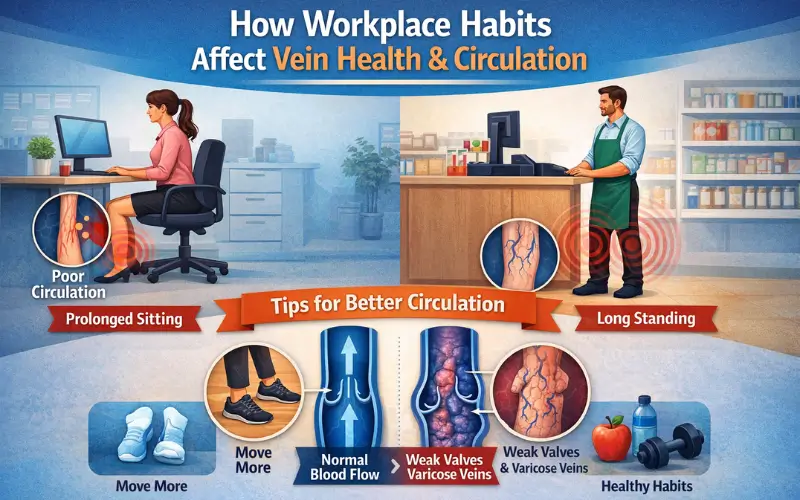
Sitting habit is one of the most common habits in workplaces that eventually affects the health of veins. Office employees, remote workers, and technology professionals are sedentary for eight hours on average at a desk with little movement.
When sitting for prolonged periods, the leg muscles don’t conduct a lot of activity. Because these muscles aid in pushing blood back toward the heart, limited movement can slow circulation. Blood may start piling up in the lower legs, causing pressure to build up inside the veins as a result.
This constant pressure can lead to symptoms like heaviness in the legs, ankle swelling and fatigue. The worst outcome however is worsened varicosities or any other vascular disorder over time.
While sitting is not inherently bad in short bouts, limited movement over a workday can slowly affect the cardiovascular system.
Venous Pressure and Standing for Long Hours
Although sitting for long periods can affect circulation, so too does standing for a long time which puts pressure on the veins. Workers in retail, healthcare, hospitality and manufacturing typically stand on their feet for long stretches every day.
Staying upright for a long time adds pressure in the veins of the lower parts of the body, because gravity drops blood downward all the time. Without enough movement to help with circulation, blood can start pooling in the veins in the legs.
This increased pressure can over time weaken vein valves and lead to varicose veins. Symptoms like aching legs, swelling, or protruding veins close to the surface of the skin may develop in people standing most of their work time.
Alternating between standing and walking or sitting can mitigate these effects as your body is better supported with healthy circulation.
Movement: An Ally for Proper Vein Function
Movement is one of the best things you can do to encourage healthy blood circulation in the workplace. Even a little bit of movement can wake up the muscles that help push blood through our veins.
Walking, stretching and gentle movements of the legs activate the calf musculature, which acts like a natural pump for our circulatory system. When these muscles contract, they assist in pushing blood upward toward the heart and decreasing the chance that blood will pool in those lower limbs.
Movement breaks sprinkled throughout the workday are vital, improving blood flow and counteracting the physical toll taken by sitting down all day. These breaks are not intended to include long exercise sessions; even a few minutes of movement can improve healthy blood flow.
Ergonomics and Workplace Design
Design of the workplace also influences wellbeing by supporting circulation and overall health. Make sure you have ergonomic workstations that promote good posture and movement so as not to put extra strain on your blood vessels, as well as muscles.
For instance, adjustable desks enable employees to switch between sitting and standing positions during the day. This give and take helps avoid constant pressure on the same body parts and facilitates regular movement.
The right chair support, foot position and desk height can also enhance posture which in return can help with circulation. Blood vessels are less compressed in a well-positioned body and, thus, circulation becomes more efficient.
Studies show that ergonomic design helps improve employee wellbeing, productivity, and long-term health outcomes in all organizations.
Common Lifestyle Factors (and Yes, That Includes the Home Office) Impacting Your Workplace Circulation
Several lifestyle habits other than those we have in workplaces affect how the circulatory system interacts with your daily work life. Keeping your body weight healthy, drinking lots of fluids and exercising daily all lead to stronger blood vessels and better circulation.
Diet also impacts vascular health. Fruits and vegetables, in particular, are high in antioxidants that promote cardiovascular function as well as reduce inflammation inside the body. These nutrients help keep blood vessels elastic and strong, allowing for better functioning.
Incorporating healthy lifestyle habits with workplace enhancements is a complete method for smooth vein protection.
Identifying Early Warning Signs of Circulation Issues
Being aware of circulation-related symptoms can allow people to tackle vein health issues in the early stages before they escalate. Typical symptoms that may affect circulation are chronic fatigue of the legs, swelling in the lower limbs, soreness and/or varicosities (visible veins) on the legs.
Others might also feel achy legs, or even restless legs or discomfort after extended periods of sitting/standing. These symptoms should not be dismissed, as they may signify underlying venous problems that need intervention.
Seeing a medical professional when these symptoms linger will allow for early detection and better treatment methods.
Access to Specialized Vein Care
Specialized medical care can be required when lifestyle changes aren’t sufficient to treat symptoms. As techniques in vascular medicine have continued to advance and improve, minimally invasive treatments that can successfully combat vein issues with minimal discomfort and downtime are becoming more prevalent.
Those with troublesome discolored or swollen legs may also benefit from seeing the Specialists at Florida Vein Care, who can act to address symptoms and restore circulation through diagnostic studies and treatment. Vascular health clinics may offer more advanced imaging technology, combined with modern treatment techniques to attack the source of the venous disturbance.
Prompt assessment by trained physicians can reduce the risk of complications and prepare individuals for the best-matched management approach.
Building Healthier Workplace Habits
You don’t need to make drastic lifestyle changes to develop healthier habits at the office. Minor changes like the ones above (taking walking breaks, performing leg-stretching exercise during prolonged meetings, or adjusting workstation heights) can have a great impact on circulation.
Employers can also do their part by encouraging wellness programs that get employees moving throughout the day. Whether it’s workplace wellness programs, standing meeting spaces or more flexible policies about breaks, these are all features that support healthier habits that help employees and organizations alike.
In such a circumstance it becomes imperative to maintain the physical wellbeing and thereby reduce the risk of any health issues related to circulation through this culture that will correspond to productivity.
Conclusion
Circulation and vein health is highly influenced by workplace habits. Modern work environments can place a lot of strain on the circulatory system, whether it’s by long periods of sitting, standing or lack of movement throughout the day.
Luckily, a lot of these effects can be tackled with straightforward lifestyle changes and greater education around vascular health. Regular body-movement, ergonomic workplace, balanced diet, and early medical checkup making the veins strong with good blood circulation.
As you know, with workplaces and their functions constantly changing, everyday work-life routines will need to be implemented in a health-centered way. People can take measures to preserve their vein health and improve wellbeing long term by learning more about how everyday habits influence the body.