A mattress is one of the most important purchases for your home. It directly affects how well you sleep every night. Good sleep improves your health, energy, mood, and productivity. However, choosing the right mattress can feel confusing. There are many types, materials, sizes, and firmness levels available.
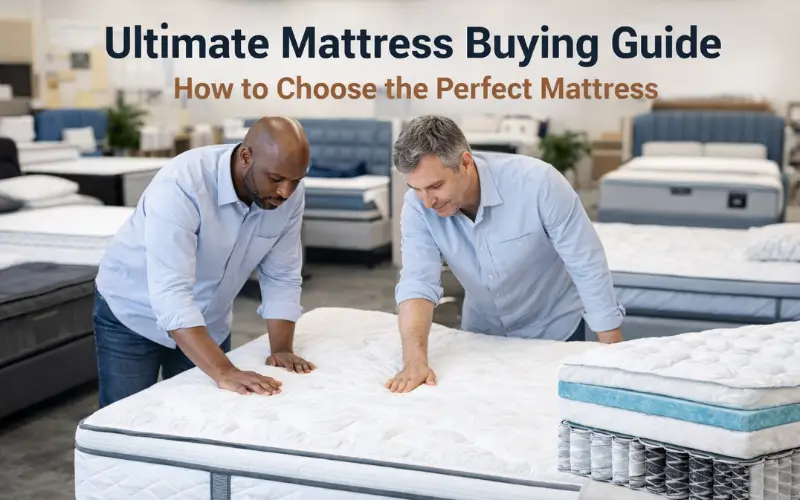
Many people buy a mattress without understanding what their body actually needs. As a result, they end up with back pain, poor sleep, and discomfort. A mattress should support your spine, relieve pressure points, and keep you comfortable throughout the night.
This ultimate mattress buying guide will help you understand everything you need to know before buying a mattress. You will learn about mattress types, firmness levels, sizes, and important features to consider. By the end of this guide, you will be able to choose the best mattress for your sleep style and comfort.
Why Choosing the Right Mattress Is Important
Many people underestimate how important a good mattress is. On average, a person spends about one-third of their life sleeping. That means your mattress plays a major role in your overall health and well-being.
A high-quality mattress provides proper support to your body while you sleep. It helps maintain a healthy spinal alignment and reduces pressure on key areas like the shoulders, hips, and lower back.
Better Sleep Quality
The main purpose of a mattress is to provide comfortable and uninterrupted sleep. If your mattress is too firm or too soft, your body may struggle to find a comfortable position. This can cause frequent tossing and turning during the night.
When your mattress properly supports your body, you fall asleep faster and stay asleep longer. This leads to deeper and more restorative sleep.
Reduced Back and Neck Pain
A poor mattress is one of the most common causes of back and neck pain. If a mattress does not support your spine properly, your body may stay in an unnatural position for several hours.
Over time, this can cause:
- Lower back pain
- Neck stiffness
- Shoulder pain
- Poor posture
A supportive mattress keeps your spine aligned and distributes body weight evenly. This reduces strain on muscles and joints.
Improved Physical Health
Sleep is essential for physical recovery and overall health. During sleep, the body repairs muscles, restores energy, and strengthens the immune system.
A comfortable mattress helps your body relax fully during the night. This allows your muscles to recover and your body to function better during the day.
Poor sleep caused by an uncomfortable mattress may lead to:
- Fatigue
- Reduced concentration
- Mood swings
- Weakened immunity
Increased Productivity and Mood
Good sleep improves mental clarity and emotional balance. When you wake up feeling refreshed, you are more focused and productive throughout the day.
On the other hand, sleeping on an uncomfortable mattress can make you feel tired and irritable. Over time, this may affect your work performance and daily activities.
A Mattress Is a Long-Term Investment
Many people focus only on price when buying a mattress. However, a mattress is something you will use every night for several years.
Most mattresses last between 7 to 10 years, which means the cost spreads over thousands of nights of sleep.
Investing in the right mattress can significantly improve your quality of life. Instead of viewing it as an expense, it should be seen as a long-term investment in your health and comfort.
When Should You Buy a New Mattress?
Many people continue using the same mattress for years without realizing it has already worn out. Over time, mattresses lose their support and comfort. This can negatively affect sleep quality and overall health.
Understanding when to replace your mattress is important. Sleeping on an old or damaged mattress can lead to poor sleep, body pain, and fatigue.
Average Lifespan of a Mattress
Most mattresses last between 7 to 10 years. However, the exact lifespan depends on the materials used and how well the mattress is maintained.
Different mattress types have different durability levels:
- Innerspring mattresses: 6–8 years
- Memory foam mattresses: 8–10 years
- Latex mattresses: 10–15 years
- Hybrid mattresses: 7–10 years
If your mattress is older than this range, it may no longer provide proper support.
Signs You Need a New Mattress
There are several clear signs that indicate your mattress needs replacement.
Sagging or Visible Indentations
One of the most obvious signs is sagging. If your mattress has visible dips or indentations, it means the internal structure has weakened.
Sagging areas can cause your spine to bend unnaturally while sleeping. This often leads to back pain and discomfort.
Waking Up With Pain or Stiffness
If you regularly wake up with back pain, neck pain, or joint stiffness, your mattress might not be supporting your body correctly.
A good mattress should keep your spine aligned and reduce pressure on your body. If it fails to do that, it may be time for a replacement.
Poor Sleep Quality
Another common sign is difficulty sleeping through the night. If you find yourself tossing and turning often, your mattress may not be comfortable anymore.
Some people also notice they sleep better in hotels or other beds. This can be a strong indication that their current mattress is no longer suitable.
Increased Allergies
Old mattresses tend to collect dust mites, allergens, and bacteria over time. These can trigger allergies or breathing issues.
If you notice symptoms such as sneezing, congestion, or itchy eyes when you wake up, your mattress might be the cause.
Lumps or Uneven Surface
A mattress should feel smooth and evenly supportive. If you notice lumps or uneven areas, the materials inside may have started to break down.
This uneven support can make it difficult for your body to stay comfortable during sleep.
Lifestyle Changes That May Require a New Mattress
Sometimes, replacing a mattress is necessary due to lifestyle changes rather than wear and tear.
Examples include:
- Significant weight changes
- Moving to a larger bed size
- Developing back or joint problems
- Sharing a bed with a partner
These changes may require a mattress with different firmness, size, or support features.
Types of Mattresses (Pros, Cons & Best For)
One of the most important steps when buying a mattress is understanding the different types available. Each mattress type offers a unique feel, support level, and sleeping experience.
Choosing the right type depends on your sleep position, comfort preference, and budget.
Memory Foam Mattress
Memory foam mattresses are made from viscoelastic foam that responds to body heat and pressure. The foam softens and molds to the shape of your body.
This material was originally developed by NASA to improve cushioning and pressure relief.
Pros
- Excellent pressure relief
- Conforms closely to body shape
- Good motion isolation (ideal for couples)
- Reduces pressure on shoulders and hips
Cons
- Can retain heat and feel warm
- Some people feel a “sinking” sensation
- Usually heavier than other mattress types
Best For
Memory foam mattresses are ideal for:
- Side sleepers
- People with back or joint pain
- Couples who want less motion transfer
Innerspring Mattress
Innerspring mattresses are the most traditional mattress type. They use a system of metal coils or springs to provide support.
A thin comfort layer is usually placed on top of the coils.
Pros
- Good airflow and cooling
- Firm and responsive feel
- Often more affordable
- Widely available
Cons
- Less pressure relief compared to foam
- Can transfer motion between partners
- May become noisy over time
Best For
Innerspring mattresses work well for:
- People who prefer a bouncy and firm mattress
- Hot sleepers
- Budget-conscious buyers
Latex Mattress
Latex mattresses are made from natural or synthetic latex foam. Natural latex is derived from rubber tree sap.
These mattresses are known for durability and responsiveness.
Pros
- Very durable and long-lasting
- Naturally breathable
- Resistant to dust mites and mold
- Provides both support and comfort
Cons
- Usually more expensive
- Heavy and difficult to move
- Natural latex mattresses can be costly
Best For
Latex mattresses are great for:
- Eco-conscious buyers
- People who want long-lasting durability
- Sleepers who prefer a responsive surface
Hybrid Mattress
Hybrid mattresses combine foam layers with innerspring coils. The goal is to offer the benefits of both support and comfort.
Most hybrid mattresses include memory foam or latex on top and coils underneath.
Pros
- Balanced support and comfort
- Better airflow than all-foam mattresses
- Good pressure relief
- Suitable for many sleep positions
Cons
- Typically more expensive
- Heavier than traditional mattresses
Best For
Hybrid mattresses are ideal for:
- Combination sleepers
- Couples
- People who want both support and cushioning
Pillow Top Mattress
A pillow top mattress has an extra layer of soft padding stitched onto the top surface. This creates a plush and luxurious feel.
Pros
- Extra softness and comfort
- Good pressure relief
- Feels luxurious
Cons
- The top layer may compress over time
- Less durability than some other types
Best For
Pillow top mattresses are suitable for:
- People who prefer a soft sleeping surface
- Side sleepers
- Those looking for a plush feel
Mattress Firmness Levels Explained
Mattress firmness is one of the most important factors to consider when buying a mattress. Firmness refers to how soft or hard a mattress feels when you lie down on it.
Choosing the wrong firmness level can lead to poor sleep, discomfort, and body pain. A mattress that is too soft may cause your body to sink too much. On the other hand, a mattress that is too firm may create pressure on your shoulders and hips.
Understanding firmness levels will help you choose a mattress that matches your body type, sleep position, and comfort preference.
Mattress Firmness Scale (1–10)
Most mattress brands use a firmness scale from 1 to 10 to describe how soft or firm a mattress feels.
Here is a simple explanation of the scale.
1–2: Very Soft
These mattresses feel extremely plush and allow the body to sink deeply into the surface. They provide strong cushioning but very little support.
They are rarely recommended because they may cause poor spinal alignment.
3–4: Soft
Soft mattresses allow noticeable sinking and contour closely to the body. They offer excellent pressure relief for sensitive areas like shoulders and hips.
However, they may not provide enough support for heavier sleepers.
Best for:
- Lightweight sleepers
- Side sleepers who need pressure relief
5–6: Medium
Medium firmness mattresses provide a balance between comfort and support. They allow slight body contouring while keeping the spine aligned.
This level works well for many sleepers because it is neither too soft nor too firm.
Best for:
- Combination sleepers
- Couples with different preferences
6–7: Medium Firm
Medium firm is one of the most popular firmness levels. It provides strong support while still offering some cushioning.
Many sleep experts recommend this firmness level because it helps maintain proper spinal alignment.
Best for:
- Back sleepers
- Combination sleepers
- People with mild back pain
8–9: Firm
Firm mattresses feel solid and supportive with minimal sinking. They keep the body on top of the mattress rather than allowing it to sink in.
Best for:
- Stomach sleepers
- Heavy sleepers
- People who prefer strong support
10: Extra Firm
Extra firm mattresses feel very hard and have almost no cushioning. These mattresses are rarely recommended because they can create pressure points and discomfort.
How to Choose the Right Firmness
The right firmness level depends on several factors.
Body Weight
Body weight affects how much you sink into the mattress.
- Lightweight sleepers (under 130 lbs): softer mattresses work better
- Average weight sleepers (130–230 lbs): medium to medium firm is ideal
- Heavy sleepers (over 230 lbs): firmer mattresses provide better support
Sleep Position
Your sleeping position also determines the best firmness level.
Side sleepers usually need softer mattresses for pressure relief. Back sleepers benefit from medium firm support. Stomach sleepers often need firmer mattresses to keep the spine aligned.
Personal Comfort Preference
Some people simply prefer a softer or firmer feel regardless of other factors. Comfort is subjective, so the best mattress is one that feels comfortable for you while still supporting your body properly.
How Your Sleeping Position Affects Mattress Choice
Your sleeping position plays a major role in determining the best mattress for you. Different sleeping positions put pressure on different parts of the body.
Choosing the right mattress based on your sleeping style can help reduce pain and improve sleep quality.
Best Mattress for Side Sleepers
Side sleeping is one of the most common sleep positions. However, it creates pressure on the shoulders and hips.
A mattress that is too firm can cause discomfort in these areas.
Side sleepers usually benefit from soft to medium mattresses that allow the shoulders and hips to sink slightly into the surface.
Key features side sleepers should look for:
- Good pressure relief
- Body contouring support
- Soft to medium firmness
Memory foam and hybrid mattresses are often ideal for side sleepers.
Best Mattress for Back Sleepers
Back sleepers need a mattress that supports the natural curve of the spine. If the mattress is too soft, the hips may sink too deeply. This can cause lower back pain.
A medium to medium-firm mattress usually works best for back sleepers.
Important features include:
- Strong lumbar support
- Even weight distribution
- Moderate cushioning
Hybrid and latex mattresses often provide a good balance for back sleepers.
Best Mattress for Stomach Sleepers
Stomach sleeping can place pressure on the lower back. If the mattress is too soft, the stomach may sink too far down, causing the spine to bend unnaturally.
Stomach sleepers usually need a firm mattress that keeps the body level.
Key features include:
- Firm support
- Minimal sinking
- Strong spinal alignment
Innerspring and firm hybrid mattresses are often suitable for stomach sleepers.
Best Mattress for Combination Sleepers
Combination sleepers change positions during the night. They may sleep on their side, back, and stomach at different times.
These sleepers need a mattress that adapts easily to different positions.
The best options usually include:
- Medium to medium firm mattresses
- Responsive materials like latex or hybrid foam
- Good motion response for easy movement
A balanced mattress helps combination sleepers stay comfortable regardless of position.
Choosing the Right Mattress Size
Choosing the correct mattress size is just as important as selecting the right type or firmness. The right size ensures that you have enough space to sleep comfortably without feeling cramped.
Your mattress size should depend on several factors, including the number of sleepers, bedroom size, and personal comfort preferences.
Below are the most common mattress sizes and who they are best suited for.
Twin Mattress
A twin mattress is one of the smallest standard mattress sizes available.
Dimensions: 38 inches wide × 75 inches long
Twin mattresses are commonly used in children’s bedrooms, guest rooms, or small apartments.
Best For
- Children and teenagers
- Single sleepers with limited space
- Bunk beds and daybeds
Twin mattresses are affordable and space-saving, but they may feel too small for adults who move a lot during sleep.
Twin XL Mattress
A Twin XL mattress is slightly longer than a standard twin mattress.
Dimensions: 38 inches wide × 80 inches long
The extra length makes it a better option for taller individuals.
Best For
- Tall teenagers
- College dorm rooms
- Single sleepers who need extra legroom
Twin XL mattresses provide additional comfort without taking up much more space than a regular twin.
Full (Double) Mattress
A full mattress is wider than a twin but still designed mainly for single sleepers.
Dimensions: 54 inches wide × 75 inches long
It offers more room to move around compared to a twin mattress.
Best For
- Single adults
- Teenagers who want more sleeping space
- Small bedrooms
While a full mattress can accommodate two people, it may feel cramped for couples.
Queen Mattress
The queen mattress is the most popular mattress size. It provides a good balance between comfort and space efficiency.
Dimensions: 60 inches wide × 80 inches long
Many couples choose queen mattresses because they provide enough space without requiring a very large bedroom.
Best For
- Couples
- Single sleepers who want extra space
- Medium-sized bedrooms
Queen mattresses offer excellent versatility and are widely available.
King Mattress
A king mattress provides a large sleeping surface and maximum comfort for couples.
Dimensions: 76 inches wide × 80 inches long
It is one of the widest mattress sizes available.
Best For
- Couples who want more personal space
- Families who sometimes share the bed with children
- Large bedrooms
King mattresses allow each sleeper to have plenty of space without disturbing their partner.
California King Mattress
California king mattresses are slightly narrower but longer than standard king mattresses.
Dimensions: 72 inches wide × 84 inches long
This size is ideal for tall sleepers who need additional legroom.
Best For
- Very tall individuals
- Couples who prefer extra length
- Spacious bedrooms
California king mattresses provide luxurious sleeping space but require a large room.
Important Factors to Consider When Buying a Mattress
Besides mattress type and size, several other factors affect comfort and sleep quality. Understanding these features will help you choose a mattress that truly fits your needs.
Comfort and Support
Comfort and support are the most important aspects of a mattress. A comfortable mattress allows your body to relax while providing proper support for the spine.
A good mattress should keep your spine aligned in a natural position while you sleep. If a mattress is too soft, your body may sink too deeply. If it is too firm, it may create pressure points.
The best mattress balances both comfort and support.
Pressure Relief
Pressure relief refers to how well a mattress distributes body weight. When you lie down, certain areas like the shoulders, hips, and lower back experience more pressure.
A mattress with good pressure relief reduces strain on these areas. This helps prevent pain and discomfort.
Memory foam and latex mattresses are known for excellent pressure relief because they contour to the shape of the body.
Motion Isolation
Motion isolation is especially important for couples who share a bed.
If one person moves or changes position during the night, a mattress with good motion isolation prevents that movement from disturbing the other sleeper.
Memory foam mattresses generally provide the best motion isolation because the material absorbs movement rather than transferring it across the bed.
Temperature Regulation
Some mattresses tend to retain heat, which can make sleeping uncomfortable. Temperature regulation refers to how well a mattress stays cool during the night.
Mattresses with good airflow and cooling materials help prevent overheating.
Cooling features may include:
- Gel-infused foam
- Breathable covers
- Coil systems that allow airflow
- Natural latex materials
These features help maintain a comfortable sleeping temperature.
Edge Support
Edge support refers to how strong the mattress edges are. A mattress with good edge support does not collapse when you sit or lie near the edge.
Strong edges provide several benefits:
- Easier to get in and out of bed
- More usable sleeping surface
- Better durability
Hybrid and innerspring mattresses usually offer stronger edge support compared to foam mattresses.
Mattress Thickness
Mattress thickness typically ranges between 8 and 14 inches.
Thicker mattresses often contain more layers and may provide better support and durability.
General guidelines:
- 8–10 inches: basic support
- 10–12 inches: balanced comfort and support
- 12–14 inches: luxury comfort and deeper cushioning
Heavier sleepers may benefit from thicker mattresses for better support.
Durability
Durability determines how long a mattress will maintain its comfort and support.
High-quality materials usually last longer and resist sagging.
Latex and high-density memory foam mattresses are known for strong durability. Innerspring mattresses may wear out more quickly depending on coil quality.
When buying a mattress, always consider the expected lifespan and warranty coverage.
How to Choose a Mattress Based on Body Weight
Body weight plays a major role in how a mattress feels and performs. The same mattress can feel soft to one person and firm to another depending on body weight.
Heavier sleepers tend to sink deeper into a mattress, while lighter sleepers may stay more on the surface. Because of this, choosing a mattress based on body weight helps ensure proper support and comfort.
Lightweight Sleepers (Under 130 lbs)
Lightweight sleepers usually do not sink deeply into a mattress. If the mattress is too firm, it may feel hard and uncomfortable.
For this reason, lighter individuals typically need softer mattresses that allow some contouring around the body.
Recommended Mattress Firmness
Soft to medium firmness (3–5 on the firmness scale)
Best Mattress Types
- Memory foam mattresses
- Soft hybrid mattresses
- Latex mattresses with plush comfort layers
Why It Works
A softer mattress allows lightweight sleepers to experience better pressure relief around the shoulders and hips. This helps maintain comfort and proper spinal alignment.
Average Weight Sleepers (130–230 lbs)
People within this weight range have the most flexibility when choosing a mattress. Many mattress types and firmness levels work well for average-weight sleepers.
Most sleep experts recommend a balanced mattress that provides both support and cushioning.
Recommended Mattress Firmness
Medium to medium-firm (5–7 on the firmness scale)
Best Mattress Types
- Hybrid mattresses
- Memory foam mattresses
- Latex mattresses
Why It Works
A medium or medium-firm mattress supports the body evenly without excessive sinking. This balance helps maintain proper spinal alignment while still offering comfort.
Heavyweight Sleepers (Over 230 lbs)
Heavier sleepers place more pressure on a mattress. If the mattress is too soft, the body may sink too deeply, causing poor support and faster mattress wear.
For this reason, heavier individuals often benefit from firmer and thicker mattresses.
Recommended Mattress Firmness
Medium firm to firm (7–9 on the firmness scale)
Best Mattress Types
- Hybrid mattresses with strong coil systems
- Latex mattresses
- High-density memory foam mattresses
Why It Works
Firm mattresses prevent excessive sinking and provide strong support for the spine. Thicker mattresses with durable materials also tend to last longer under heavier weight.
Mattress Materials Explained
Understanding mattress materials can help you choose a mattress that suits your comfort preferences and durability needs. Different materials provide different levels of support, cooling, and pressure relief.
Below are the most common materials used in modern mattresses.
Memory Foam
Memory foam is one of the most popular mattress materials. It is designed to respond to body heat and pressure.
When you lie down, memory foam softens and molds to the shape of your body. This creates a hugging sensation that many sleepers find comfortable.
Benefits
- Excellent pressure relief
- Contours closely to the body
- Reduces motion transfer between partners
Limitations
- May retain heat
- Some sleepers feel a sinking sensation
To improve cooling, many modern mattresses use gel-infused memory foam or breathable foam layers.
Gel Foam
Gel foam is a variation of memory foam that includes cooling gel particles. These particles help absorb and disperse body heat.
Benefits
- Better temperature regulation
- Similar pressure relief as memory foam
- More comfortable for hot sleepers
Limitations
- May still retain some heat depending on mattress design
Gel foam is commonly used in combination with other foam layers.
Latex Foam
Latex foam is made either from natural rubber tree sap or synthetic materials.
Natural latex mattresses are known for their durability, responsiveness, and eco-friendly properties.
Benefits
- Very durable and long-lasting
- Naturally breathable
- Resistant to dust mites and mold
- Responsive surface that prevents deep sinking
Limitations
- Higher price compared to other materials
- Heavy and difficult to move
Latex mattresses are often recommended for people who want long-term durability and natural materials.
Polyfoam
Polyurethane foam, commonly called polyfoam, is a versatile material used in many mattresses.
It is often used as a support layer or comfort layer depending on its density.
Benefits
- Lightweight
- Affordable
- Available in different firmness levels
Limitations
- Lower-quality polyfoam may wear out faster
- Less contouring than memory foam
Higher-density polyfoam tends to be more durable and supportive.
Steel Coils (Innerspring Systems)
Steel coils are used in innerspring and hybrid mattresses. These coils provide structural support and allow airflow inside the mattress.
There are several types of coil systems, including:
- Bonnell coils
- Pocketed coils
- Continuous coils
- Offset coils
Benefits
- Strong support
- Better airflow and cooling
- Responsive and bouncy feel
Limitations
- May transfer motion if coils are not individually wrapped
Pocketed coil systems are often preferred because they reduce motion transfer and improve comfort.
Buying a Mattress Online vs In-Store
Today, people have two main ways to buy a mattress: online or in a physical store. Both options have advantages and disadvantages. Understanding these differences can help you choose the best buying method for your needs.
In recent years, online mattress shopping has become extremely popular because of convenience and competitive pricing. However, some buyers still prefer the traditional in-store experience.
Buying a Mattress Online
Online mattress companies have grown rapidly over the last decade. Many brands sell mattresses directly to customers through their websites.
These mattresses are often delivered in a compressed box, making shipping easier and more affordable.
Advantages of Buying Online
Lower Prices
Online mattress brands usually sell directly to consumers without middlemen. Because of this, they often offer lower prices compared to retail stores.
Convenience
Shopping online allows you to compare many mattresses quickly. You can read reviews, check specifications, and place an order without leaving your home.
Sleep Trials
Most online mattress companies offer generous sleep trial periods, often ranging from 90 to 365 nights. This allows you to test the mattress at home and return it if it does not suit you.
Wide Selection
Online stores typically offer more options in terms of materials, firmness levels, and features.
Disadvantages of Buying Online
You Cannot Test the Mattress Immediately
One drawback is that you cannot physically try the mattress before buying it. You must rely on product descriptions and customer reviews.
Return Process
While many companies offer free returns, arranging a return can still take time and effort.
Buying a Mattress In-Store
Traditional mattress stores allow customers to test mattresses in person before making a purchase.
This hands-on experience can help some buyers feel more confident about their decision.
Advantages of Buying In-Store
Immediate Testing
The biggest advantage of shopping in a store is that you can lie down on different mattresses to see how they feel.
This helps you understand firmness levels and comfort before buying.
Personal Assistance
Sales representatives can help explain mattress features and recommend options based on your needs.
Faster Delivery
Some stores offer same-day or next-day delivery, which can be convenient if you need a mattress quickly.
Disadvantages of Buying In-Store
Higher Prices
Retail stores usually have higher overhead costs such as rent, staff salaries, and showroom space. These costs may increase the mattress price.
Limited Selection
Physical stores often carry fewer models compared to online retailers.
Pressure From Salespeople
Some buyers feel uncomfortable with aggressive sales tactics used in certain mattress stores.
Which Option Is Better?
Both options can work well depending on your preference.
Choose online shopping if you want:
- Better pricing
- More mattress choices
- Long sleep trials
Choose in-store shopping if you want:
- To test mattresses physically
- Personal assistance
- Faster delivery
Many people now combine both methods by researching online and then visiting a store to test similar models.
How Much Should You Spend on a Mattress?
Mattresses are available in a wide range of prices. Some budget mattresses cost only a few hundred dollars, while luxury models can cost several thousand.
The right budget depends on the mattress size, materials, and quality.
A mattress is a long-term purchase, so it is usually better to focus on quality and durability rather than choosing the cheapest option.
Budget Mattresses ($300 – $800)
Budget mattresses are usually made from basic foam or simple innerspring systems.
These mattresses may still provide decent comfort but often lack advanced features.
What to Expect
- Basic foam or coil construction
- Limited durability
- Fewer comfort layers
Best For
- Guest rooms
- Temporary use
- Buyers with limited budgets
Mid-Range Mattresses ($800 – $1,500)
Mid-range mattresses offer a balance between quality and affordability. Many popular mattress brands fall into this category.
These mattresses often include better materials and more advanced comfort layers.
What to Expect
- Hybrid designs
- Higher-quality memory foam
- Improved cooling features
- Better durability
Best For
- Most sleepers
- Couples
- People looking for long-term value
Luxury Mattresses ($1,500 – $3,000+)
Luxury mattresses use premium materials and advanced construction techniques.
They often include multiple comfort layers, high-end foam, natural latex, and sophisticated cooling systems.
What to Expect
- Premium materials
- Superior durability
- Advanced support systems
- Enhanced cooling technology
Best For
- People who want maximum comfort
- Buyers looking for long-term investment
- Sleepers with specific comfort needs
Is an Expensive Mattress Worth It?
An expensive mattress can be worth the investment if it offers better durability, comfort, and support.
Since you will likely use the mattress every night for several years, paying more for quality can improve sleep quality and overall health.
However, price alone does not determine quality. The best mattress is the one that fits your sleep style, comfort preference, and support needs.
Mattress Trial Periods, Warranties, and Return Policies
When buying a mattress, many people focus only on comfort and price. However, it is also important to consider the trial period, warranty, and return policy offered by the brand.
These policies protect your purchase and give you peace of mind if the mattress does not meet your expectations.
Mattress Sleep Trials
A sleep trial allows you to test a mattress at home for a specific period. Most online mattress brands offer sleep trials ranging from 90 nights to 365 nights.
This trial period is important because it can take time for your body to adjust to a new mattress.
Why Sleep Trials Matter
Sleeping on a mattress in a showroom for a few minutes is very different from sleeping on it every night. A sleep trial allows you to experience the mattress in real-life conditions.
Benefits of sleep trials include:
- Testing comfort over several weeks
- Checking support and pressure relief
- Ensuring it suits your sleeping position
If the mattress does not feel right, many companies allow you to return it for a refund or exchange.
Mattress Warranty
A mattress warranty protects you against manufacturing defects. Most mattresses come with warranties ranging from 5 to 15 years, while some premium brands offer longer coverage.
What a Warranty Usually Covers
Common warranty coverage includes:
- Sagging beyond a certain depth
- Broken coils
- Cracks or splits in foam
- Defects in materials or construction
However, warranties usually do not cover normal wear and tear or damage caused by improper use.
Before purchasing a mattress, it is always wise to read the warranty terms carefully.
Return Policies
Return policies explain how you can return or exchange a mattress if you are not satisfied.
Many online mattress companies offer free returns during the trial period, while others may charge a small pickup or shipping fee.
What to Check in a Return Policy
Before buying, look for:
- Length of the return window
- Whether return shipping is free
- If there are restocking fees
- Refund processing time
A flexible return policy reduces the risk of buying a mattress online.
Tips for Testing a Mattress Before Buying
Whether you buy online or in-store, testing a mattress properly can help you make a better decision.
Many people make the mistake of testing a mattress for only a few seconds. This does not give enough time to evaluate comfort and support.
Here are some practical tips to test a mattress effectively.
Spend Enough Time on the Mattress
If you are testing a mattress in a store, lie down for at least 10–15 minutes. This gives your body time to relax and feel how the mattress supports you.
A mattress may feel comfortable at first but become uncomfortable after a few minutes.
Try Your Usual Sleeping Position
Always test the mattress in the position you normally sleep in.
For example:
- Side sleepers should lie on their side
- Back sleepers should lie flat on their back
- Stomach sleepers should test that position as well
This helps you understand how the mattress supports your body during normal sleep.
Pay Attention to Pressure Points
Notice how your shoulders, hips, and lower back feel while lying on the mattress.
A good mattress should reduce pressure in these areas while still supporting your spine.
If you feel discomfort or tension, the mattress may not be the right choice.
Check Edge Support
Sit or lie near the edge of the mattress to test edge support.
If the edge collapses too much, the mattress may not provide enough stability or usable sleeping surface.
Strong edge support is especially important for couples and people who frequently sit on the bed.
Common Mattress Buying Mistakes to Avoid
Buying a mattress is a significant purchase, yet many people make simple mistakes that affect their sleep quality.
Avoiding these mistakes can help you choose the right mattress.
Choosing Based Only on Price
Many buyers choose the cheapest mattress available. While saving money is important, a low-quality mattress may wear out quickly or fail to provide proper support.
Instead, focus on comfort, support, and durability.
Ignoring Sleep Position
Your sleeping position greatly affects the type of mattress you need.
Choosing a mattress without considering how you sleep can lead to poor spinal alignment and discomfort.
Always select a mattress that supports your primary sleep position.
Not Checking the Trial Period
Skipping the sleep trial or return policy can be risky. If the mattress does not suit your body, you may be stuck with an uncomfortable purchase.
A good trial period allows you to test the mattress safely.
Overlooking Mattress Size
Some people choose a mattress that is too small for their needs.
Couples, for example, may feel cramped on a full-size mattress. Selecting the right size ensures better comfort and freedom of movement.
Not Researching the Materials
Different materials affect comfort, durability, and temperature regulation.
Understanding mattress materials helps you make a more informed decision.
Extra Accessories That Improve Sleep
In addition to a good mattress, certain accessories can improve your sleeping experience.
These products can enhance comfort, protect your mattress, and support better sleep.
Mattress Toppers
A mattress topper is an extra comfort layer placed on top of your mattress.
It can make a firm mattress softer or add extra cushioning.
Memory foam and latex toppers are popular choices for improving comfort.
Mattress Protectors
A mattress protector shields your mattress from spills, dust, and allergens.
It helps keep the mattress clean and can extend its lifespan.
Many protectors are waterproof and breathable.
Pillows
The right pillow is just as important as the mattress. Pillows help support the neck and maintain proper spinal alignment.
Different sleeping positions require different pillow types:
- Side sleepers: thicker pillows
- Back sleepers: medium loft pillows
- Stomach sleepers: thin pillows
Bed Frames and Foundations
A strong bed frame or foundation provides proper support for your mattress.
Using the right foundation can prevent sagging and improve mattress durability.
Frequently Asked Questions (FAQs)
What type of mattress is best overall?
There is no single mattress that works best for everyone. Hybrid and memory foam mattresses are popular because they provide a balance of comfort, pressure relief, and support.
What mattress firmness is best for back pain?
Medium-firm mattresses are often recommended for people with back pain because they support the spine while providing some cushioning.
How long should a mattress last?
Most mattresses last between 7 and 10 years, depending on the materials and how well they are maintained.
Is memory foam better than spring mattresses?
Memory foam mattresses offer better pressure relief and motion isolation, while spring mattresses provide stronger support and better airflow.
The best option depends on your comfort preferences.
What mattress is best for couples?
Couples usually benefit from mattresses with good motion isolation and strong edge support, such as memory foam or hybrid mattresses.
Final Thoughts
Choosing the right mattress is essential for achieving better sleep and improving overall health. Since you spend many hours on your mattress every night, the right choice can make a significant difference in comfort and well-being.
When buying a mattress, consider factors such as mattress type, firmness level, size, materials, and your sleeping position. It is also important to review sleep trials, warranties, and return policies before making a purchase.
A mattress is a long-term investment in your sleep quality. Taking the time to research and choose carefully will help ensure that you enjoy comfortable and restful sleep for many years.