Choosing the right mattress in 2026 is more important than ever. With growing awareness around sleep health, posture alignment, physical recovery, and temperature regulation, a mattress is no longer just a bedroom purchase — it is a long‑term investment in overall well‑being and daily performance.
The global mattress market continues to expand, driven by innovations in cooling technology, advanced foam engineering, zoned coil systems, and the rapid growth of online mattress purchasing. Consumers today have access to more transparent product specifications, longer trial periods, and better warranty coverage than ever before.
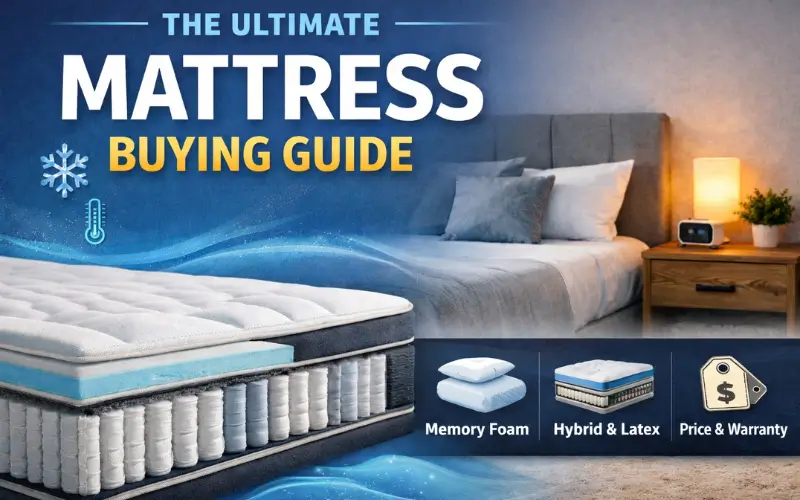
This comprehensive guide walks you step‑by‑step through how to choose the right mattress based on your sleep profile, material quality, durability indicators, pricing benchmarks, and warranty protection — so you can buy with confidence.
1. Identify Your Sleep Profile
Your sleep profile determines everything. The best mattress for one person may be completely wrong for another.
Sleep Position
Side Sleepers: Side sleepers place significant pressure on shoulders and hips. A soft to medium firmness (4–6 out of 10) typically provides optimal pressure relief and contouring. Memory foam and pressure‑relieving hybrid mattresses perform especially well for this group.
Back Sleepers: Back sleepers require balanced support to maintain neutral spine alignment. Medium to medium‑firm mattresses (5–7 out of 10) — particularly hybrids with zoned lumbar support — are ideal.
Stomach Sleepers: Stomach sleeping demands firmer support (7–8 out of 10) to prevent hip sink and lower‑back strain. Strong coil systems or high‑density foam cores are recommended.
Combination Sleepers: Those who change positions throughout the night need responsive materials that prevent the “stuck” feeling. Latex and responsive hybrids allow easier repositioning.
Body Weight & Support Needs
Body weight significantly affects how a mattress feels and performs over time.
Under 130 lbs: Softer comfort layers improve contouring and prevent excessive firmness.
130–230 lbs: Most medium or medium‑firm mattresses perform well in this range.
Over 230 lbs: Reinforced hybrids or high‑density foam builds are strongly recommended. Look for thicker profiles (12–14 inches), durable coil systems, and memory foam densities of 5 lb/ft³ or higher. Durability becomes especially important in this category.
Temperature Sensitivity
Overheating is one of the most common mattress complaints. Cooling technologies to prioritize include:
- Phase‑change material (PCM) covers
- Gel, graphite, or copper‑infused foams
- Open‑cell or ventilated foam structures
- Pocketed coil airflow systems
- Natural latex (inherently breathable)
Hybrid and latex mattresses generally sleep cooler than traditional all‑foam designs due to increased airflow.
Allergies & Sensitivities
For allergy‑prone sleepers, consider:
- Hypoallergenic mattress covers
- Dust‑mite resistant fabrics
- Natural latex
- Certified low‑VOC foams
- Organic cotton or wool covers
Recognized certifications such as CertiPUR‑US®, OEKO‑TEX®, GOLS, and GOTS provide additional safety and material transparency.
2. Understand Mattress Types
Each construction type affects feel, durability, and overall performance.
Memory Foam: Memory foam is known for deep contouring and excellent motion isolation.
Pros:
- Strong pressure relief
- Reduces joint stress
- Minimal motion transfer (great for couples)
Cons:
- Can retain heat without cooling upgrades
- Slower responsiveness
Look for comfort layer densities between 3–5 lb/ft³ at minimum, with 5+ lb/ft³ offering premium durability.
Latex: Latex (natural or blended) is durable, responsive, and breathable.
Pros:
- Long lifespan
- Naturally cooling
- Responsive and supportive
- Hypoallergenic options
Cons:
- Heavier
- Typically more expensive
- Firmer feel compared to memory foam
Natural latex often outlasts most polyurethane-based foams.
Hybrid: Hybrid mattresses combine pocketed coils with foam or latex comfort layers.
Pros:
- Balanced support and cushioning
- Strong airflow
- Better edge support
- Suitable for most sleeper types
Cons:
- Quality varies widely
- Higher price range depending on materials
Hybrids continue to gain popularity due to their balanced performance.
Innerspring: Traditional coil systems with thinner comfort layers.
Pros:
- Good airflow
- Strong edge support
- Often more affordable
Cons:
- Less contouring
- More motion transfer
Adjustable Air Beds: Air chamber systems allow customizable firmness.
Pros:
- Adjustable support
- Ideal for couples with different preferences
Cons:
- Expensive
- Mechanical components may require maintenance
3. Quality Markers That Matter
Marketing names are less important than construction details.
Foam Density: Higher density equals longer lifespan.
- Memory foam: 3–5 lb/ft³ minimum
- Premium memory foam: 5+ lb/ft³
- Polyfoam support cores: 1.8 lb/ft³ or higher
Lower-density foams break down faster and can lead to sagging.
Coil Systems Look for:
- Individually pocketed coils
- Zoned lumbar reinforcement
- Reinforced perimeter edges
- 800+ coils in a queen size (general durability benchmark)
Cooling Construction: True cooling performance comes from breathable design, airflow channels, coil ventilation, and conductive materials. Gel infusion alone does not guarantee meaningful cooling.
Certifications: Trusted certifications increase confidence in safety and sustainability standards.
4. Mattress Pricing in 2026
Average queen-size pricing benchmarks:
- Innerspring: ~$1,000
- Memory Foam: ~$1,150
- Hybrid: $1,300–$1,500
- Latex / Plus‑Size Hybrid: $1,700+
- Adjustable Air: $2,000+
Higher prices typically reflect:
- Higher-density materials
- Advanced cooling layers
- Zoned ergonomic construction
- Longer trial periods
- Stronger warranty protection
Holiday promotions (Presidents’ Day, Memorial Day, Labor Day, Black Friday) often offer the deepest discounts.
5. Trials, Returns & Warranties
Trial Periods: Most reputable brands offer at least 100 nights. Many provide 365-night trials, allowing full seasonal evaluation.
Return Policies
Always verify:
- Free pickup
- Full refund terms
- Restocking fees
- Minimum trial requirements
Warranties: Common coverage includes
- 10-year limited warranties
- Lifetime warranties (select brands)
Important details to review:
- Indentation threshold (usually 1–1.5 inches)
- Prorated vs non-prorated terms
- Foundation requirements
- Stain exclusions
Warranties typically cover manufacturing defects — not comfort preference.
6. Mattress Sizes & Room Fit
Standard U.S. sizes:
- Twin: 38×75
- Twin XL: 38×80
- Full: 54×75
- Queen: 60×80
- King: 76×80
- California King: 72×84
Before upgrading, measure your bedroom space, ensure walking clearance, and confirm delivery path accessibility.
7. Online vs In‑Store Buying
More than half of mattresses are now purchased online.
Online Advantages:
- Transparent specifications
- Longer trial periods
- Competitive pricing
- Easy comparison
In‑Store Advantages:
- Immediate hands‑on testing
- Faster local delivery
- Negotiation flexibility
Many consumers test locally and purchase online for optimal value.
8. Add‑Ons That Improve Sleep Quality
Mattress Protector: Protects against stains and preserves warranty eligibility.
Mattress Topper: Allows firmness adjustment without replacing the mattress.
Adjustable Base: Improves circulation, reduces snoring, and enhances ergonomic positioning.
Pillow Selection:
- Side sleepers: high loft
- Back sleepers: medium loft
- Stomach sleepers: low loft
Cooling bedding materials like cotton, bamboo, and Tencel improve airflow.
9. Common Buying Mistakes
- Prioritizing brand name over specifications
- Ignoring foam density
- Choosing firmness based solely on marketing
- Skipping trial fine print
- Overlooking edge support
- Failing to measure room or delivery path
- Ignoring cooling needs
10. Quick Buyer Checklist
- Match firmness to sleep position
- Confirm foam densities and coil quality
- Prioritize cooling features if needed
- Compare realistic price benchmarks
- Aim for 100+ night trial
- Review warranty indentation thresholds
- Add a waterproof protector
- Measure room and doorways before purchase
Final Thoughts
The best mattress in 2026 is not necessarily the most expensive or most advertised — it is the one engineered to support your body type, sleep position, temperature preferences, and durability expectations.
Modern transparency, generous trial periods, and improved material engineering have made it easier than ever to make informed decisions. Focus on verified construction details over marketing language, use your trial period fully, and prioritize long‑term support.
A properly selected mattress can improve comfort, reduce pain, and support better sleep for years to come.