The crypto market continues to grow as more people trade digital assets and explore new ways to manage them. With so many platforms available, knowing where to trade can shape the entire experience. Understanding which exchanges stand out helps traders find the right balance of security, cost, and convenience.
This article highlights five leading platforms that many traders use today. Each offers a unique approach to trading, from advanced tools to user-friendly layouts that make transactions easier. By the end, anyone can see which exchange fits their goals and trading style best.
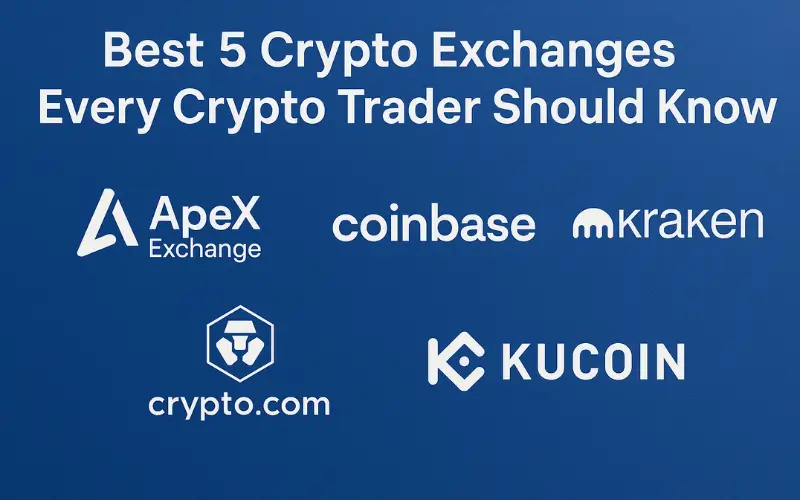
1. ApeX Exchange
ApeX Exchange operates as a decentralized trading platform that focuses on both perpetual and spot markets. It promotes self-custody, so users retain full control of their assets instead of storing them with a central authority. The platform highlights fast execution, low fees, and multi-chain access across networks like Ethereum, Arbitrum, and Polygon.
Through ApeX Exchange, users can trade a wide range of crypto pairs using either USDT or USDC. The system supports high leverage options, reportedly up to 100x, for those who trade derivatives. It also offers incentives through its native tokens, APEX and BANA, which can provide staking rewards or fee benefits.
The platform’s design aims to deliver a centralized exchange experience within a decentralized framework. By maintaining transparency through smart contracts while avoiding required identity checks, it appeals to users who value privacy. Its link to established liquidity sources helps it compete with other major decentralized exchanges in 2025.
2. Coinbase
Coinbase stands out as one of the most well-known platforms for buying and selling digital currencies. It attracts both new and experienced traders because of its simple layout and secure setup. The platform focuses on ease of use, which makes it suitable for people who want to start trading without much setup or confusion.
It uses strong security features such as two-factor authentication and cold storage of assets. These measures help protect user funds against online threats. In addition, it complies with major financial regulations in several countries, which adds another layer of trust.
Coinbase supports a wide range of popular cryptocurrencies and allows users to convert between them with clear pricing. Its mobile app offers the same straightforward tools as the desktop version, making trading accessible anywhere.
Fees tend to be slightly higher than some other exchanges; however, many traders see the added transparency and security as worth the cost. Coinbase continues to focus on making crypto access simple, regulated, and safe.
3. Kraken
Kraken stands out as a long-running and respected platform in the crypto industry. It has attracted both beginners and experienced traders who want a stable and secure place to buy and sell digital assets. Its clear interface and strong focus on protection give users confidence during each trade.
The exchange supports a wide range of cryptocurrencies and offers several trading pairs. Users can access features like spot and futures markets that help them diversify their strategies. In addition, the platform provides detailed charts and tools that make market analysis easier.
Kraken charges competitive fees, which vary based on trade volume and type. Its customer support team responds promptly and addresses questions with clarity. Therefore, many users consider it a consistent choice for day-to-day transactions.
Security also remains a major strength for Kraken. It keeps a large portion of funds in cold storage and maintains strict verification steps. These measures help protect users’ accounts against unauthorized access.
4. Crypto.com
Crypto.com stands out for its wide selection of digital assets and simple interface suited to both new and experienced traders. It provides a mobile app and desktop platform that allow users to buy, sell, and swap a large number of coins. The layout feels clear and direct, which helps users make quick decisions.
The platform charges competitive trading fees that can decrease with higher trading volume or by holding its native token. It also includes features such as staking, debit card services, and recurring purchases for those who wish to automate parts of their portfolio.
Security remains a strong focus for Crypto.com. It uses two-factor authentication, cold storage for funds, and insurance coverage for certain assets. These measures aim to protect user accounts and maintain confidence across a large trading base.
Customer support operates through live chat and help centers. This approach gives traders quicker access to answers and keeps the experience more user-friendly.
5. KuCoin
KuCoin stands out for its large selection of digital assets and features that suit both new and experienced traders. It supports spot, margin, and futures trades with a clear interface that helps users move through different markets easily. The platform’s layout feels direct and practical, which makes navigation simple.
The exchange keeps fees low, often around 0.10%, which appeals to traders who move in and out of markets frequently. Its liquidity in popular pairs helps orders execute quickly, helping traders react to price changes without long delays.
KuCoin also gives access to staking and lending, allowing users to earn rewards on assets they already hold. This adds flexibility for those who want to take part in more than simple buying or selling.
Security and accessibility remain key points of attention, and KuCoin continues to strengthen its systems to protect user assets. These factors make it one of the notable global platforms in today’s crypto space.
Conclusion
Each exchange stands out for specific strengths such as low fees, strong security, or wide coin support. Traders benefit most by matching their goals to a platform’s unique features.
New users may value simple layouts, while experienced traders may prefer advanced order types and analytic tools. Therefore, comparing features before depositing funds helps prevent costly mistakes.
Market trends change quickly, so staying alert to updates and fee structures remains important. With careful research and regular review, traders can maintain confidence in their chosen platform and adapt as the crypto landscape evolves.