Getting hurt on the job can completely turn your life upside down in an instant. If you are dealing with a painful injury while trying to figure out how to pay your regular monthly bills, working with experienced New York workers’ compensation lawyers can help you protect your rights and secure your financial future. The regional economy in Syracuse relies on a dedicated workforce across several busy fields, including healthcare networks, local university operations, manufacturing facilities, and seasonal shipping hubs. Employees in these industries face unique physical demands every day, and an unexpected accident can happen on any shift, leaving you wondering what steps to take next.
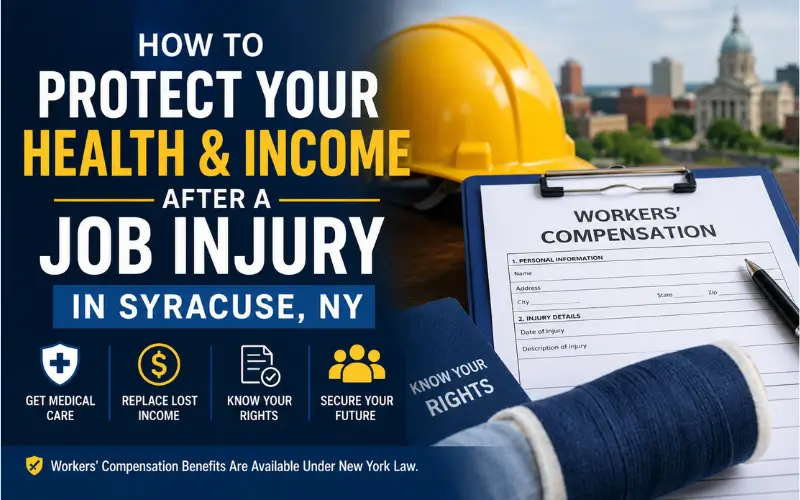
Understanding your basic rights as a worker in New York State is the first major step toward recovery. The state system is built to provide critical support, but navigating the strict rules requires careful attention to detail.
Immediate Actions to Take After a Workplace Injury
The very first moments after an accident are critical for both your physical health and your future legal claim. You must report your injury to your supervisor or employer in writing as soon as possible. State rules managed by the New York State Workers’ Compensation Board require you to give this notice within thirty days of the incident, but doing it immediately prevents the insurance company from claiming your injury happened outside of work.
After notifying your boss, you need to seek medical care from a doctor who is officially authorized by the state board. When you see the doctor, you must clearly state that your injury happened while you were performing your job duties. The medical team will create an official report that serves as the primary foundation for your insurance case.
Understanding Your Weekly Financial and Medical Benefits
The state system provides two primary types of support to help you recover. First, it covers all necessary medical care that relates directly to your workplace injury. This includes your initial emergency room visits, regular doctor appointments, physical therapy sessions, prescribed medications, and any required surgeries. You should never receive a direct bill from a doctor for care that qualifies under these rules.
Second, if your injury prevents you from working for more than seven days, you can receive weekly cash benefits to help replace your lost income. The system calculates these weekly payments based on a specific formula. It takes two-thirds of your average weekly wage from the year before your accident and multiplies that number by your percentage of temporary disability. For example, if a doctor states you are fifty percent disabled, your benefit will reflect that specific level of impairment.
Common Obstacles That Can Delay Your Payments
Even when an accident is completely obvious, insurance companies frequently look for reasons to minimize, delay, or entirely deny valid claims. One common hurdle involves pre-existing medical conditions. If you hurt your lower back at work, the insurance adjuster might look through your old medical files to find a minor back strain from several years ago. They will then try to argue that your current pain is just an old issue acting up, rather than a brand new injury caused by your job.
Another frequent problem is a disagreement over your actual level of disability. The insurance company might hire their own independent medical examiner to look at you for just a few minutes. This doctor might claim you are fully recovered and able to return to full duties, even though your own personal physician says you still need weeks of physical therapy. When these medical opinions conflict, your weekly checks can suddenly stop, leaving you in a very difficult financial position.
Why Technical Timelines and Paperwork Accuracy Matter
The state system runs on incredibly strict deadlines and massive amounts of paperwork. Missing a single filing date can cause you to lose your right to benefits permanently. Beyond the initial thirty-day notice to your employer, you must file an official claim form, known as a C-3 form, with the state board within two years of your accident.
Every medical update, payroll record, and insurance form must match perfectly. Simple mistakes, like entering the wrong date of injury or leaving out a secondary body part that was hurt in the crash, can trigger an automatic system flag. These mistakes often result in lengthy delays where you have to wait months for an official hearing just to correct a basic typographical error.
The Role of Formal Hearings in Settling Disputes
When the insurance company denies your claim or tries to cut off your benefits, your case will move toward a formal administrative hearing. These legal proceedings take place before a dedicated workers’ compensation law judge. During a hearing, both sides have the opportunity to present medical evidence, submit payroll records, and offer spoken testimony about how the accident occurred.
These hearings operate just like a traditional courtroom trial. The judge reviews the written law and the medical facts to make a final binding decision about your weekly checks and medical treatment. Having a skilled professional present your evidence correctly ensures the judge hears the true story of your injury.
Looking at Long Term Options and Section Thirty Two Agreements
As you reach a point where your condition stabilizes, you might start thinking about a permanent conclusion to your case. New York law allows for a voluntary settlement agreement known as a Section 32 Waiver Agreement. This agreement allows you to close out part or all of your claim in exchange for a single lump-sum cash payment.
A lump-sum settlement can give you immense financial freedom, but it comes with a major trade-off. Once you accept a full Section 32 settlement, the insurance company is no longer responsible for paying for your future medical care for that injury. You must carefully calculate what your future prescriptions, doctor visits, and potential surgeries will cost over the rest of your life before you sign any final paperwork.
How Local Industry Trends Impact Worker Safety
The specific types of jobs available in central New York heavily influence the kinds of workplace injuries that occur. For instance, the large healthcare sector requires nurses and aides to lift and move heavy patients daily, which often leads to severe shoulder and neck strains. Meanwhile, workers in local manufacturing and warehouse facilities frequently deal with heavy machinery, forklift accidents, and repetitive motion injuries.
The harsh winter weather in the region also plays a major role in local workplace safety. Delivery drivers, construction crews, and maintenance workers face an increased risk of severe slips and falls on ice and snow while performing their regular job duties. The state system covers these weather-related accidents just like any other on-the-job injury, provided you were actively working when the fall occurred.
Securing Your Financial Future and Moving Forward
Recovering from a serious job injury takes time, patience, and the right resources. You do not have to fight against large insurance corporations completely on your own while trying to heal. By understanding your legal rights and taking prompt action to document your medical condition, you can successfully protect your family budget.
The system exists to provide a financial safety net for honest, hardworking people who have been hurt while earning a living. Taking control of your claim today ensures that you will have the continuous medical care and steady financial support you need to make a full recovery and eventually return to your regular routine.