
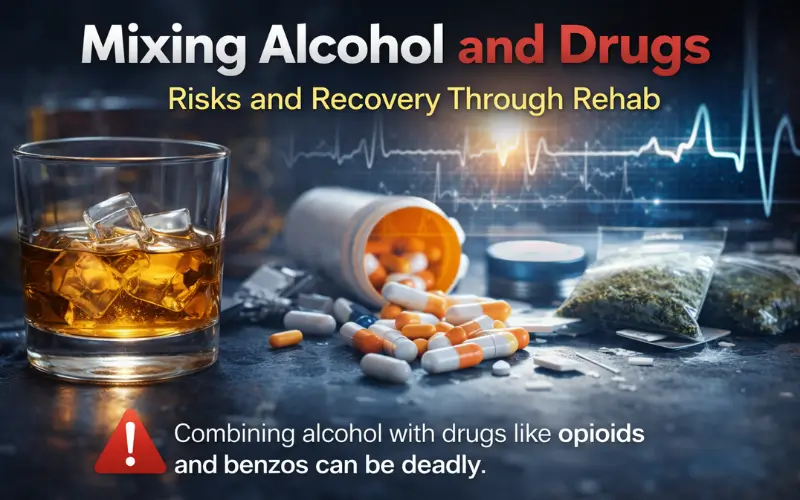
A night out starts with a few beers, then someone pops a pain pill to ease a headache. It seems harmless at first. But that mix can turn deadly fast. Polydrug use combining alcohol with drugs like opioids, benzos, or even weed fuels a quiet crisis. Each year, over 100,000 people in the U.S. die from drug overdoses, and alcohol often plays a role in those stats. This article breaks down why mixing these substances is so risky. We’ll cover the science behind it, the health fallout, signs to watch for, and how Dana Point Drug Rehab pulls you back from the edge.
Understanding the Pharmacology of Mixing Substances
Synergistic Effects: When 1 + 1 Equals 5
Your body doesn’t handle mixed substances like separate items. Synergy means the combo packs a punch way bigger than each alone. Take alcohol and Xanax—both calm you down. Together, they slow your breathing to a crawl, raising overdose odds sky-high.
Doctors warn that this boost can hit without warning. You might feel fine one minute, then black out the next. In fact, the National Institute on Drug Abuse reports that polydrug overdoses spike when depressants team up like this.
The Role of the Liver and Metabolism Interference
Alcohol demands your liver’s full focus. It processes booze first, shoving other drugs to the back burner. This delay lets drugs build up in your blood, making them stronger and longer-lasting.
Think of your liver as a busy kitchen chef. One big order (alcohol) clogs the works, so meds like antidepressants linger too long. Over time, this toxic buildup harms your whole system.
Higher drug levels mean more side effects, from nausea to organ failure. Studies show this interference doubles toxicity risks for common prescriptions.
Impact on the Central Nervous System (CNS)
The brain takes the hardest hit from these mixes. Alcohol dulls signals; add opioids, and your CNS shuts down further. This leads to deep sleep that turns into coma.
Mix a downer like booze with an upper like meth, and chaos follows. Your heart races while your mind fogs, hiding true danger. Emergency rooms see this mismatch cause strokes in young adults.
Long sessions of this strain your nerves raw. Recovery demands rest, but the damage lingers if unchecked.
Immediate and Long-Term Health Consequences of Polydrug Use
Acute Dangers: Overdose and Accidental Injury
One wrong mix can end it all. Overdoses from alcohol and drugs kill fast—your breath stops, or your heart gives out. The CDC notes that alcohol factors in 40% of fatal drug ODs.
Beyond that, impairment clouds judgment. People drive drunk and high, crashing into others. Falls at home turn fatal too, with head injuries piling up in ER stats—over 2 million visits yearly tied to substance slips.
These moments strike without mercy. A casual party turns tragic when someone mixes without thinking.
Cognitive Decline and Mental Health Deterioration
Your brain suffers over time from repeated hits. Memory fades; you forget chunks of days. Judgment slips, leading to bad choices that snowball.
Anxiety ramps up, or depression sinks in deep. Polydrug use often sparks dual diagnosis—addiction paired with mental illness. About 50% of those in rehab battle both, per SAMHSA data.
These changes steal your sharp edge. Friends notice the fog; you feel lost inside. Breaking free takes targeted help to rebuild.
Physical Organ Damage Across the Body
The liver bears the brunt—scarring leads to cirrhosis from booze and pills. Stomachs bleed from irritated linings; hearts weaken into cardiomyopathy.
Kidneys strain under the load, filtering out poisons non-stop. Lungs falter if depressants slow breaths too much. One study links polydrug habits to a 30% higher risk of early organ failure.
Your body screams for a break. Ignore it, and repairs grow impossible. But catch it early, and healing starts.
Recognizing the Signs: Identifying Polydrug Misuse in Yourself or Others
Behavioral Indicators of Mixing Substances
Spot the clues in actions. Mood swings hit hard—one laugh, next rage. Blackouts erase hours; you wake confused.
Sleep flips upside down—nights of tossing, days of crashing. Secret hunts for pills or booze signal trouble, especially if chasing combos.
Friends pull away as lies stack up. You chase that mix high, ignoring the toll. Watch for these red flags; they save lives.
Why People Mix: Underlying Psychological Drivers
Folks mix to tweak the feel. A stimulant counters booze’s drag, aiming for balance. Or they chase bigger rushes, ignoring risks.
Pain hides beneath—stress or trauma pushes the hunt. That first mix eases worry, but hooks deep.
Understanding this pulls back the curtain. It shows addiction’s grip, not weak will. Rehab tackles the root.
How Specialized Addiction Rehab Addresses Polydrug Use Effectively
Comprehensive Dual Diagnosis Treatment Protocols
Rehab centers shine at handling multiples. They treat addiction and mind issues side by side. This dual approach cuts relapse by half, experts say.
Staff assess your full story—booze, drugs, feelings. Plans weave therapy with meds to steady you. No one-size-fits-all here.
You gain tools for both battles. Peace follows when body and brain align.
Medically Supervised Detoxification for Complex Withdrawals
Detox kicks off safe. Docs watch every beat, easing the storm of quits. Polydrug pulls hit wild—seizures, sweats, panic.
Meds calm the ride; nurses check vitals round the clock. Without this, home tries risk death. Facilities manage the mix’s mess.
You emerge clear-headed, ready for next steps. It’s the bridge to real change.
Tailored Therapy Modalities for Polydrug Users
Therapy fits your path. CBT rewires thoughts on mixing urges. MI sparks your own drive to quit.
Groups share stories—yours matches others’ polydrug traps. Plans stay personal, hitting your weak spots. Relapse drills focus on combo triggers.
These methods build strength. You learn to dodge old habits, step by step.
Taking Action: Steps Towards Professional Intervention and Lasting Sobriety
Recognizing the Need for Help: A First Step in Intervention
Admit the struggle—it’s brave. Talk calm with loved ones; say what you see without blame. “I worry about the mixes; let’s get support.”
Hotlines like SAMHSA’s offer free ears—call 1-800-662-HELP. They guide without judgment.
This chat opens doors. Delay costs more pain.
Choosing the Right Level of Care Post-Assessment
Assess first—what’s your mix depth? Inpatient suits heavy polydrug cases; 24/7 care heals deep wounds.
IOP works for milder pulls—therapy sessions fit life. Docs match you right; residential often starts strong for safety.
Pick based on needs. Success follows fit.
Conclusion: Choosing Clarity Over Chemical Chaos
Mixing alcohol and drugs brews a storm of risks—from overdose shocks to brain fog and organ wreck. Polydrug use hides in plain sight, but its toll mounts fast. We’ve seen the science, the signs, and the fallout.
Rehab stands as your lifeline. With detox, therapy, and dual care, it untangles the mess. You step out stronger, free from the chaos.
Pick clarity today. Reach for help; reclaim your steady path. A full life waits beyond the haze.