
Stopping Adderall can feel like hitting a wall after a long run. Your body and mind crave the energy boost it gave you, but now everything slows down. This article covers safe steps to manage Adderall withdrawal symptoms, from spotting early signs to building habits that ease the ride.
Recognizing the Signs – What to Expect During Withdrawal
Adderall withdrawal hits hard because the drug amps up your brain’s dopamine and norepinephrine. When you quit, those levels drop fast. Knowing what comes next helps you prepare without panic.
Fatigue and Extreme Sleepiness
Fatigue tops the list of Adderall withdrawal symptoms. You might go from wired nights to crashing all day. This crash stems from your central nervous system rebounding after constant stimulation.
Sleep patterns flip. Insomnia fades, but hypersomnia takes over—you could sleep 12 hours or more. Rest helps, but too much leaves you groggy. Push for balanced rest to rebuild energy stores.
Track your sleep in a journal. Note what helps you wake refreshed. Over time, this symptom eases as your body resets.
Mood Disturbances and Dysphoria
Your emotions swing wild during withdrawal. Irritability flares up over small things, like a delayed text. Anxiety might spike, making your heart race without reason.
The big low hits as dysphoria or depression. Colors seem dull; joy feels out of reach. In tough cases, dark thoughts creep in—suicidal ideas demand quick help from a doctor.
Breathe through these waves. They pass, but don’t ignore them. Talk to someone if moods sink deep.
Increased Appetite and Weight Gain Concerns
Adderall curbs hunger, so stopping flips the switch. You feel ravenous, craving carbs and sweets. This happens because your metabolism slows without the stimulant push.
Weight gain worries many folks. A few pounds might add up quick if you overeat. But it’s your body’s way of refueling after suppression.
Choose smart snacks like nuts or fruit. Portion control keeps things steady. Hydrate often—thirst tricks you into thinking you’re hungry.
Intense Cravings and Psychological Distress
Cravings pull strong, like an itch you can’t scratch. Your brain screams for Adderall to kill the fog. These urges peak in the first week but fade with time.
Distress builds from the mental tug-of-war. You question why you quit. Remember, this phase is temporary—your mind heals step by step.
Distract with hobbies. Call a friend when the pull hits. Each day without use strengthens your resolve.
The Cornerstone of Safety – Medical Supervision and Tapering
Going solo on withdrawal risks big setbacks. Doctors guide you through safely. Their plans cut down on harsh symptoms and boost success odds.
Why Professional Guidance is Non-Negotiable
Cold turkey amps up dangers. Symptoms worsen, and relapse odds jump to 80% without help, per addiction studies. A doctor spots risks early.
They check your health history. Heart issues or mental health ties make withdrawal trickier. Pros tailor advice to you.
Start by booking that appointment. Share your full story—no shame in needing support. It’s the smart path to steady recovery.
Developing a Gradual Tapering Schedule
Tapering means cutting doses slow, like easing off a gas pedal. Drop by 5-10mg weekly under doc watch. This softens the crash.
Stick to the plan tight. Skip doses tempt fate. Track pills in a log to stay on course.
Adjust if needed—life throws curves. Your provider tweaks based on how you feel. Patience pays off here.
Managing Co-Occurring Conditions During Detox
Adderall often hides ADHD or anxiety. Without it, those flare back. Treat them right to avoid extra pain.
Docs might switch meds, like non-stimulants for focus. Therapy pairs well too. It digs into root causes.
Monitor moods close. Journal daily shifts. This flags when to loop in your team.
Lifestyle Adjustments for Physical Symptom Relief
Daily tweaks ease the body’s strain. Small changes add up fast. Focus on basics to feel human again.
Prioritizing Sleep Hygiene During Fluctuations
Sleep bounces—nights too long, then too short. Set a fixed bedtime, say 10 PM. Wind down with no screens an hour before.
Keep your room cool and dark. Blackout curtains help. A white noise machine drowns out thoughts.
Nap if needed, but cap at 30 minutes. This rhythm rebuilds your natural clock. Soon, rest comes easier.
Nutritional Support for Recovery
Food fuels brain repair. Load up on proteins like eggs for amino acids—they build neurotransmitters. Omega-3s from fish fight inflammation.
Eat balanced meals three times a day. Skip sugar crashes. Veggies and fruits steady your blood sugar.
Drink water—aim for eight glasses. It fights fatigue head-on. A smoothie with greens kicks off mornings right.
- Breakfast idea: Oatmeal with nuts and berries.
- Lunch tip: Grilled chicken salad.
- Snack choice: Yogurt with seeds.
These picks curb appetite swings too.
Psychological Coping Mechanisms and Relapse Prevention
Mind games win the battle here. Tools sharpen your edge against slips. Practice daily for lasting strength.
Cognitive Behavioral Techniques (CBT) for Cravings
CBT rewires thoughts. When a craving hits, ask: “What’s the proof I need this?” Challenge the lie.
Distract quick—read a page or chew gum. Ride the urge like a wave; it crests then falls. Track wins in a notebook.
Sessions with a therapist deepen this. Apps offer daily prompts too. Consistency turns tricks into habits.
Building a Robust Support Network
Share your journey with close ones. Tell a friend: “I’m quitting Adderall—need your ear.” Their check-ins ground you.
Join groups like Narcotics Anonymous. Hear stories that match yours. It cuts isolation.
Online forums connect anytime. Post questions; get real tips. Bonds form fast in shared struggle.
- Family role: Cook healthy meals together.
- Friend perk: Plan walks or calls.
- Group benefit: Weekly meetings for accountability.
Networks buffer tough days.
Mindfulness and Stress Reduction Practices
Mindfulness quiets the storm. Try box breathing: In for four, hold four, out four, hold four. It drops anxiety in minutes.
Meditate five minutes daily. Apps guide beginners. Focus on breath; let thoughts drift.
Journal gratitude nightly. Note three good things. This shifts focus from lows to wins.
When to Seek Immediate Intervention
Some signs scream for backup. Spot them early to stay safe. Help waits just a call away.
Identifying Red Flags for Severe Depression or Anxiety
Watch for daily function loss. Can’t get out of bed? That’s a flag. Anhedonia—zero joy in favorites—signals deep trouble.
Panic attacks that won’t quit. Chest tight, breaths short. Or thoughts of harm—don’t wait.
Track patterns. If they worsen, act. Your life matters more than toughing it out.
Emergency Protocols for Overwhelming Symptoms
Call 911 for self-harm risks or psychosis hints, like seeing things. Head to ER—they stabilize fast.
For bad anxiety, hit urgent care. Meds like benzos bridge gaps short-term. Follow up with your doc.
Hotlines help now: 988 for suicide prevention. Talk it out. Pros guide next steps.
Conclusion: Commitment to Long-Term Wellness Post-Withdrawal
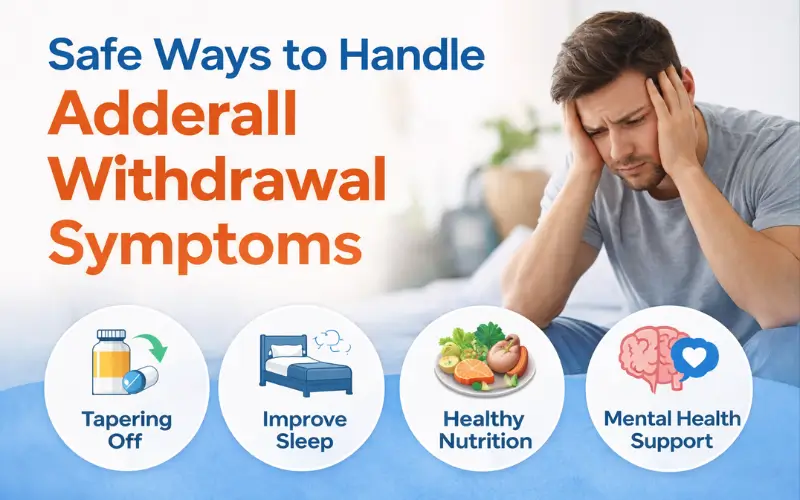
Safe Adderall withdrawal blends medical oversight, smart habits, and mental tools. Tapering cuts risks, while nutrition and walks rebuild strength. Support networks and mindfulness fend off cravings.
You’ve got this—each day builds freedom. Recovery isn’t linear, but persistence wins. Reach out to a pro today; start your steady path to clear-headed days.