We’ve all had the experience. You put on a piece of clothing from a brand you know and love, and before you even look in the mirror, you just know it’s going to feel good. The fabric seems to fall into place. The seams sit comfortably where they should. The weight feels balanced. Nothing binds or twists. It simply feels right.
Another piece from a different brand may look similar on the hanger, yet feel entirely different on the body. The fabric might cling in the wrong places. The neckline may shift. The sleeves may sit slightly off. The difference is subtle, but unmistakable. Some fashion brands simply feel better than others. But why?
It Starts With Consistency, Not Just Design
We might assume it’s about creativity. Better designers. Sharper stylists. Closer attention to trends. But the explanation is often less visible than that.
Brands that feel better tend to focus on repetition and refinement. They understand that wearing clothing is not a static experience. It changes as the body moves, sits, stretches, and moves through the day.
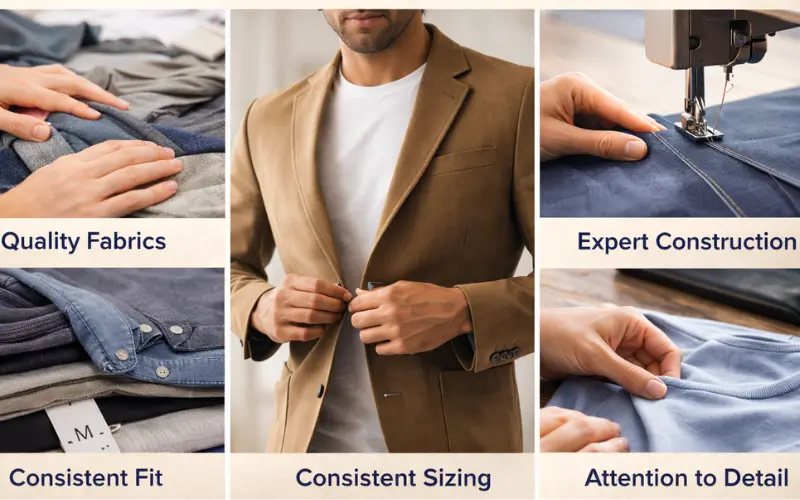
A brand that prioritizes consistent fit becomes predictable in the best possible way.
Fabric Memory and Sensory Experience
The experience of a garment begins with fabric selection. Not only texture, but weight, elasticity, and recovery. Strong brands choose fabrics that maintain structure without stiffness and allow flexibility without distortion.
Some fabrics return to their original form after movement. Others do not. The difference may not be obvious on a rack, but over time, it defines how a customer relates to a brand.
Consumers often describe certain labels as “comfortable” or “reliable,” even when they cannot explain why. Such observations have also come up on worldfashionnews.com in discussions about how certain brands maintain consistency from season to season. Ultimately, these conversations return to the same point: small production decisions shape long-term perception.
Construction Details That Go Unnoticed
It is easy to focus on visible design elements. Color. Cut. Silhouette. But construction determines how a garment truly feels.
Stitch density, seam placement, and lining quality all influence wear. Even waistband reinforcement can affect how a piece sits on the body.
Brands that consistently feel better control these factors carefully. They reduce variation from one production run to the next. As a result, a customer’s second purchase feels as dependable as the first. That familiarity is what turns a brand into a staple.
Fit as a Form of Emotional Assurance
Fit is not only technical. It is emotional.
When clothing fits reliably, it reduces decision fatigue. You don’t question whether it works. You already know. This creates quiet loyalty. Customers return not to noise or promotion, but to certainty.
Brands that fail to maintain consistency introduce friction. Sizing shifts. Necklines change. Sleeves adjust unpredictably. These variations erode confidence.
Feeling good in clothing often means not having to think about it at all.
Repetition Builds Identity
Brands that feel good understand the value of refinement over constant reinvention. They evolve gradually rather than pivot dramatically.
A consistent pattern block or signature silhouette creates a recognizable physical language. Over time, customers begin to associate that fit with their own identity.
Eventually, the garment stops being about trend cycles and becomes part of personal continuity. The brand supports that identity instead of competing with it.
The Invisible Discipline Behind Effortless Style
What appears effortless is supported by discipline. Sampling, re-fitting, and testing help minimize variation. Brands that emphasize operational discipline rarely highlight it. The results are felt rather than advertised.
This invisible framework allows clothing to feel natural rather than performative. When a garment works with movement and proportion, the alignment feels intuitive.
Why We Notice Without Knowing Why
Most consumers do not understand stitch tension or grading accuracy. They feel the outcome instantly.
A garment that fits predictably reduces hesitation. A fabric that breathes properly enhances comfort. A silhouette that holds its structure builds confidence.
Brands that feel better recognize that fashion is not only visual. It is sensory. It is experienced in motion. In the end, what sets these brands apart is not volume, but consistency. Not spectacle, but reliability.
Some fashion brands feel better because they are designed to be experienced, not just seen.