A wallet is one of the most common everyday accessories people carry. It is used to store important items like cash, credit cards, identification cards, and sometimes coins or receipts. Although wallets may seem simple, there are actually many different styles designed for different needs and lifestyles.
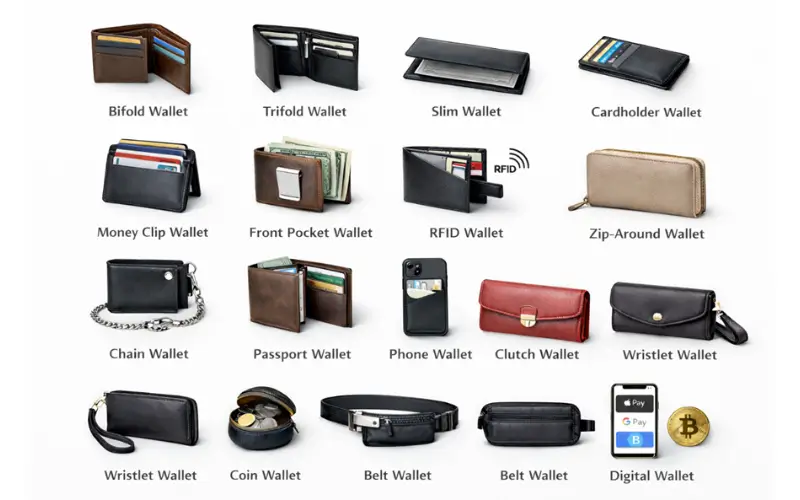
Wallet styles have evolved over time. In the past, most people used traditional leather wallets that held cash and cards. Today, there are many modern options such as minimalist wallets, travel wallets, RFID-blocking wallets, and even digital wallets.
Choosing the right wallet can make daily life easier. The right design helps you stay organized, protects your valuables, and fits comfortably in your pocket or bag. Some people prefer slim wallets for minimal carry, while others need larger wallets that hold many cards, documents, or coins.
Wallet styles generally fall into several main categories:
- Classic wallets for everyday use
- Minimalist wallets designed to be thin and lightweight
- Security wallets with protection features like RFID blocking
- Travel wallets for passports and documents
- Fashion wallets often used by women
- Digital wallets that store payment information on smartphones
In this guide, we will explore the most common wallet styles, their features, and when they are best used. This will help you understand which wallet type fits your needs and lifestyle.
Classic Wallet Styles
Classic wallet styles are the most traditional designs. These wallets have been used for many years and remain popular because they are practical and reliable. They typically hold cash, cards, and identification documents in a compact design.
Styles of Wallet
Let’s look at the most common classic wallet types.
Bifold Wallet
The bifold wallet is the most popular wallet style in the world. As the name suggests, it folds into two sections.
When opened, the wallet has two main halves. Inside, you usually find several card slots, compartments for identification cards, and a long pocket for cash.
Key features of a bifold wallet
- Folds once in the middle
- Contains multiple card slots
- Includes a cash pocket for bills
- Usually made of leather or synthetic materials
Advantages
Bifold wallets are popular because they balance capacity and compactness. They can hold several cards and cash without becoming too bulky.
They also fit easily in back pockets or jacket pockets, making them convenient for everyday use.
Best for
- Everyday use
- People who carry cash and cards
- Traditional wallet users
Trifold Wallet
A trifold wallet has three sections instead of two. The wallet folds twice, creating a more compact shape when closed.
Because of the extra fold, trifold wallets usually have more card slots and compartments than bifold wallets.
Key features of a trifold wallet
- Three folding sections
- Larger storage capacity
- Multiple card slots and ID windows
- Cash compartment inside
Advantages
The main advantage of a trifold wallet is extra storage. It is useful for people who carry many credit cards, membership cards, or business cards.
Even with more storage, the wallet remains organized because cards are divided across multiple sections.
Disadvantages
Because of the extra fold, trifold wallets can sometimes become bulkier than bifold wallets, especially when full.
Best for
- People who carry many cards
- Business professionals
- Users who want more storage space
Minimalist Wallet Styles
Minimalist wallets are designed for people who prefer to carry fewer items. These wallets focus on simplicity, slim design, and lightweight materials. They are perfect for modern lifestyles where many people mainly use cards instead of cash.
Minimalist wallets are also popular because they reduce pocket bulk and are more comfortable to carry.
Slim Wallet
A slim wallet is one of the most popular minimalist wallet styles. It is designed to be thin and compact while still holding essential cards and some cash.
Slim wallets usually have fewer compartments than traditional wallets. Most designs include a few card slots and a small pocket for folded bills.
Key features of a slim wallet
- Very thin and lightweight
- Holds a small number of cards
- Minimal compartments
- Often designed for front pocket carry
Advantages
Slim wallets are comfortable and easy to carry. Because they are thin, they prevent bulky pockets and create a cleaner look.
They also encourage users to carry only the most important items.
Best for
- Minimalists
- People who carry mostly cards
- Front pocket wallet users
Cardholder Wallet
A cardholder wallet is one of the smallest wallet styles available. As the name suggests, it is mainly designed to hold credit cards, debit cards, and identification cards.
Most cardholder wallets contain a few card slots on each side and sometimes a small middle pocket.
Key features of a cardholder wallet
- Very compact size
- Usually holds 4–8 cards
- Simple design with few compartments
- Lightweight and easy to carry
Advantages
Cardholder wallets are extremely portable. They are ideal for people who prefer carrying just a few essential cards.
Because of their size, they easily fit into front pockets, jacket pockets, or small bags.
Best for
- Minimal carry
- Quick everyday use
- People who rarely carry cash
Money Clip Wallet
A money clip wallet combines a wallet and a metal clip. The clip is used to hold cash securely while the wallet contains slots for cards.
Some designs have the clip on the outside, while others place it inside the wallet.
Key features of a money clip wallet
- Metal clip for holding cash
- A few card slots
- Very slim design
- Usually made of leather or metal
Advantages
Money clip wallets are sleek and stylish. They are ideal for people who want to carry both cards and cash without using a bulky wallet.
The clip keeps bills tightly secured and organized.
Best for
- People who carry cash frequently
- Minimalist wallet users
- Those who prefer slim accessories
Front Pocket Wallet
A front pocket wallet is specifically designed to fit comfortably in the front pocket of pants.
Unlike traditional wallets that are carried in the back pocket, front pocket wallets are smaller and more ergonomic.
Key features of a front pocket wallet
- Compact size
- Curved or ergonomic shape
- Slim profile
- Usually holds cards and folded cash
Advantages
Front pocket wallets improve comfort when sitting and walking. They can also provide better security because it is easier to notice if someone tries to access your front pocket.
Best for
- People who dislike back-pocket wallets
- Travelers concerned about pickpocketing
- Minimalist wallet users
Secure and Specialized Wallet Styles
Some wallets are designed with special features that provide additional security or functionality. These wallets protect personal information, prevent theft, or provide extra storage protection.
These styles are becoming more popular as people carry more electronic cards and travel frequently.
RFID-Blocking Wallet
An RFID-blocking wallet is designed to protect credit cards and identification cards from electronic theft.
Many modern cards contain RFID chips that allow contactless payments. However, criminals can sometimes scan these chips remotely using special devices.
RFID-blocking wallets include a special lining that blocks these signals.
Key features of RFID wallets
- RFID-blocking material inside the wallet
- Prevents unauthorized card scanning
- Available in many wallet styles
Advantages
RFID wallets provide extra security, especially when traveling or visiting crowded places like airports, malls, and public transport.
They help protect sensitive financial information.
Best for
- Travelers
- Security-conscious users
- People using contactless cards
Zip-Around Wallet
A zip-around wallet has a zipper that goes around the wallet’s edges. This design keeps all contents secure inside the wallet.
These wallets are often larger and commonly used by people who carry many items.
Key features of zip wallets
- Full zipper closure
- Large storage capacity
- Multiple compartments for cards, cash, and coins
Advantages
The zipper prevents items from falling out. It also keeps cards, receipts, and coins organized inside the wallet.
Many people prefer zip wallets for travel or everyday organization.
Best for
- People who carry many items
- Organized wallet users
- Travel use
Chain Wallet
A chain wallet is attached to a metal chain that connects the wallet to a belt loop or clothing.
This style became popular among bikers, skateboarders, and street fashion communities.
Key features of chain wallets
- Metal chain attached to wallet
- Prevents wallet from being dropped or stolen
- Durable and rugged design
Advantages
The chain provides additional security because the wallet stays connected to the user.
It also adds a distinctive style element for fashion and subculture trends.
Best for
- Bikers
- Street fashion enthusiasts
- People who want extra theft protection
Travel and Utility Wallet Styles
Travel and utility wallets are designed for people who need to carry more than just cash and cards. These wallets often include space for passports, boarding passes, smartphones, or other travel documents.
They are especially useful for travelers, commuters, and people who prefer carrying everything in one place.
Passport Wallet
A passport wallet is specifically designed for travel. It has enough space to hold a passport along with other important travel items.
Many passport wallets also include compartments for boarding passes, credit cards, and travel documents.
Key features of a passport wallet
- Space for a passport
- Multiple card slots
- Compartments for tickets and documents
- Often includes RFID protection
Advantages
Passport wallets keep all travel essentials in one place. This makes it easier to stay organized when going through airports, security checkpoints, or immigration.
They also reduce the risk of losing important travel documents.
Best for
- International travelers
- Frequent flyers
- People who carry many travel documents
Phone Wallet
A phone wallet combines a smartphone case with a wallet. It usually attaches to the back of a phone or comes as a phone case with card slots.
This type of wallet allows users to carry their most important items—phone, cards, and sometimes cash—together.
Key features of a phone wallet
- Built into a smartphone case
- Card slots on the back
- Sometimes includes a small cash pocket
Advantages
Phone wallets are convenient because people already carry their phones everywhere. By combining a wallet and phone case, users reduce the number of items they need to carry.
It also makes quick payments and card access easier.
Best for
- Minimalist users
- People who carry only a few cards
- Everyday convenience
Belt Wallet
A belt wallet is designed to be worn around the waist or attached to a belt. Some designs hide money inside the belt itself, while others include small zip compartments.
These wallets are commonly used for travel security.
Key features of belt wallets
- Worn around the waist or hidden in clothing
- Small zip compartments
- Designed to be discreet
Advantages
Belt wallets provide extra security because they stay hidden under clothing. This reduces the risk of pickpocketing in crowded areas.
They are especially useful when traveling in unfamiliar places.
Best for
- Travelers
- People visiting crowded tourist areas
- Users who want hidden storage
Wallet Styles for Women
Wallet styles for women often focus on both function and fashion. These wallets are usually larger and designed to hold more items such as cards, cash, coins, and sometimes even smartphones.
Many women’s wallets also serve as small handbags.
Clutch Wallet
A clutch wallet is larger than most traditional wallets. It is often carried by hand rather than placed in a pocket.
Clutch wallets usually have many compartments and can store cards, cash, coins, and even smartphones.
Key features of a clutch wallet
- Large size
- Multiple compartments
- Often includes zipper sections for coins
- Stylish designs and materials
Advantages
Clutch wallets provide plenty of space for organization. Many people use them when they want to carry essentials without bringing a full handbag.
They are also popular for formal events and social occasions.
Best for
- Events and outings
- People who carry many items
- Fashion-conscious users
Wristlet Wallet
A wristlet wallet is similar to a clutch wallet but includes a small strap that goes around the wrist.
This strap allows the wallet to be carried securely without holding it constantly.
Key features of a wristlet wallet
- Wrist strap for easy carrying
- Medium to large storage capacity
- Zipper or button closures
Advantages
Wristlet wallets are convenient because they keep essentials secure while leaving your hands mostly free.
They are perfect for shopping, traveling, or short trips where carrying a bag is unnecessary.
Best for
- Everyday convenience
- Shopping trips
- Lightweight travel
Coin Wallet
A coin wallet (or coin purse) is a small wallet specifically designed to store coins.
Although digital payments have reduced the use of coins in some places, coin wallets remain useful for small change.
Key features of coin wallets
- Small and compact
- Usually includes a zipper or snap closure
- Designed mainly for coins
Advantages
Coin wallets keep loose change organized and prevent coins from getting lost in bags or pockets.
Many people also use them to store small items like keys or earbuds.
Best for
- Carrying coins
- Organizing small items
- Compact storage
Digital Wallets (Modern Wallet Alternatives)
Digital wallets are a modern alternative to traditional physical wallets. Instead of carrying cash and cards, a digital wallet stores payment information electronically on a smartphone or computer.
With a digital wallet, users can make payments, store cards, and complete transactions quickly using mobile devices.
Mobile Wallets
Mobile wallets are apps installed on smartphones that allow users to make contactless payments.
These apps store debit cards, credit cards, and sometimes identification cards. Payments are made by tapping the phone near a payment terminal.
Examples of mobile wallets
- Apple Pay
- Google Pay
- Samsung Pay
Advantages
Mobile wallets are very convenient. Users can make payments without carrying physical cards or cash.
They also add security because transactions often require fingerprint, facial recognition, or a passcode.
Best for
- Smartphone users
- Contactless payments
- Everyday purchases
Online Wallets
Online wallets store payment information on websites or apps used for digital transactions.
They are commonly used for online shopping, sending money, and receiving payments.
Examples of online wallets
- PayPal
- Skrill
- Neteller
Advantages
Online wallets simplify online transactions. Users do not need to enter card details every time they make a purchase.
They also allow fast money transfers between users.
Best for
- Online shopping
- Freelancers and online businesses
- Sending money internationally
Cryptocurrency Wallets
Cryptocurrency wallets are used to store and manage digital currencies such as Bitcoin or Ethereum.
These wallets can be software-based apps or physical hardware devices.
Types of crypto wallets
- Software wallets (mobile or desktop apps)
- Hardware wallets (physical devices for secure storage)
Advantages
Cryptocurrency wallets allow users to securely store and manage digital assets.
Hardware wallets provide extra protection because they store private keys offline.
Best for
- Cryptocurrency users
- Investors in digital assets
- Secure crypto storage
How to Choose the Right Wallet Style
Choosing the right wallet depends on your lifestyle, storage needs, and personal preferences. Different wallet styles offer different benefits.
Here are some important factors to consider.
Consider Storage Needs
Think about what you usually carry in your wallet.
Some people carry many cards, cash, and documents, while others only carry a few essential items.
For example:
- Minimal carry: slim wallet or cardholder
- Many cards: trifold wallet
- Travel documents: passport wallet
Choosing a wallet with the right capacity helps keep everything organized.
Choose Based on Your Lifestyle
Your daily activities can influence which wallet style works best for you.
For example:
- Business professionals may prefer classic bifold or trifold wallets.
- Minimalists often choose slim wallets or cardholders.
- Travelers may need passport wallets or belt wallets.
Selecting a wallet that fits your lifestyle makes it more practical and convenient.
Consider Size and Comfort
Wallet size is an important factor. Large wallets may hold more items but can feel bulky in pockets.
Slim wallets are lighter and more comfortable, especially for front pocket carry.
Consider how and where you plan to carry your wallet.
Look for Security Features
Security is another important consideration.
Some wallets include features that help protect personal information and valuables.
Common security features include:
- RFID blocking to prevent electronic theft
- Zippers to keep items secure
- Chains or straps to prevent loss or theft
Choosing a wallet with the right security features can provide extra peace of mind.
Wallet Materials and Their Impact
The material of a wallet affects its durability, appearance, and comfort. Different materials offer different benefits. Some are designed for luxury and style, while others focus on practicality and sustainability.
Choosing the right material can help your wallet last longer and match your personal style.
Leather Wallets
Leather is the most traditional and widely used wallet material. It is known for its durability, classic appearance, and long lifespan.
Leather wallets often develop a natural patina over time, which gives them a unique and attractive look.
Advantages
- Very durable
- Stylish and timeless design
- Becomes more attractive with age
Best for
- Everyday use
- Professional settings
- People who prefer classic accessories
Metal Wallets
Metal wallets are a modern alternative to traditional leather wallets. They are usually made from aluminum, stainless steel, or titanium.
These wallets often have a rigid structure and use elastic bands or clips to hold cards.
Advantages
- Very strong and durable
- Protects cards from bending
- Often includes RFID protection
Best for
- Minimalist users
- Modern style preferences
- People who want strong card protection
Fabric Wallets
Fabric wallets are lightweight and casual. They are commonly made from materials like nylon, canvas, or polyester.
These wallets are popular among students, travelers, and outdoor enthusiasts.
Advantages
- Lightweight
- Affordable
- Available in many colors and designs
Best for
- Casual everyday use
- Outdoor activities
- Budget-friendly options
Vegan Wallets
Vegan wallets are made without animal products. They are created using synthetic or plant-based materials such as cork, recycled plastic, or polyurethane.
These wallets are becoming more popular as people look for sustainable and eco-friendly products.
Advantages
- Animal-free materials
- Environmentally friendly options
- Modern designs and textures
Best for
- Eco-conscious users
- Sustainable fashion
- Ethical shopping choices
Pros and Cons of Different Wallet Styles
Different wallet styles offer different benefits depending on your needs. Understanding the pros and cons of each type can help you choose the best wallet for your lifestyle.
| Wallet Type | Advantages | Disadvantages | Best For |
| Bifold Wallet | Classic design, balanced storage | Can become bulky when full | Everyday use |
| Trifold Wallet | High card capacity | Thicker than bifold wallets | People with many cards |
| Slim Wallet | Lightweight and compact | Limited storage | Minimalists |
| Cardholder Wallet | Very small and portable | Holds few items | Card-only users |
| Money Clip Wallet | Slim and stylish | Limited card space | Cash carriers |
| RFID Wallet | Protects against digital theft | Slightly more expensive | Security-conscious users |
| Passport Wallet | Holds travel documents | Larger size | Travelers |
| Phone Wallet | Combines phone and wallet | Limited storage | Minimal carry |
Comparing wallet styles makes it easier to decide which one suits your daily needs.
Frequently Asked Questions (FAQs)
What is the most popular wallet style?
The bifold wallet is the most popular wallet style. It offers a good balance between storage capacity and compact size, making it ideal for everyday use.
Is a bifold or trifold wallet better?
Both wallet styles have their advantages. Bifold wallets are slimmer and easier to carry, while trifold wallets provide more storage for cards and documents.
What wallet is best for minimalists?
Minimalists usually prefer slim wallets, cardholder wallets, or money clip wallets because they are thin and lightweight.
Are RFID wallets worth it?
RFID wallets can be useful for protecting cards that support contactless payments. They block electronic signals that could be used for unauthorized scanning.
What wallet is best for travel?
A passport wallet or belt wallet is best for travel. These wallets can store passports, boarding passes, and other important documents securely.
Conclusion
Wallets come in many different styles, each designed to meet different needs. From traditional bifold and trifold wallets to modern minimalist designs and digital wallets, there is a wallet for every lifestyle.
Classic wallets offer reliable everyday storage. Minimalist wallets focus on simplicity and comfort. Travel wallets provide space for documents and extra security, while digital wallets make payments faster and more convenient.
When choosing a wallet, consider how many items you carry, how you prefer to organize them, and where you usually store your wallet. The right wallet should be practical, comfortable, and suited to your daily routine.
By understanding the different wallet styles available, you can choose a wallet that perfectly matches your needs and personal style.