
In an increasingly competitive market, businesses are constantly seeking ways to differentiate themselves. While product quality and customer service remain central, indoor air quality is emerging as a powerful yet often overlooked advantage. Organizations that prioritize clean air can enhance employee performance, improve customer experiences, and strengthen their overall brand.
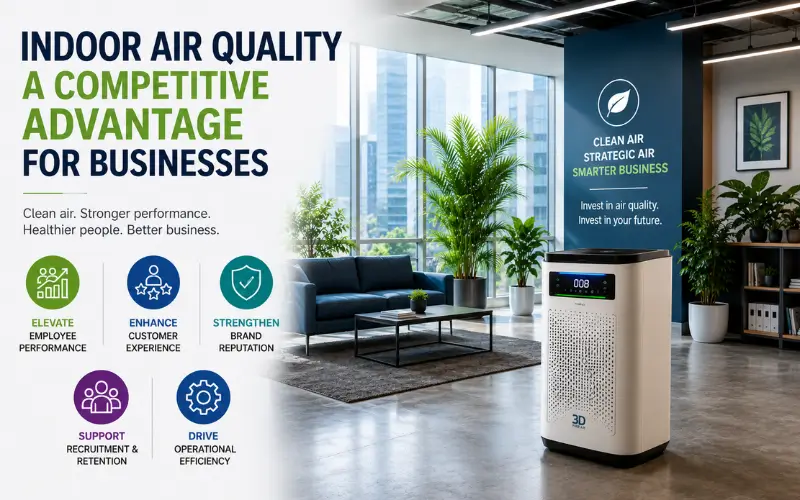
Elevating Employee Performance
A healthy workforce is a productive workforce. Clean indoor air reduces exposure to pollutants that can impair concentration and energy levels.
Employees working in environments with high air quality are more focused, efficient, and less prone to fatigue. This directly contributes to improved performance and output.
Investing in air filtration demonstrates a forward-thinking approach that values both health and productivity.
Enhancing Customer Experience
Indoor air quality also affects customer perception. In retail, hospitality, and service industries, the environment plays a significant role in shaping customer experiences.
Clean air creates a more pleasant and comfortable atmosphere, encouraging customers to spend more time in the space. Conversely, poor air quality can drive customers away.
Businesses that prioritize air quality can create environments that attract and retain customers.
Strengthening Brand Reputation
Corporate responsibility and sustainability are increasingly important to consumers and stakeholders. Businesses that invest in clean air initiatives can position themselves as leaders in health and environmental responsibility.
Implementing modern 3d printer air purifier systems demonstrates a commitment to innovation and well-being. This can enhance brand reputation and build trust with both employees and customers.
Strong reputations often translate into competitive advantages, particularly in industries where differentiation is key.
Supporting Recruitment and Retention
Top talent is more likely to choose employers that prioritize health and workplace quality. Clean air is an important factor in creating an attractive work environment.
Employees who feel comfortable and safe are more likely to remain with the organization, reducing turnover costs and maintaining continuity.
Air quality improvements can therefore play a role in both attracting and retaining skilled professionals.
Driving Operational Efficiency
Improved air quality contributes to smoother operations by reducing health-related disruptions and equipment degradation caused by dust and contaminants.
Efficient workplaces experience fewer interruptions and maintain higher levels of consistency in performance. This operational stability is essential for maintaining a competitive edge.
Air quality initiatives also align with broader efficiency goals, creating synergies across the organization.
Conclusion
Indoor air quality is more than a health concern—it is a strategic advantage that can set businesses apart. By enhancing employee performance, improving customer experiences, and strengthening brand reputation, clean air initiatives deliver measurable benefits.
Organizations that recognize the value of air quality are better positioned to compete, grow, and succeed in today’s demanding business environment.