Managing a commercial property means juggling countless responsibilities, and landscape maintenance tends to eat up more time and resources than most business owners anticipate. If you’re running operations with a small maintenance crew, every hour matters, and those hours should be focused on your core business, not on endless lawn care. Artificial grass offers a practical way out of the exhausting cycle of mowing, watering, fertilizing, and seasonal upkeep that traditional lawns demand. This landscaping solution lets businesses maintain impressive outdoor spaces without pushing their already-stretched staff to the limit.
Dramatic Reduction in Labor-Intensive Tasks
Traditional grass maintenance isn’t just time-consuming, it’s relentlessly demanding throughout the entire growing season. Your maintenance team likely spends several hours each week just on mowing, depending on how much ground you’ve got to cover, and that doesn’t even include the edging, trimming, and cleanup that follows. Then there’s the constant battle with watering schedules, sprinkler adjustments, and monitoring irrigation effectiveness to avoid those embarrassing brown patches or waterlogged areas. Fertilization requires careful planning and even application across your entire lawn area, which means your staff needs to handle products safely and spread them evenly.
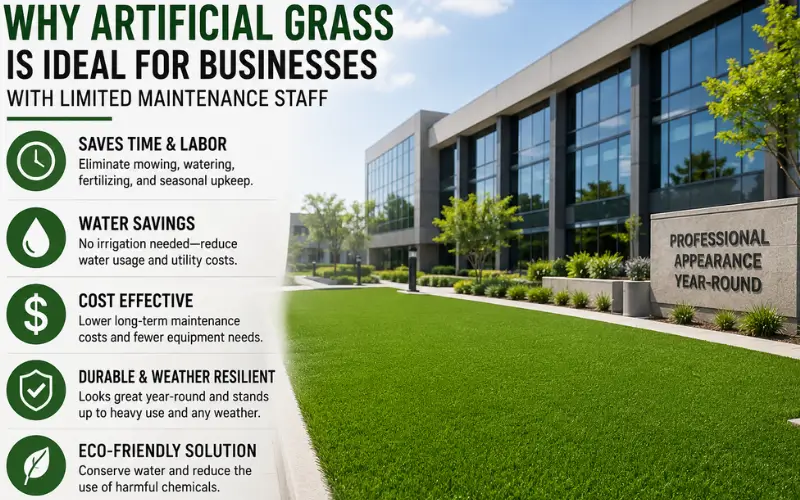
Here’s the relief: artificial grass eliminates these tasks completely. Those recovered hours can go toward building maintenance, enhancing other landscaping features, or tackling property improvements that actually add value to your business. You won’t be scheduling weekly mowing sessions, adjusting watering times, or planning seasonal treatments anymore. Even a single maintenance person can effectively manage outdoor spaces that would typically require several team members working in rotation.
Consistent Professional Appearance Year-Round
Natural lawns have a frustrating habit of looking their worst at the most inconvenient times. Weather patterns, seasonal changes, and staffing availability all directly impact how your grass looks on any given day. During those brutal summer months, even well-maintained lawns can turn brown and patchy despite regular watering, which doesn’t exactly project the professional image you’re aiming for. Winter dormancy drains the color from natural grass, leaving your property looking tired and neglected during months that might be crucial for your business.
Artificial grass doesn’t play these games. It maintains that vibrant, freshly-manicured appearance regardless of weather patterns, seasonal transitions, or whether you’ve got a full team available that day. Your business property looks immaculate whether you have two maintenance workers actively tending to it or none available for a week. This reliability proves especially valuable if you’re in a customer-facing business where first impressions can make or break client relationships.
Simplified Equipment and Supply Management
Running a natural grass maintenance program means committing to substantial equipment investments and ongoing supply purchases that quickly add up. Your team needs commercial-grade mowers, edgers, trimmers, blowers, and all the fuel, oil, and replacement parts that keep those machines running. You’ll need dedicated storage space for housing this equipment, along with fertilizers, herbicides, pesticides, and various watering components. Staff training becomes necessary to ensure everyone operates equipment safely, handles chemicals appropriately, and follows proper procedures.
Artificial turf installations eliminate nearly all of this complexity. You’ll need a simple leaf blower and an occasional hose-down, that’s essentially it for maintenance tools. The storage space previously occupied by mowers, fuel containers, and chemical products becomes available for more productive uses. Fewer equipment needs also mean reduced liability risks associated with machinery operation and chemical handling, which simplifies your safety protocols considerably.
Water Conservation and Utility Cost Savings
Natural grass is incredibly thirsty, and commercial properties with expansive lawns can burn through thousands of gallons weekly during growing seasons. Those water bills add up fast, creating expenses that are hard to justify when you’re looking at the bottom line. Your maintenance team has to monitor irrigation systems constantly, adjust timers as seasons change, and respond to broken sprinkler heads or leaks that waste water while driving up costs. When drought conditions hit or water restrictions go into effect, maintaining natural grass becomes even more challenging, and expensive, as businesses face higher rates or strict usage limitations.
Artificial grass requires zero irrigation, which means those landscape-related water bills disappear entirely. For businesses managing outdoor spaces where animals spend time, pet turf provides specialized drainage systems that maintain hygiene without water-intensive cleaning routines. The financial savings accumulate impressively over time, often helping offset your initial installation investment within just a few years. Beyond the direct cost savings, you’re also advancing corporate sustainability goals and demonstrating environmental responsibility to customers and stakeholders who increasingly care about these issues. Your maintenance staff no longer needs to troubleshoot irrigation problems, adjust watering schedules based on recent rainfall, or worry about system malfunctions during weekends or holidays. This simplification removes a major source of maintenance emergencies and unplanned work that can derail other scheduled tasks.
Minimal Seasonal Adjustments and Weather Resilience
Natural grass doesn’t just require maintenance, it requires different maintenance approaches throughout the year, which means your staff needs expertise and time to adapt constantly. Spring brings heavy growth periods that demand frequent mowing, while summer heat requires increased watering and vigilant monitoring for heat stress. Fall means aeration, overseeding, and preparing the lawn for winter dormancy, while winter itself may require different care depending on your climate. Extreme weather events can absolutely devastate natural lawns, forcing your maintenance team into extensive recovery mode after droughts, floods, or temperature extremes.
Artificial grass remains completely unaffected by these seasonal transitions. Your synthetic turf performs identically whether temperatures climb above 100 degrees or plunge below freezing, no seasonal preparation or recovery efforts required. Heavy rainfall drains quickly through properly installed artificial grass, preventing those muddy patches or standing water pools that would wreck a natural lawn. This weather resilience proves particularly valuable in regions with unpredictable climates or extreme conditions where natural grass struggles to survive, let alone thrive.
Conclusion
When you’re operating with limited maintenance staff, every decision about resource allocation matters significantly. Artificial grass addresses staffing constraints in ways that traditional lawns simply can’t match, through dramatic reductions in labor demands, elimination of equipment requirements, and a consistently professional appearance that never falters. The water conservation benefits deliver immediate financial returns while supporting broader sustainability initiatives that enhance how customers and stakeholders view your business. Weather resilience and year, round performance mean your property maintains its attractive appearance without the seasonal fluctuations and emergency interventions that natural grass inevitably demands.