
As children navigate a world that feels increasingly complex, parents often seek peace of mind, especially when their kids are out of sight. While schools are structured environments where safety protocols are (or should be) standard, the real challenge for parents begins when their children step outside the school gates—whether it is a family trip to a busy theme park, a solo walk to a friend’s house, or simply navigating public transport. This is where wearable technology steps in, offering a modern solution to an age-old parental concern: knowing where your child is and that they are safe.
The market for child-focused wearable devices has grown rapidly, offering tools that extend parental oversight without being overly intrusive. These devices move beyond simple identification tags and incorporate advanced features like GPS tracking, two-way communication, and geofencing. But what exactly are these tools, and how effectively do they help parents manage risk in dynamic public spaces? The devices themselves fall into a few key categories, primarily smartwatches and dedicated GPS tags, each offering a distinct blend of functionality and ease of use.
Smartwatches: More Than Just a Timepiece
Child-specific smartwatches are arguably the most popular wearable technology for safety outside school environments. Designed often with bright colors and child-friendly interfaces, these are not just mini-smartphones; they are safety devices first. Their core features revolve around communication and location.
Key functions often include:
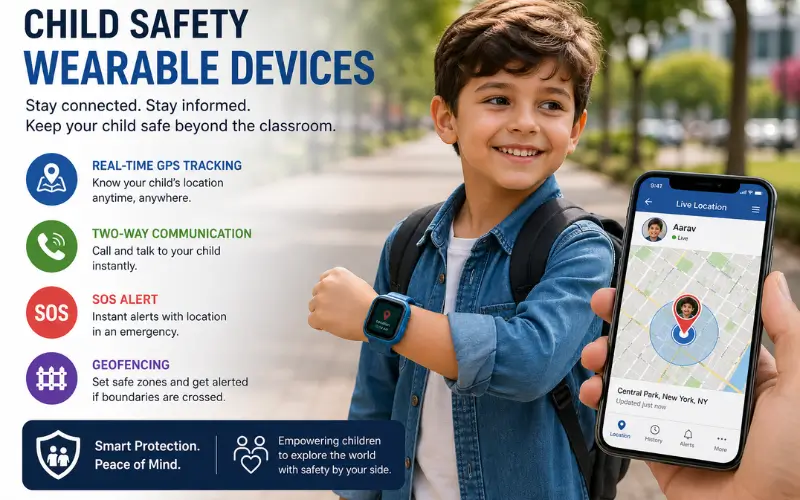
- Real-time GPS Tracking: Parents can check their child’s location instantly via an app on their own smartphone. This is invaluable when a child is traveling independently, perhaps walking home after an extracurricular activity or being picked up by a non-familiar guardian.
- Two-Way Voice Calls: Most devices allow children to call a limited list of approved contacts, typically parents or guardians, ensuring they can reach a trusted adult immediately if they are in distress or feel lost.
- SOS Functionality: A dedicated button can be pressed to immediately alert a pre-set list of emergency contacts with the child’s current location.
- Geofencing: This feature allows parents to establish virtual boundaries (e.g., the park, the neighborhood block, or the route to and from a piano lesson). If the child steps outside this designated “safe zone,” the parent receives an immediate alert.
The benefit of the smartwatch is that it looks like a normal accessory, encouraging continuous wear. This contrasts with other school-based identification systems, such as those relying on technologies that contribute to the overall Cost of RFID implementation in schools. These smartwatches provide a more personal, parent-controlled layer of security.
The Role of Dedicated GPS Trackers and Tags
For younger children or for specific, high-risk scenarios (like an international flight or a crowded outdoor event), a dedicated GPS tracker or wearable tag might be preferable. These devices often strip away communication features to focus solely on robust, long-lasting location monitoring.
They are typically smaller, lighter, and easier to conceal or attach to clothing, bags, or even car seats. These trackers are often chosen when the goal is purely location data and the parent wants to minimize distractions or potential misuse from a child. A major advantage of these simpler tags is their battery life, which can often last for days or even weeks, providing extended monitoring capability essential for longer trips or vacations. Their simplicity makes them excellent tools for asset tracking, ensuring not only the child’s safety but also the recovery of personal items should they be misplaced during travel.
Managing Risks and Promoting Independence
While these technologies provide an invaluable safety net, the conversation must also address how they affect a child’s development. The goal is safety, not stifling independence. Parents must balance the benefits of instant location data against the need to teach children critical skills for navigating the real world.
Here are some ways parents can use wearables responsibly:
- Teach, Don’t Just Track: Use the device as a tool for teaching responsibility. For instance, if a child is late arriving home, the parent should use the data to have a conversation about time management and adherence to plans, not just to impose punitive measures.
- Set Clear Boundaries: Explain to the child that the device is for safety, especially in crowded, unfamiliar settings (like tourist attractions or busy airports), and not for continuous surveillance of their personal time.
- Privacy Considerations: Ensure the devices chosen offer strong data security and privacy protocols, given the sensitive nature of the location data they collect. This is a critical factor for any personal safety technology.
The Future of Family Safety Tech
The landscape of child safety wearables is constantly evolving. Manufacturers are integrating more advanced health monitoring features, such as heart rate sensors and activity trackers, turning these safety devices into holistic wellness tools. Furthermore, the integration with smart home ecosystems means that safety protocols can be seamlessly extended from the school, to the streets, and back into the home.
The ultimate goal of this technology is not to replace good parenting or safety education, but to provide a secure and reliable safety cushion. By leveraging the power of mobile technology and precise location services, parents can offer their children the freedom to explore and grow, all while maintaining the peace of mind that comes with being just a call—or a GPS ping—away.