
If you’ve ever tried to explain a design to a brand or factory using nothing but hand gestures and vague emails, you’d better know how quickly things can fall apart. When it comes to the fashion world, a tech pack is your patent insurance policy. It is indicated as the “blueprint” for your garment; this ensures that what you assume in your head is exactly what comes out of the shipping container.
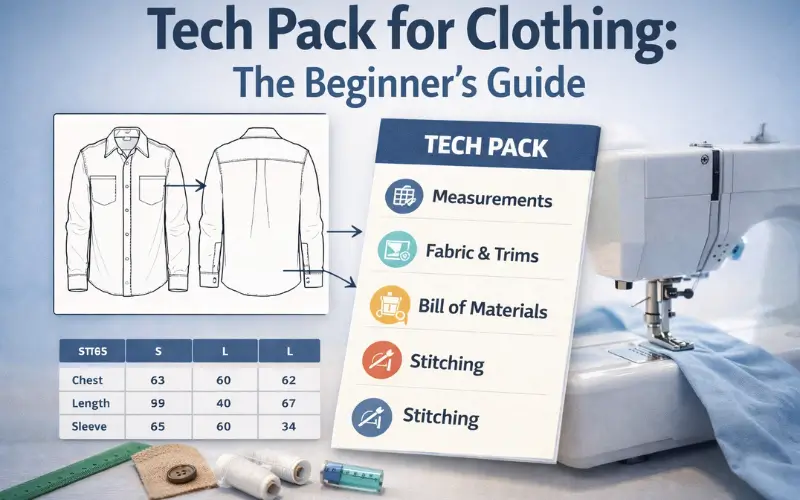
For people who are just starting, such a process can feel overwhelming. Give a read to this context and find what you need to know and how to get it done right.
What Exactly is a Tech Pack?
Think of a tech pack (technical package) as a set of instructions for a builder. Without it, a brand is essentially guessing. It comes with detail:
- Fabric measurements
- Trim locations
- Fabric types
- Stitching instructions
Tech pack documentation helps in minimizing errors and eliminating the need for constant back-and-forth communication.
Why Do You Need a Tech Pack Designer?
Many founders try to create their first tech packs themselves, but the learning curve can be steep. This is where a tech pack software like AI TechPacks comes in. It helps translate creative ideas into structured technical specifications that can be easily used by pattern makers and manufacturers.
The Essential Components
A professional-grade tech pack typically comes with:
- Technical Sketches: These are “flats”: the black and white 2D drawings entirely revealing the front, back, and side views.
- The Bill of Materials (BOM): Stated as a list of every single physical item that is required, it ranges from the main fabric down to the brand labels and threads.
- Measurement Specs: Referred to as the chart detailing the dimensions for every size in your range.
- Stitching & Construction: Complete mentions on seam types, SPI (stitches per inch), and reinforcement points.
Finding the Right Partner
The success of your clothing production run often hinges on the quality of the provided documentation. Keep in mind that if your specs are messy, your samples will be too. If you’re hiring a clothing tech pack designer, you should have to pay for precision.
An experienced clothing tech pack designer has a proper idea of how to anticipate production hurdles prior to being done, which will save you thousands in wasted fabric and shipping costs. Similarly, proceeding with a tech pack designer who has experience in your specific domain (like activewear or denim) can be the difference between a perfect fit and a total disaster.
The Designer Tech Pack vs. Factory Specs
Some factories most often come with aspects to create “internal” specs for you, but there is a catch: if you ever need to move your production elsewhere, most probably you don’t own those files. Investing in a designer tech pack clearly states you own the intellectual property.
A perfect designer tech pack is portable, as it provides you with the freedom to shop around for different manufacturers without starting the development process from scratch every time.
Final Thoughts for Beginners
There’s no need to rush the development phase; stick with a tech pack designer as it ensures the optimal manufacturing quality. You ought to provide a clear and concise roadmap to a factory for building a scalable brand.