The first step towards developing a spending plan that can aid in debt freedom is also to have a clear vision of the fact that your money should be a tool to serve your priorities as opposed to responding to your pressure. A plan is neither a penalty nor some kind of temporary limitation, it is a realistic system which provides a focus to all the money you make. Having debt means that such unplanned expenditure tends to stretch the financial strain and retard development. An intelligent budget provides organization, minimizes possible uncertainty, and puts guesses into the background. It enables you to understand how your income, obligations, and goals interact in such a way that every month brings you nearer to stability and long-term self-reliance.
Income Awareness
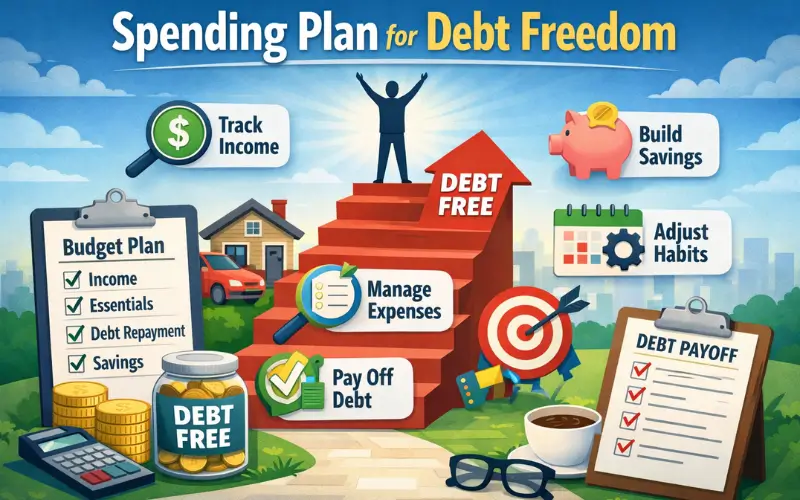
The initial activity in creating an enabling expenditure budget is to have a clear idea of the amount of money available to play with. This is simply an exercise of finding out your reliable amount of take home pay and dividing it into irregular or unpredictable sources. With such a clear definition of income, there are realistic limits that can be set on each type of expenditure and there is no need of filling gaps using credit. An effective plan is one that is based on the real figures of the income that one has and this instills confidence and averts frustration that arise when one sets objectives that are not sustainably maintained.
Knowledge of income also entails perception of timing and consistency. Bills can be paid by commission, seasonal work, or pay schedule; this is because it may influence when and how it is paid. Coordinating with cash flow is a sure way of meeting the necessary expenses and debt repayments without generating any form of late charges or extra interest. Once your income trend is honored, your expenditure plan becomes a reliable structure instead of a main cause of constant re-alignment.
Expense Structure
Enhancing all routine spending would be an effective way of getting an accurate picture of where the money is being spent at the moment. The first expenses to determine are fixed costs which include housing, utilities and insurance, then the variable costs which include food, transportation, and personal expenditure. This model puts an emphasis on the costs that are necessary and those that can be modified. A debt-free spending plan does not encourage people to get rid of the comforts but helps to make sure that decisions are taken in a conscious and not automatic manner.
After the organization of expenses, there will be an opportunity to assign to every category its purpose and limit. This exercise normally exposes minor but steady leakages that dilute the process of progress like underutilized subscriptions or impulse buying. Diverting even small sums of money in payment of debt can help save a lot of interest in the long run. There are also cases when a formal solution such as consumer proposal BC can be looked at as an element of a larger financial plan and thus, structured budgeting becomes even more critical.
Debt Prioritization
The budget should provide a specific and secure position of debt on the monthly plan. Repayments should not be seen as flexible or optional and instead they should be planned just like other basic living expenses. This will support the notion that going debt free is not a secondary financial goal but a main one. When payments are made in advance, then the balance of money can be divided without any ambiguity and difficulty.
Regularity in the payments creates momentum and emotional assurance. The decrease in the number of balances even in small steps makes the importance of discipline and planning more evident. An effective expenditure plan also considers the interest rates and minimum requirements so that the gains are always gradual and the losses are kept to the minimum. In the long run, this disciplined form will help in minimizing the use of credit and help in the shift towards financial independence.
Behavior and Adjustment
Success can be achieved in the long run not on the basis of numbers alone, but on the habits. A budget is effective when it considers realistic behavior as opposed to idealistic intentions. Leaving a decent space for everyday necessities and the need to have fun occasionally is the way to avoid burnout and rash decisions that are likely to sabotage progress. It is not perfection but sustainability so the plan needs to be firm but easy to follow.
The plan is reviewed and adjusted regularly to keep it in touch with the changing circumstances. Changes in earnings, unforeseen costs or financial objectives can necessitate changes. Also by reviewing the plan every month, you are in charge and remind yourself to be committed towards becoming debt free. This constant scrutiny makes the spending plan not a dead object but a living tool that helps the financial development to proceed consistently and confidently.
A spending plan that facilitates the freedom of debt is based on a clear, structured and consistent spending plan as opposed to restriction by itself. By knowing your income, planning your expenses, focusing on paying the debt, and changing your habits as the years go by; you establish a plan that can direct every financial action you make with a purpose. By doing this, you will minimize stress, avoid excessive use of credit and gradually redirect your thinking towards long-term stability as opposed to short-term stress. A properly structured spending plan, once pursued with patience and frequent review, is a potent instrument and one which, in addition to supporting the eradication of debt, can be used to establish a stable and long-term financial security and control.