A 2024 study reveals that fewer than 60 companies are responsible for the vast majority of global plastic pollution. In which retail packaging is specifically highlighted as a primary driver of this environmental crisis. While plastic remains a staple for retail packaging, you can still change it.
As the consumer demand for sustainability and regulatory pressure grow, retail brands are optimizing their packaging by using some sustainable strategies that you can also use to leverage sustainable custom packaging that attracts customers, builds authenticity, and enables customer loyalty.
The Growing Demand for Plastic-Free Product Packaging
Plastic pollution has emerged as one of the most critical environmental challenges of the modern era. From single-use straws and bags to the wrapping on everyday consumer goods, plastic is nearly inescapable in global commerce. This ubiquity has sparked a shift in consumer behavior, as people increasingly rethink their purchasing decisions to protect marine life, terrestrial ecosystems, and human health.
According to another study done in 2020, shows that consumers are willing to spend 70 more when packaging is plastic-free. By keeping this in mind, retail brands are now changing their product packaging, whether for food, beverages, cosmetics, electronics, or other retail accessories.
Plastic-Free Packaging Alternatives That Brands Are Utilizing
While plastic-free alternatives are discovered due to technological advancements, it remains a challenge for retail brands to switch from one material to another. Companies need to carefully consider the life cycle of a product, from the materials used to the end-of-life disposal or recycling process.
This requires significant innovation in product design, packaging, and manufacturing processes. Let’s look at some of the ways businesses are responding to the demand for plastic-free alternatives and leading the way in sustainable consumer goods.
Plant-based plastics
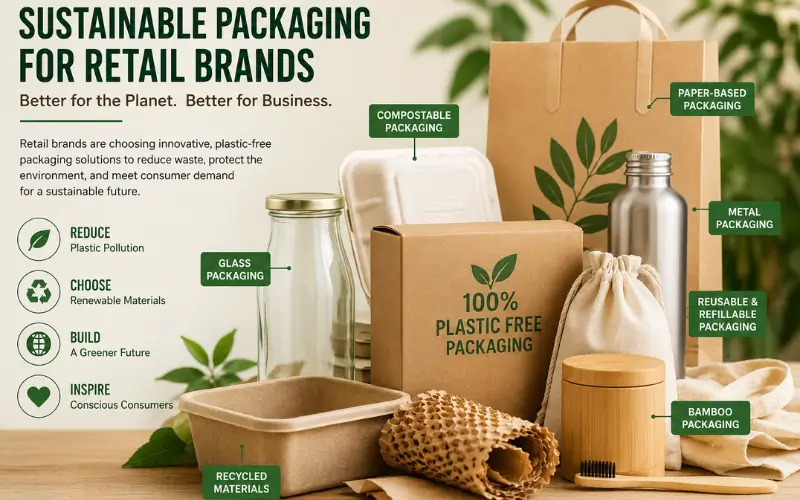
Plant-based plastics, or bioplastics, are derived from renewable biomass sources such as corn, sugarcane, cellulose, and agricultural waste. Custom Boxes Lane provides bioplastic materials that are easily recyclable and compostable. These materials are designed to mimic the durability and flexibility of traditional plastics; they offer a sustainable alternative to petroleum-based products.
Unlike conventional plastics that persist in the environment for centuries, bioplastics are engineered to decompose, significantly reducing fossil fuel dependence and long-term waste.
Bamboo
Bamboo is a highly renewable, biodegradable, and durable alternative to plastic, which has become a significantly popular material for everything from kitchenware to personal care retail sections. This material offers a sustainable solution to curb pollution from retail stores through products like reusable cutlery, toothbrushes, food packaging, and innovative bamboo-based bioplastics.
Bamboo is like a jack of all trades when it comes to sustainable packaging for retail shelves. Consumers find them appealing, aesthetic, sustainable, and eco-friendly packaging that lasts longer and leaves no harm behind.
Glass & Metal
Glass and metal have always been the best packaging materials due to their superior, free from harmful chemicals, non-toxic, and infinite recyclability. While glass is ideal for chemical-free storage and metal offers lightweight, break-resistant portability, they both can be used in food storage and beverage cans or containers. Both eliminate plastic chemical leaching, though glass is fragile and heavier to transport.
Many retail brands and companies are now opting for glass or metal containers for food and beverage packaging, cosmetics, and household goods.
Recycled Materials
Another plastic-free material option is using recycled materials, especially those that have been diverted from the waste stream. This is another way retail businesses can reduce plastic use. By using post-consumer waste, including recycled paper, textiles, and ocean-bound plastic, brands can increasingly incorporate sustainability and turn waste into valuable items. Retail brands can satisfy consumers while reducing single-use plastic in their product packaging. Some recycled materials are so fine that you can even make luxury boxes packaging for brands out of them.
Plastic-Free Materials
From instant snacks and cosmetics to daily groceries and personal accessories, single-use plastics dominate modern retail shelves. This near-total reliance on plastic packaging means that almost every consumer purchase contributes to the global waste stream. To combat this, retail brands are rethinking their packaging and going for plastic-free alternatives.
Below are some plastic-free alternatives that brands are optimizing, and you can also:
Paper-based packaging
Retail brands can eliminate plastic wrap, bubble mailers, and styrofoam peanuts by switching to renewable, recyclable paper alternatives such as kraft paper, molded fiber, and corrugated cardboard. These materials are popular on retail shelves as they offer strong, durable structural integrity and branding opportunities.
These materials are not only biodegradable but also recyclable, offering a more sustainable lifecycle than plastic. Top retail brands’ product packaging includes kraft boxes wholesale, wraps, paper tape, and specialized paperboard for food, cosmetics, and shipping.
Compostable packaging
Take our packaging one step further by introducing compostable materials. These materials are made from renewable resources like cornstarch or wood pulp; these materials break down in the composting environment without leaving behind harmful residues.
Refillable containers
In an effort to reduce waste altogether, many retail brands are offering refillable products. Consumers can purchase a product once and then simply buy refills, which typically come in minimal or plastic-free packaging. This model is particularly popular for products like cleaning supplies, beauty items, and food storage.
Conclusion
As consumers demand more sustainable options, retail brands are obliged to shift toward compostable, renewable, and sustainable options to reduce their environmental carbon footprint. Retail brands have also seen a massive shift in sales after optimizing their packaging to be plastic-free, indicating that consumers prefer eco-friendly packaging that is less harmful to the environment.
You can also show your role in sustainable packaging by choosing plastic-free materials like kraft, cardboard, glass, or renewable resources. Custom Boxes Lane offers all the above-mentioned plastic alternatives that support durable packaging and brand potential. By embracing the shift toward sustainability, you can set new standards in the consumer goods market and help build a brighter, more sustainable future.